Art
Saturday, September 29, 2018
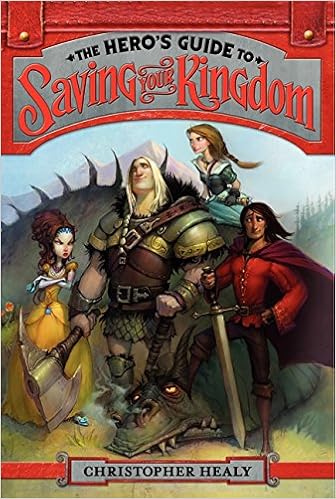
Top 3 Reasons To Read The Hero's Guide to Saving Your Kingdom (Julie)
I've thoroughly enjoyed reading this book and look forward to continuing the adventure with the characters in their next two books.
So here's my top 3 guide as to why you should read this book:
1) Expect the unexpected. We have four Princes Charming and the four princesses that go with those stories: Cinderella, Rapunzel, Snow White, and Sleeping Beauty. No one is truly who you imagine from the stories/Disney versions. Which gives a fresh slant. The one thing I didn't like about these characters was Sleeping Beauty's portrayal. She's one of my favorites, but here she is a spoiled BRAT. However, having read book one, I'm of the opinion that she may go through a personality change as the series continues.
2) Only one of the four princes is an actual hero. Rapunzel ended up saving her "hero" after he got tossed out of the tower by the witch. Cinderella's "hero" never even left the castle to find her, just sent his servants. Snow White's "hero" had gotten lost in the woods when he came upon the dwarves who insisted he kiss Snow White. Then there's Sleeping Beauty's hero. He did battle the witch and save the day, only to discover Sleeping Beauty wasn't the charming princess he thought she'd be.
3) Improbability at its finest. This is truly a fairy tale, by which I mean, it in no way resembles real life. For example, Gustav, one of the princes, gets in the way of a fire-breathing dragon. Does he get burned to a crisp? Nope. He just loses his hair. Another is a ten year-old bandit king who is the terror of the kingdoms. His favorite punishment is his spitball wars, which his men are deathly afraid of. All these improbabilities add to the charm and humor of
the story.
Lastly, being an incurable romantic, I'm curious to see how the romance plays out among the princes and princesses. It's possible that all the princesses get a Prince Charming, but which one?
Tuesday, April 26, 2016
Authors that Inspire (Laura)
![]() |
| Beatrix Potter pillows (with my kitty) |
Beverly Sommers
Sommer's sweet, short novel The Meaning of Sisterhood had a special place in my heart when I was a teenager. I used to find this book by going to the same shelf in the library and looking for the cover. Then one day it had been moved, and I couldn't remember the name of the author or the title in order to find it again. It took me a few years and the help of a couple of friends to figure out what it was I had read, and another friend tracked down a used copy for me. For this reason, it has special meaning to me, but also brings me back to my childhood, to when life was simple and I still lived in the same home with my parents and siblings. I read it every Christmas. No other books I read during my teen years stayed with me quite like this one.JK Rowling
Of course. Rowling fascinated me with her world, stories, and characters and made me want more books like hers. I was working in a library when book six of the Harry Potter series came out, and with all the frenzy around it, I decided to see what the fuss was over. I had a month off from school that August and planned to read all six books during the break. I bought them two at a time, and it wasn't fast enough.
Christopher Healy
Fairy tales and good humor are two elements I especially love to see in books, and Healy combined these impressively in his Hero's Guide trilogy. A laugh can get you through a lot, and not many books have made me laugh out loud like these books have. They teach me about bringing out the kind of humor in my writing that I enjoy, and attempting to do it alongside serious themes. It doesn't matter if my writing never reaches the league of these books, as long as they keep me stretching and striving to get better.
Laura Ruby
The first time I finished reading Ruby's Bone Gap, I immediately flipped to the beginning and started over again. A year later, I am still processing it, and I hope to one day be able to write about why it means so much to me. For now, all I can say is this beautifully written magical realism story gave me hope and tapped into a well of thoughts and feelings in me that I am still working to express more fully in my writing. Sometimes when something lights a fire in me, it takes me a while to gather the pieces and figure out what it is I'm trying to respond with. I still haven't quite gotten there with this book.
Kate DiCamillo
With her novel The Magician's Elephant, DiCamillo said something I think I have always wanted to say and didn't know how to. Now I have a copy of this book to remind me of its message anytime I want to hear it. Writers like DiCamillo remind me there are people in the world doing exactly what they should be doing with their lives, and that is inspiring on its own. She makes me want to be a better writer.
In fact, all of these authors make me want to be a better writer. The best kind of writing happens when you feel alive, like you're dying to say something and don't necessarily know quite what. You just have to figure it out, like arranging puzzle pieces until you find the right combination of words or metaphors or sometimes sounds until your message comes across. The one you've been trying to say, or maybe didn't even know you wanted to say. Writing is like being thirsty, or like having an itch on a nerve that's hard to place. It's like that for me anyway, and these authors have all made me respond in some form. They've stirred something that eventually led me to write--maybe days, months, or years later. Their work is the reason I fell in love with books and keep falling in love with books, especially children's and young adult literature. Writing is my way of figuring out what it is deep inside me that I can't easily unlock but feel a desperate need to. Just as pain is our bodies' way of telling us something is wrong, our drive to write is our hearts' way of telling us we have something to say that we haven't expressed, or that we've maybe even buried. We all have this to contribute, and these authors have helped me uncover that drive in myself. There are many others I'm sure I am not even thinking of right now, but these are some that have stayed with me. I recommend them!
What authors have influenced or continue to influence you in your writing?
Laura
Attributions
The Meaning of Sisterhood: http://www.goodreads.com/book/show1054834.Meaning_of_Sisterhood
The Hero's Guide to Saving Your Kingdom: http://www.amazon.com/Heros-Guide-Saving-Your-Kingdom/dp/0062117459
Tuesday, October 16, 2018
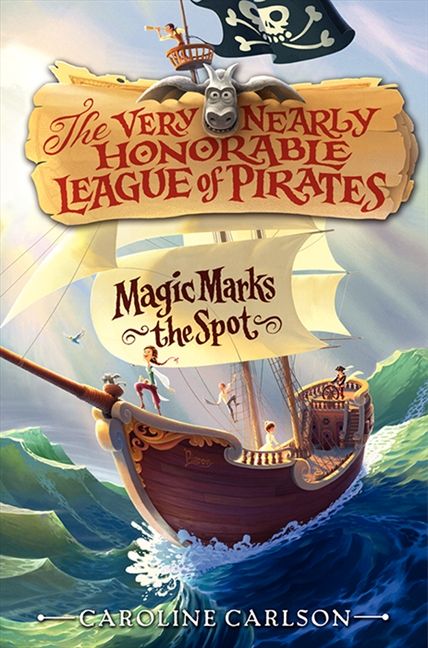
Magic Marks the Spot (Very Nearly Honorable League of Pirates)
high society and pirates.
Here's what Amazon has to say:
What makes this so much fun are the characters and absolute absurdness of everything. In the world in which Hilary lives, there are those of High Society and then those beneath them, like the pirates. Interwoven in the story are excerpts from "books" and "news articles" written from both points of view. Which are absolutely hilarious.
To give you an example of what High Society is like for a young lady, here's a quote from the guidebook for young ladies:
"Archery-- a most graceful sport if one can manage to fire one's arrows without perspiring."
If said young lady is blessed with quite a burly arm, them I suppose it's possible.
Now on to the scalawags and treacherous pirates. To keep things civilized, or at least nearly so, the pirates have their own league...Very Nearly Honorable League of Pirates or VNHLP. In the VNHLP's manuals, you can find all sorts of useful information for all aspects of pirating. For example, the purpose of a pirate is to find treasure. To do so, you need a VNHLP approved map:
"to guide future pirates, a treasure map must include a dotted line indicating the best route to the treasure. Obstacles along the route (such as crocodile dens, hanging skeletons, etc...) should also be noted on the map. The route must end in a large X to mark the spot where the treasure is buried.
If you do not posses a VNHLP approved treasure map, abandon the quest at once. Without proper maps, pirates would wander aimlessly through the kingdom digging holes in the ground at random, causing disruption and potential injury to citizens who do not watch their step."
To find more of these delightful quotes or if you have been secretly wishing to become a pirate yourself, please check out Magic Marks the Spot at your local library or online resource.
Friday, August 31, 2018
Interview with Kendra E. Ardnek (The Worth of a King Blog Tour)
Today we're excited to welcome Kendra E. Ardnek to Lands Uncharted as part of the blog tour celebrating her release of The Worth of a King! I'll share more about the book below, but first, the author answered some interview questions for us :) Enjoy!
Tell us a little bit about yourself.Hi! I'm a dragon fairy! Who writes books! Awesome fantasy books that are frequently fairy tale retellings. And, also, despiting owning a desk, I'm currently sitting on the floor on a pile of blankets to answer this interview...
Sounds comfy! What prompted you to start writing? Are you one of those authors who knew you were meant to write since childhood, or did it come as a discovery later in life?
I've known ever since I understood that it was what you were supposed to do with pencils - as opposed to acting out stories with them. I wasn't serious about it until the first of the new Narnia movies came out and I thought I could write a better version of it. That script became my baby and I proceeded to rewrite it over and over until it didn't resemble Narnia at all. And then I put it on hold and wrote some fairy tale mash-ups, the first of which I published at just sixteen.
Impressive! Which authors have had the most significant impact on your writing?
J.R.R. Tolkien, C.S. Lewis, and Gail Carson Levine.
Those are some of my favorites, too :) Please share your favorite writing tip.
Don't wait for the muse to show up. Sit down and write.
Do you have any go-to foods or beverages while writing?
Water and coffee. And random weird snacks that I find in my drawers.
Yay for random snacks! Since we're all about exploring new worlds here at Lands Uncharted, if you could choose one place to visit, real or fictional, where would you go?
I want to go to Germany and tour the castles.
The desire to cowrite a book with my friend, Jack Lewis Baillot. The story evolved out of a search for themed we both loved writing about, which involved twins, king stories, and general awesomeness.
The cover was designed by Alea Harper, and it took several tries before we sprung upon the exact combination of elements that embodied the heart of the book. If you want to see the process, we Alea and I both posted our sides of it during the cover reveal.
What do you have planned next for the Fall of a Star series?
It's going to be a trilogy, and I have the second book about 60% plotted and the third book actually has a first draft that needs to be completely rewritten. Actually, I had some debate back and forth as to which one was going to be #2 and which would be #3, as there are two timelines involved. Therefore, I'm going to try to release them back-to-back, within the same year. But, first, I have to write them.
How exciting! And finally, no visit to Lands Uncharted is complete without Top 3s! Give us a top 3 list in the category of your choice.
I'm going to go with my top three representations of Snow White, 'cause Worth proved to be an accidental retelling of that tale.
1. Winter by Marissa Meyer
2. Hero's Guide Series by Christopher Healy
3. Ever After High by Shannon Hale
Princess Obsidia’s father was killed the night she was born. Since there was no male heir, the crown went to the man who killed him, by Dialcian law. This never bothered her, growing up, and when it comes time for Obsidia to choose her husband, she chooses Prince Delaney, the son of that man, with little hesitation. Only then does her life start crumbling around her. Adrian expected to live a normal life, taking his father’s place at the print shop when his father retired. But, on his eighteenth birthday, when the princess’ engagement is announced, his world is ripped out from under him when he learns that his life was a ruse, and he is the twin brother to the princess – and expected to take back his father’s throne.
Delaney knows that his country is hovering on the brink of war – and that his father may harbor murderous intentions towards his intended bride due to her Zovordian blood. He wants nothing more than to protect Obsidia and his people, but as merely prince, he has little power against his father.
The ancient war between the Dragons and the Immortal King and Queen is nearing its climax, and the three are already caught in it.
Saturday, December 14, 2019
The Long List of Top Books and Authors of 2019 (Lizzie)
Top 3 Most Read Authors of 2019
Top 3 Fantasy Romance Novellas
1. Nyssa Glass: House of Mirrors by H.L. Burke
2. Mirrors and Pearls by Lea Doue
3. Curse and Consequence by Savannah Jezowski
Top Fantasy Novels with Romance
1. Lady of Weeds by W.R. Gingell2. Lady of Dreams by W.R. Gingell
3. The Lord of Dreams by C.J. Brightley
5. Identity by Camille Peters
Top Short Stories
Deep Magic Winter edition is also a winner just based on the two short stories I've read so far.
Top Non-Fantasy Books
Thursday, October 13, 2016
NaNo Prep: Learning Worldbuilding from the Masters (Hannah)
NaNo Prep: Worldbuilding
How many times have you had to stop your productive momentum of writing to do research? Have you been caught up in the bliss of inspiration only to have it all come crashing down as you are forced to spend precious time searching the Internet for some obscure detail, discouraged because you might have to read through the entire Wikipedia page to find a relatively minor fact? I know I have had these problems. Even though I write fantasy, I want it to be as believable as possible, which means I ground my writing in reality.
Being the compulsive researcher that I am, I had been searching for a book that specifically covered fantasy and science fiction. After all, speculative fiction has a very different set of problems from the other, more reality-based genres. Much to my surprise, I discovered a hidden gem while browsing the hidden, tucked-away, ridiculously small reference section in my local Barnes & Noble bookstore. I had seen many books on writing before, but this was what I had been looking for all along: Behold,
Writing Fantasy & Science Fiction: How to Create Out-of-This-World Novels and Short Stories
Orson Scott Card's name is on the front, but in reality he only wrote one quarter of the book. His section is titled "How to Write Science Fiction and Fantasy," and gives a solid overview of good writing, with some important fantasy and science fiction related tips and stipulations. In the next section, Philip Athans shares a history of speculative fiction and its status in modern culture. Jay Lake finishes the first part of the book by speaking specifically to steampunk writers.The real value of this book comes after the first one-third. Many noted speculative authors contributed to "The Writer's Complete Fantasy Reference" - this section makes the book completely worthwhile.
It boasts a comprehensive collection of technical information, all conveniently gathered into one book. It is easy to waste valuable time combing the internet for exactly what fabric your middle-class Italian merchant's daughter would wear, whether to call your hero's weapon a mace, a flail, or a morning star, or how a castle siege would affect daily life.
If your fantasy is even remotely similar to medieval Europe, there are many resources for you. Read through the section on fantasy cultures - you will find summaries of several different types of government and economic systems, definitions of various titles, and explanations of the important political entities and people groups of the times. The section on commerce, trade, and law covers virtually every European profession and then some, with some elementary explanation of basic economics of the times. Another section, titled "The Anatomy of a Castle," is quite self explanatory, covering the form and function of every element of a medieval castle, with additional information on daily life in the castle. Finally, there is a chapter that guides you through medieval clothing, from fabrics to colors to pieces all sorted by gender and class.
Not interested in traditional medieval European fantasy? The section on world cultures covers a dozen kingdoms across the world, from Africa to Asia over the Pacific to North and South America. It shows their economy, politics, religion, and military, to help you understand them well enough to incorporate those lesser-used cultures into your fantasy stories.
Other chapters cover magic in all its forms, the practices and effects of witchcraft and paganism, fantasy races from cultures all across the world, and creatures from the myths and legends of virtually every culture. The "Complete Fantasy Reference" is certainly not much of an exaggeration. This book has been an invaluable tool to help me ground my stories in realism without having to search the Internet.
So, how does this help you?
Besides encouraging you to get your hands on this fantastic book, I will give you three takeaways to help your NaNoWriMo preparation:
1. Using correct terminology will make you more credible and give your stories life.
It seems small, but if you write like you are an expert on your subject, readers will notice. You may not know everything about 16th century London, but if you add some accurate details for flavor, it will help them become more immersed in the world. After all, one of the most important elements of a great fantasy world is a foundation in reality. It will also help readers remember your story, and may help them learn something as well. Correct, specific terminology will help your world feel real and well-developed, and what speculative writer doesn't want that?
2. Constraints breed creativity.
It seems counter-intuitive to scour what has already been done in order to find new ideas, but this is exactly the way inspiration works. Some people complain about having to learn about story structure, character arcs, character archetypes, theme, and every other supposedly pre-defined aspect of writing. They feel these things force their creativity into the proverbial box and stifle inspiration. My response? "You have to know the rules before you can break them." More often than not, this defines how I like to act: do your research, learn everything there is to learn about your subject, and do it the prescribed "right" way first. The people who have gone before you weren't stupid, after all. Many would balk at this procedure, but at least for me, it works well. I find more inspiration and more creativity when I am trying to work within pre-determined constraints, and the more difficult the problem, the better the solution.
Recently, I was struggling with my climax and couldn't figure out how to reach the outcome I wanted. Every action the characters could take swept the story away from the resolution I wanted. My dad helped me brainstorm, and after many good but insufficient ideas, he helped me strike the nugget of gold I had been searching for, and if I had been in a cartoon, a light bulb the size of Texas would have appeared over my head. The result revamped my story and boosted my excitement for weeks afterward.
It might just be that my brain is more logically wired than creatively oriented, but I think there is some truth here: don't throw away the "rules" to boost your creativity, instead, embrace them.
3. Look for inspiration everywhere.
Although I had done a good chunk of my worldbuilding before finding this book, some of the chapters drove this point home for me. The world cultures, fantasy races, and mythical creatures sections opened my eyes to so many potential ideas buried in the fantastic ideas from cultures around the world. As much as I love a good Tolkien-esque traditional fantasy, that isn't the only type available.
My current work-in-progress was inspired by the original dark elves of Norse mythology, which were elf-dwarf hybrids who lived underground because they would turn to stone if the sun touched them. Other ideas have also come from unorthodox places. The fourth module in my 10th grade biology course covered mushrooms, and almost immediately my stately, stone, Gothic underground cities turned into mushroom colonies, with residents eating mushrooms of various types almost exclusively because plants do not grow underground. That same year, I had a friend who was obsessed with Japanese video games and another who was a master martial artist. Their influences on me ended up causing my familiar magical high/light elves to take on a distinct feudal Japanese flavor. Ironically, the frequent spectacular light saber duels in the Star Wars: The Clone Wars animated series convinced me to rethink my automatic use of swords and bows as the primary weapons - my main characters now use maces and spears.
No matter where you are, it is easy to find inspiration if you look for it. Don't censor it, either. If you turn ideas over in your mind instead of dismissing some of them out-of-hand as cliche, silly, or unreasonable, you will boost the effectiveness of your inspiration. The "What If?" of unorthodox ideas leads to the most innovative, creative, and intriguing stories. Inspiration isn't necessary for your writing, but will give you the energy and enthusiasm to continue through NaNoWriMo when you are reaching the mid-month slump.
Thanks so much for reading! This month, I am busy preparing for NaNoWriMo, so I took advantage of the excuse to share some of my favorite writing tips and resources. I hope you are enjoying it. See the bottom of the page if you would like some more worldbuilding resources. If you would like to read other related posts, see below:
NaNoWriMo: Write with Abandon!
NaNo Prep: Character Resources
NaNo Prep: Setting Resources
NaNo Prep: Plot Resources
NaNo Tips: Give Your Story a Chance
NaNo Tips: What Helps You Focus?
NaNo Tips: My NaNo Journey
Other Worldbuilding Resources
- My beloved 30 Days of Worldbuilding, which has perfect 15-minute exercises to help you prepare during October
- Country and Culture Development Questions
- Creating Better Fantasy and Science Fiction Species
- Fantasy Creature Development Questions
- How to Create an Awesome Setting
- Setting the Rules and Limitations of Your World
- Town and City Development Questions
- Worldbuilding Basics - The Elements of a Well-Developed World
- 7 Deadly Sins of Worldbuilding
Attributions
Writing Fantasy & Science Fiction: http://fw.cdn.iwp.com/media/catalog/product/cache/33/image/9df78eab33525d08d6e5fb8d27136e95/t/h/the-guide-to-writing-fantasy-and-science-fiction_1.jpg
Saturday, July 27, 2019
Top 3 Books with Maps and New Book Map Reveal (Lizzie)
I can't talk about books with maps and not talk about Tolkien's The Hobbit or The Lord of the Rings, or Robert Louis Stevenson's Treasure Island, but I want to mention other books as well, so I'll just say these are the top books with maps after the classics.
Books with Maps
1) The Hero's Guide to Saving Your Kingdom by Christopher Healy
2) The Dreamhouse Kings series by Robert Liparulo
This is a fun map because it is of a house instead of a continent, but if you know the story (which I review here) you'll understand how important a map of this particular house is. I also got to meet Robert Liparulo recently at the Realm Makers conference in St. Louis!
3) The Sword of Lyric series by Sharon Hinck
Tuesday, December 28, 2021
Top 12: Advice and References for Authors after 12 Years of Writing
I've been writing about twelve years now and have indie published seven novels and multiple shorter works and a couple of magazine articles, so I know a thing or two about the indie publishing world and writing in general. I still have a bunch to learn, but I wanted to share a few bigger things I've discovered over the years, especially since this is my last post as a regular blogger for Lands Uncharted. I have a busy publishing schedule and life changes that made it advisable to step away. I've loved the blog and look forward to keeping up with it. If you'd like to keep up with me and learn about my new releases, you can sign up for my monthly newsletter here (note this is for my fiction books, not for writing advice).
But on to advice and references. I've chosen twelve things to talk about, one for each year of my writing journey.
Advice for Writers
1. Be wary of advice.
Yes, I get the irony of this statement, but I also know how much wasted time and frustration I've endured due to listening to poor advice. Or advice that didn't fit my genre. Unless you write romance, don't listen to romance authors. Seriously. Or be very careful about what you do listen to. The expectations are widely different. Literary agent Steve Laube likes to tell a story of an outstanding speculative fiction book proposal he received, but when the author sent the requested full manuscript, it was awful, even the initial chapters that Mr. Laube considered brilliant had been rewritten. Guess what? The author's romance-writing critique partners had advised him on how to "improve" the male MC, and it didn't work, not for the genre he was writing. Also be wary of people who adhere to strict rules rather than principles (rules are guidelines to help you follow principles derived from studying what works). Be wary of those who don't have credentials. Remember that those who spend a lot of time on social media giving advice may not be the ones actively publishing and finding success. Some are, but many successful authors are too focused on writing and publishing to hang out on social media, except with their fans.
So when considering advice, ask if it fits your genre and if the person giving it has credentials or an agenda. They may have a product they want you to buy, and that's fine. Just be aware. Do they sell advice and books, or just advice on how to write? And consider whether the advice resonates with you. I've wasted a lot of time and energy following "authors should have/do such and such" advice that didn't feel right at the time. For example, trying to build fans through social media. My instinct was why waste time on Twitter when I have nothing to say? But I tried anyway. It stressed me out and failed miserably. If I haven't a reason to be on a social media site unrelated to selling books, I shouldn't be there. I should love the site and have more to say than "Buy my book." Do you know what helps me sell books? It's not Twitter or Instagram. It's writing more books (especially in popular genres like fairytale retellings), connecting with other authors in author groups and newsletter swaps, doing sales and using promo sites, and using reader magnets. Readers first want great books. That should be your goal.
2. Understand the principles behind the rules and ignore the rules as needed.
It's easier to follow a rule than it is to understand and apply a principle. Find writing teachers who talk about principles of great writing rather than merely preach rules. Principles were derived from studying great stories, and rules were developed to make following the principles easier. So rules come from good stories, not good stories from rules. Study good stories for yourself and understand the principles of good storytelling.
3. Remember your readers.
Readers have nothing to read from you if you're chasing followers on every new social media platform. Think about them when choosing how to spend your time and in what to write in your books and in your newsletters, etc. As I said earlier, readers first want great books. That should be your goal.
4. Don't give up learning and reading.
5. Don't be afraid to give your characters real traits, flaws, and struggles.
Ever watch a Hallmark movie? Do you even need to to know what's going to happen? Big city person gives up job for simple life and/or picturesque little town. What about Disney? Depending on the era, there's likely a busy or undependable parent involved. Dad must get straightened out.
Sometimes, it feels like there's only a handful or character flaws and arcs in the movies and books, and that the issue must be a huge part of the story. There must be a huge moment--with the appropriate music--where Dad realizes he really loves his kids after all, etc. Go a little deeper for your characters than what's easy or is commonly portrayed in most movies and books. What have you dealt with or been influenced by? Can you redeem those struggles by using them in your writing? I used a lot of my own struggles in one of my male MCs. He wasn't a near-perfect hero. He was messy, but he was working through his struggles. I was afraid readers would be dissatisfied to have a less-than-handsome hero dealing with non-typical hero weaknesses, but a few readers told me they'd never connected so much with a character before.
It does depend on your genre and style how much the flaws and character arc influence the story, however. Some stories don't need to delve into a hero's insecurities, for instance, even if they are evident in him.
6. Keep writing.
Even if you have to schedule it. Even if it's hard. There may be seasons when you have to give it up, but before you do that, take a hard look at your schedule and see if you're trading doing something with what God gave you (imagination and writing skill) for extra hours of Netflix and CandyCrush. Allen Arnold reminds us that we are called to be co-creators with God. Even if you don't publish what you create, you're creating with God when you write or paint or sing or whatever else gives you joy. Don't give that up for a life of absorbing what others are creating or simply wasting time scrolling through social media. What do you want to have done with your life when you are old?
7. Study the successful. And the failures.
Do you love someone's book? That makes them a success. Ask yourself what you like about the book, the cover, the blurb, and if those things should be applied to your own books. Also, recognize what you don't like in books and movies and avoid those things in your own work. And just because you like something in someone else's book doesn't mean it has to be in yours, but ask that of enough books and you might find what fits you.
Does someone have lots of a great reviews and lots of books out and seem to be doing all the things you want to do? Study them. Do they run ads? Chase followers on social media platforms or quietly cultivate their own tribe of readers? Publish often or slowly, letting anticipation build? But you need to ask, is their genre comparable to yours? The numbers of reviews, downloads, etc. for romance books and fantasy books should not be compared, for instance. Even the hosts of the Six Figure Authors Podcast will tell you that and they're obviously doing well for themselves. Romance tends to sell a lot more, like it or not, so don't get discouraged when you see posts on how some newbie romance author broke six figures on their one book.
8. Find a great critique group or beta-readers.
The qualifier "great" is extremely important here (see Advice #1). Critique partners and beta-readers are essential to improving your craft and catching things in your novels (at all stages, when new and even when you have the craft down pat) that you might be too close to to see. And some beta-readers are just super wise and experienced in things you aren't and so serve as sage counsels and topic experts.
9. Avoid lotteries.
A lot of people push social media for authors and tell them to chase fans on every platform that pops up. It may work for a few, especially those who got on early or just love the medium. To me, trying to grow a following on social media sites is like trying to win the lottery. It costs a lot in terms of time, energy, and creativity for very little, if any, results. Even if you get fans on social media, are they also readers? Your readers? Are they looking for free entertainment or are they willing to put aside the phone to purchase a book?
If connecting with people and influencing them whether or not they buy your book is your goal, that's great. If you enjoy social media itself (the content you produce, not getting followers or likes), that's also great. But if you feel pressured to get on social media to sell books--because books are how you influence people or hope to support yourself--please realize you don't have to do social media. Maybe connect with the fans you have in a private group (or set up a group so they can interact with one another and you occasionally pop in). But you don't have to be on every platform. My fans on social media are people who liked my books before they sought me out. The people I follow are those whose books I liked first. Do you know where most readers are? Amazon. That's right. They are at the places where they can buy books, and also on Goodreads and book review sites.
Readers might play around on the other sites, but they most likely go to stores or review sites to find books to buy. You can reach them by writing more books, asking for reviews, and doing ads. Readers are also on or reachable through sites like Bookfunnel, MyBookCave, StoryOrigin, BookBub, ENT, and other newsletter swap, reader magnet, and book promotion sites. If social media is not your thing, rejoice! It doesn't have to be. Write great books first and foremost, then network with other authors with similar genres to reach each others' fans (because your readers want to know about other books they'd like while you are writing your next novel), and use the reader-focused sites I mentioned. It might be less daunting to hang out on social media than do the hard work of writing a book, but do consider how you steward your time and your gift.
You might not want to hear "write to market," but if you're an indie trying to break in, you might consider writing a few books in a popular niche genre, one where it's easier for readers to find you. But only do this if you also like that genre. I like clean fairytale retellings. I've written several and loved it, but it's not what I want to write the rest of my career. But writing the standard "girl in a pretty dress" fairytale retelling (again, a genre I enjoy) has helped me gain readers who have (at least some have) followed me into other genres. If they learn to trust you as an author in a beloved, easy-to-categorize genre, then they'll follow you into other worlds. For me, this is clean girl-in-a-pretty-dress fairytale retellings to "Jane Austen romance meets fantasy adventure" and epic fantasy fairytale retellings and steampunk.
References for Writers
9. Books
10. Informational Podcasts, YouTube Channels, and Blogs
11. Promotion Helps
12. Conferences
So that's my advice. I hope it helps or encourages you. What's your best writing advice?
Saturday, June 22, 2019
Top 3 Summer Reads (Lizzie)
Also being a lover of historical fiction, I have a few of those on my summer list as well. I just finished and loved (as I expected I would) Karen Witemeyer's More Than Words Can Say and look forward to Tessa Afshar's Thief of Corinth. Karen Witemeyer's books have wonderful, deep characters, great examples of healthy relationships (something too often difficult to find in romance novels), a beautiful romance, and humor. I've only read Tessa Afshar's Pearl in the Sand, but if this new one is like her debut, then it will also have deep characters, important life lessons portrayed in a way that touches you without being preachy, and wonderful Biblical history brought to life.