Showing posts with label Speculative Fiction. Show all posts

Tuesday, July 28, 2020

Realm Makers Virtualcon 2020 Recap

Photo by Gretchen E.K. Engel
Two weeks ago I attended Realm Makers Virtualcon 2020 from the comfort of my own home. While I plan to be in St. Louis next year, I'm glad with the craziness that's 2020, Virtualcon happened. It was a much-needed event that was the perfect virtual version of an in-person conference. I'm an extrovert and was concerned there wouldn't be enough face-to-face audio/video interaction, but I found ways.

Normally, I'm Realm Makers' Friendly Neighborhood Volunteer Coordinator. This year that role looked a bit different. All new skill sets meant different volunteers and different duties. My main role was as tech support and as a Discord moderator. I did tech support, helped coordinate prayer on Discord, and helped with appointments.

I spent the weeks leading up to Realm Makers learning how to break Discord in every possible way, sometimes on purpose but mostly figuring out that my laptop didn't have a webcam and how to load Discord on different computers including my daughter's laptop since she was attending as a teen. Her first Realm Makers!

Making an at Home Event Special

To make Realm Makers an event, I bought special food including the ingredients for nonalcoholic strawberry daiquiris. We ended up drinking them later, but they were a hit. I bought special crackers and cheese. Most importantly, I knew I'd be busy and wanted an immersive experience, so I enlisted my husband and son on cooking duties.
Good thing. I was very busy Thursday and my son's shrimp tacos were amazing! Thursday night my husband brought home a takeout feast--great timing. We had some technical difficulties and had to pivot from Crowdcast to Zoom. I was supposed to moderate C.J. Redwine's Harry Potter Trivia and we had to make adjustments to switch it. All went well. Whew!

My home office is cluttered because it was designed as an open office space with four work stations, so my daughter's desk is behind mine and windows make it tricky with lighting. Because I had to moderate panels on camera, I moved downstairs and set up in our living room, the only "camera friendly" part of our house. Since we were going to be on different sessions at the same time, I let my daughter use her laptop in her room, a temporary arrangement that she appreciated.

We live out west, so I had to get up early to prepare for the day and sessions started at 8 a.m. my time. I decided to sleep in our guest room to keep from interrupting my husband's sleep. It was so nice because it was like staying in a hotel room. I had no idea being in my own home could feel so much like a vacation.

Friday and Saturday my husband and son fixed dinner. One of the meals was lasagna roll-ups, a family favorite that takes a bit of time to prepare.

Socializing Happened
Two things made Realm Makers for me, nightly gaming and video chatting. We gamed on Discord using video chat. All of the hilarity and inside jokes that make tabletop gaming one of my favorite parts of Realm Makers happened at Virtualcon. Those game conversations drifted into late night visiting where we joked around but also deepened friendships. Saturday, I attended the Havok after party where the anthology finalists and winners were announced. I loved hearing the authors discuss the story behind their winning stories. The party continued on and I loved hanging out with the Havok Hive who include longtime friends and new friends. We had a great time and as usual turned into some memorable moments. The evenings hijinks included a prank that involved a sock puppets and a hazmat mask.

Quality Content

From N. D. Wilson's mindblowing keynote to C.J. Redwine's closing one, it was a conference full of fantastic content. As conference staff, I don't usually get to attend much in the way of sessions, but with the Crowdcast and Discord format, I was able to attend some sessions. I learned a lot from C.J. Redwine's marketing session and can't wait to attend the other sessions over the next few weeks.

I moderated the Why Write Short Fiction Panel. It was so good. The conversation flowed, and I rediscovered my love for short stories and the impact they have on us. We had a great discussion on a story that hit two panelists very differently. It was a story that made one panelist uncomfortable because it was convicting but resonated with me on a deep, emotional level.

To sum it up, Realm Makers Virtualcon 2020 was the perfect event for this year! And for 2021, I hope you'll Meet Me in St. Louis!

Tuesday, April 28, 2020

The Virus Thing (Guest Post by Rebecca LuElla Miller)


I’m excited to welcome Rebecca LuElla Miller, fantasy writer and editor, to the blog today. She’s sharing her thoughts on COVID-19, its echoes in the speculative fiction world, and our reactions as individuals. I encourage you to check out her other writings at her blog A Christian Worldview of Fiction, her group blog Speculative Faith, and her books The Power Elements of Story Structure and The Power Elements of Fiction.

Without further ado, here's Rebecca:

The Virus Thing


I don't mean to sound flippant, but the name for the virus which is spreading faster than we'd like, and which has caused a number of head-turning closures---like March Madness and the NBA, the end of MLB Spring Training, schools in upwards of 30 different states, and any number of churches---the name of this thing is a bit long and and actually under some debate. So The Virus Thing may be a safe way to refer to it.

I know for some people the quick spreading, deadly illness can be quite fearful. That's why stores have sold out of things like sanitizer and sanitary wipes and health masks. Why the run on toilet paper, is another topic for another time, but I guess it does illustrate what fearful people will do. No logic to it, but “everyone else is buying it up, so I'd better buy it up too.”

And then there are the get-rich-at-everyone-else's-expense schemers who an unverified report claims, are now selling the hoarded toilet paper on eBay for an exorbitant price. Such is the way fear can dictate society's reaction to a widespread danger.


As it happens, speculative author Jill Williamson just released a novel in November, 2019, that now feels eerily spot on. Thirst is a prequel to her dystopian series, The Safe Lands, in essence explaining how the world got the way it was when the first novel in the series, Captives, opens.

Back in January I featured Thirst at Speculative Faith in one of our Fiction Friday segments.

Little did I realize that The Virus Thing would soon have an effect here and around the globe in a way that feels like it came from the pages of that book. Especially this part from the back cover copy:

Desperation brings out the worst in many of the travelers, infecting even those closest to Eli. When division comes, will he be able to hold his group together or will each fall victim to their own thirst for survival?

Of course we haven't seen desperation bring out the worst yet. Just the crazy. (Toilet paper?? I can't get over that one. As if having lots of toilet paper will safeguard anyone from a virus!)

Maybe that's because no one actually, really is desperate. They just want to hedge things against desperation now while they can.

I'm not saying we are anywhere close to experiencing events such as the characters in Jill's novel experienced, but it is a good study of society and how quickly order can descend into chaos.

I'm not saying that's where we're headed at this time either. I just think it feels eerily prescient that Jill wrote Thirst months before The Virus Thing broke out.

In all this public reaction to our current situation, I think a couple things remain clear:
  • Christians should behave in a way that marks us as Christians. We should still be kind to our neighbor, to the people in the never-ending grocery line.
  • We should resist the urge to take over for God. We can't hedge ourselves against death. Our times are in God's hands. Buying extra canned goods will not extend our lives a single day beyond God's plan for our lives.
  • We should remember that God is faithful, not just in good times. He is faithful even when the storm swamps the boat, even when we're pushed into the fiery furnace, even when we're trapped between the Red Sea and Pharaoh's army. He's faithful when we face a giant and all we have is a sling.
Speculative fiction is a great source for understanding the "what if's" of life. Jill's story gives us a window into our society as we face a new uncertainty. Well, new to us. A century ago people dealt with influenza, pre-antibiotics, and  that must have been very hard and frightening. In centuries before that, people faced the Black Plague and Cholera and other diseases that took thousands of lives.

But in the 21st century, dealing with a quick-spreading disease that has no specific drug that will arrest it, is new ground.

Reactions vary from those who hoard, and those who mock, to those who go on as if nothing has changed. I guess I lean toward the latter. Sure, families have new challenges--with kids home from school and various meetings and conferences cancelled. I definitely don't think we should be in panic mode, but I also think we need a bit of generous respect when it comes to taking health precautions.

Now is the time to be good neighbors, to show kindness, to stay connected (and we are blessed with so many ways of staying connected electronically), and to pray.

That's probably the most important thing Christians can do. That and speak the truth about who God is, about how important it is to keep our eyes fixed on the One who holds us in His hand.

This article first appeared at Speculative Faith in March.


Friday, March 24, 2017

Christianity and High Fantasy (Hannah)

I’m sorry about the short post today, but this is a topic that has been on my mind ever since I began writing my current manuscript. See, I am a Christian, and it is my desire to glorify God in everything I do. That most certainly includes my writing.

Unfortunately for me, I write high fantasy. High fantasy is a particular sub-genre of fantasy that is set in a world that has no connection whatsoever to earth as we know it. The fantasy content is “high” as opposed to low fantasy, which includes worlds that are essentially earth with magical or fantasy elements added in.

Christianity in high fantasy is tricky. J.R.R. Tolkien, the renowned author of the Lord of the Rings trilogy as well as many other works in Middle Earth, was a devoted Christian, but he never explicitly showed these elements in his work. His stories showed the Christian belief in good’s ultimate triumph over evil, but this does not in itself make Lord of the Rings or any of the others “Christian” books.

Pilgrim’s Progress comes closer, in that it is a clear allegory for the Christian life. Because it has no relation to earth and is filled with fantastic elements, it could be considered high fantasy. The Kingdom series by Chuck Black also follows the pattern of Pilgrim’s Progress in that it retells Bible stories in a new setting.

The “Dragon” Books, by Bryan Davis, are a combination of low and portal fantasy. Portal fantasy stories have settings such that earth is connected to another fantasy realm via a portal of some sort. Obviously, with a heavy emphasis on earth and a good deal of time spent there, it is easy to fit the Gospel into the narrative.

But what about high fantasy? I am not writing allegory, and neither am I writing low or portal fantasy. High fantasy is tricky in that we must treat the figure of Jesus especially carefully. In an alternate world, it isn’t much of a stretch to say that the same God is the Creator. However, it is really right to say that Jesus came to the alternate world as well as earth? If He did, did He live essentially the same life as the one He led on earth? What about the Bible? That book in particular is inextricably tied to history. What does the other world have for God’s Word? These are all difficult questions that face a Christian high fantasy writer. I asked the question many times: how can I get a Christian message into my book? The more I thought about it, the more I realized that I have several Christian high fantasy books on my shelves to serve as inspiration.

Swords of the Six, by Scott Appleton, solves this problem by having God but not Jesus. In the book, there are a couple of prophets who are in communication with the Creator and whose job it is to do the Creator’s will and lead others to do the same. The God in this book is clearly recognizable as the Christian God, but there is no mention of salvation or Jesus. Instead, the characters serve the Creator wholeheartedly because they love Him. This is a viable option, given that it can share truths about God and the proper response to Him. The main drawback is that it does not present the Gospel explicitly. This may not be too much of a problem, depending on what story you are telling.

The Map Across Time, by C.S. Lakin, takes a different option. The author chose a few key Bible verses as her theme, and presented the verses in-story as wise sayings that the characters learn to accept and live by. In this way, she is able to infuse her story with Biblical themes even though she did not create a world with God or Jesus or the Bible explicitly mentioned. The downside of course is that if I had not found the book in a Christian bookstore, I may never have realized it was supposed to be an obviously Christian book.

Another two of Bryan Davis’ series, Dragons of Starlight and Tales of Starlight, are also high fantasy. Here he omits any mention of God and Jesus but his strong Christian themes shine through his characters, who live by a clearly Christian system of morality that is regulated by the Code. This book receives little explanation, but the characters treat it as if it were the Word of God for them. It is, of course, perfectly consistent with the Bible.  This focus on the morality of the Christian life without getting into the specifics of exactly how God, Jesus, and the Bible relate to an alternate world is the most simple method to use and use well, but can have difficulty because without God, there can be no morality.

There are pros and cons to each approach, and there is no clear way to go about writing high fantasy that is explicitly Christian but not blasphemous in any way. Ultimately, I believe that as long as the author seeks to honor God with her writing and trains her ear and heart to listen for His words, she will produce a book that is pleasing and glorifying to Him.

I wrestled with the question of how to infuse my work with Christian themes when I first started writing, and it took me about a year to settle into a decision. Since then, I have continued to question whether it was the right one. At this point, I will not rewrite my story to support a sweeping change, so I am stuck with my original decision. My story follows Tolkien’s example, with Christian virtues and values underlying the storytelling, but with no explicit references to anything resembling God, Jesus, the Bible, or other recognizable elements of Christianity on earth.

In the future, maybe I will find a better option. For now, I will do the best I can to honor God with my writing, no matter what it is.

Have you had trouble showing Christian themes or elements in your writing? Do you have any suggestions for high fantasy writers in the future? Which example do you like best of the ones I listed above?

Thursday, October 27, 2016

A Time to Rise (Out of Time Book 3) by Nadine Brandes (Elizabeth)

If you remember, I posted a review on the first two Out of Time books in the series, and in October, the last book has finally come out!

If you haven't started this series, I'd recommend checking out the book review I linked above, so the summary below won't reveal any spoilers ;)


From Amazon
What more can you sacrifice than your life?

Parvin Blackwater is dead.

At least that's what the Council and the world thinks. But her sacrifice tore down part of the Wall long enough to stir up hope and rebellion in the people. Now she will rise again. Strong, free, and fearless.

Parvin and Solomon must uncover the mysterious clues that Jude left behind in order to destroy the projected Wall once and for all. Meanwhile, the Council schemes to new levels of technology in its attempts to keep the people contained. Can a one-handed Radical and a scarred ex-Enforcer really bring shalom to the world?


All the books in the series have covered an inspiring part of Parvin's faith journey, and this book was no exception. Her spiritual journey was both inspiring and relatable. The characters were multi-dimensional, inspiring me with their examples, yet still very much human and flawed. And, of course, I adored Solomon and Parvin's relationship. Parvin had to learn what it means to step back and let Solomon take charge. I suspect that this won't came naturally for me either... I seriously loved Solomon. He was always a leader, yet he was also completely behind whatever Parvin tried to do. He was kind, compassionate, and his faith and reliability helped anchor Parvin. After what they'd been through previously, Solomon would have done almost anything to make sure they're not separated again. The plot, as always, was interesting and kept me on my toes. I was never quite sure what to expect next. Being the last of the series, the book concluded beautifully, and its ending resonated with shalom.

Endings can be hard. What factors do you think determine a satisfactory ending? Have you ever struggled with your role in a relationship, like Parvin?

Thanks for reading!
-Elizabeth Newsom

Friday, October 21, 2016

Interview with S.D. Grimm (& Giveaway!)

We have a lucky winner...Caryl Kane!!! (Winner chosen via Rafflecopter.) Congratulations to Caryl, and many thanks to S.D. Grimm and all of you who stopped by to enter! Check back for more giveaways in the coming months :) Have a wonderful weekend!


We are thrilled to welcome S.D. Grimm to Lands Uncharted to celebrate release day for her debut YA speculative novel, Scarlet Moon! Sarah is a woman of many talents in addition to writing (and has a great sense of humor!), and we're so grateful she took the time to answer some questions for us today. And, did you notice GIVEAWAY in the post header?! That's, right, Sarah has generously offered to give away a signed copy of Scarlet Moon to one lucky winner. Find out how to enter below!


And now, without further ado, here's Sarah!


First, a little introduction:

S. D. Grimm’s first love in writing is young adult speculative fiction. She is represented by Julie Gwinn of the Seymour Agency and her debut novel, Scarlet Moon, is slated to be published in October 2016. When she’s not writing or editing, Sarah enjoys reading (of course!), making clay dragons for her Grimmlies store on Etsy, practicing kickboxing and Brazilian jiu jitsu, training dogs, and doing anything outdoorsy with the family. Her office is anywhere she can curl up with her laptop and at least one large-sized dog.


What's something we wouldn't know about you just by looking?

Well, I do like Brazilain jiu jitsu, kickboxing, fencing, and shooting. Archery is next.


Do you have any go-to foods or beverages while writing?

Ummmm . . . water. :)


What fictional character(s) best describes your personality?

Well, I’ve been called Rapunzel from Tangled. I think that scene in Tangled where she flits back and forth between feeling horrible and amazing for leaving the tower pretty much nails it. That and the singing while cleaning. Holy awkward, Batman.


Since we're all about exploring new worlds here at Lands Uncharted, if you could choose one place to visit, real or fictional, where would you go?

Real: the UK
Fictional: Hiccup and Toothless's world from How to Train Your Dragon


Why do you write speculative fiction? What draws you to it? 

Magic. I love the endless creative possibilities of fantasy and sci-fi. Something about this genre sparks to life the kid inside me that makes me want to share the wonder I experience in believing and hoping and knowing the impossible is somehow possible. I like to encourage others to embrace that inner child and believe it too.


What advice would you share with an aspiring author?

Don’t give up. Find supporters and a few people you trust to critique your work. Then treat them like gold.


What has your journey to finding an agent and the road to publication been like?

Hard. Crazy. The thing about this business is it’s not for the faint of heart. You better your craft all the time. You build your social media presence. You try to send the right work at the right time to the right people. You attempt to stay ahead of the curve without knowing where the curve is. You survive getting your heart broken again and again and again. You don’t give up. You make connections. Friends. Partners in writing who help and encourage you. You have fun. You learn a lot about writing and about yourself. And when something good happens and you take another step forward down this path, all those people celebrate with you. You find community. You work your heart out and wear it on the pages of your work. People will crumple it up, step on it, and some will even use it wipe the snot off their own faces. And then there will be those who feel what you’re trying to say. They’ll cherish it, and they’ll recommend that others read it. Some will misunderstand it. Others will get it. And still that journey—probably on the road less traveled—is just beginning.


No visit to Lands Uncharted is complete without Top 3s! Give us a Top 3 list, in the category of your choice.

Top 3 Favorite Animal Characters (besides mine, of course):

Toothless the dragon, Ghost the direwolf, and Bigwig the rabbit from Watership Down


Now, we can't forget to talk about Scarlet Moon, which releases TODAY! What's it about?

Told from multiple point of view characters, Scarlet Moon is a young adult fantasy about Jayden, a seventeen-year-old, dagger-wielding, storm-detecting orphan who can save the race of people known as the Feravolk from a sorceress queen bent on annihilating them. Maybe they should have thought of that before they killed Jayden’s family.


What was your inspiration for writing Scarlet Moon?

I love animals. The novel I wrote prior to this one (which sits in a proverbial dark, secret drawer) was about animals. All the characters were animals. And one day I decided to get serious about publishing. Then I decided I was going to write about people. I still wanted animals to be a big part of the story so I chose to write about a race of people who can commune with nature. These people basically get certain talents or abilities from animals—and they reciprocate, giving animals certain abilities too. Then I researched some really cool animals, including mythological ones, and the story world really grew from there.


What do you hope readers will take away from Scarlet Moon?

Persevere. And real love always protects, no matter the cost.


And I can't help but ask, can you tell us what you're working on now?

A Cyberpunk with superheroes.


Sounds amazing, right? Thank you so much for visiting and letting us celebrate your release day, Sarah! You can find out more about Sarah at http://sdgrimm.com, or by connecting with her on Facebook, Twitter, or Pinterest. You can purchase Scarlet Moon on Amazon.

Now, about that giveaway :) Enter using the form below (U.S. residents only). The giveaway closes at 11:59 Central Time on Thursday, October 27th and the winner will be announced here on Friday, October 28th. Good luck!!


a Rafflecopter giveaway

Saturday, October 8, 2016

Top 3 Speculative Worlds (Laurie)

One of the things I love most about the fantasy genre is that anything can happen in worlds with elements both familiar and foreign. This summer, Elizabeth did a post on her favorite speculative worlds, which got me thinking about the fantasy worlds in the books I've read. Months later, I'm finally ready to share my top 3!


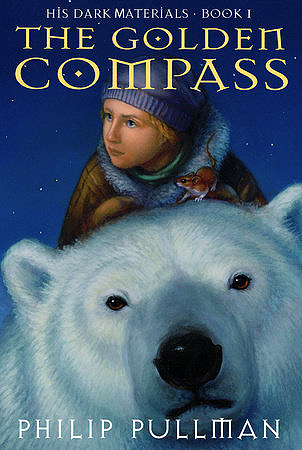
3. His Dark Materials Trilogy by Philip Pullman

119322There are aspects of this series I didn't agree with, but the world-building was phenomenal. I enjoyed the idea of parallel worlds, and the fact that there were consequences for traveling between them. Pullman incorporated so many fascinating elements into these worlds, including armored polar bears, spectres, dust (invisible, mysterious particles), and the remarkable items the books are named for: the Golden Compass, the Subtle Knife, and the Amber Spyglass. Most of all, I loved the concept of daemons, an external manifestation of a person's soul in the form of an animal. I remember wishing I had a constant companion who could provide consolation and guidance like Lyra had in Pantalaimon. And since daemons take a permanent form once their humans reach adulthood, I also had fun speculating what animal form would be a good match for me. The complexity of Pullman's world-building and the way it interacts with the story really made this series stand out when I read it as a teenager.


2. The Hollow Kingdom Trilogy by Clare Dunkle

142776I already posted about this series as part of my top 3 couples, but I have to give it another shout-out for world-building. In the first book, Kate and her sister discover that a civilization of goblins lives underneath a nearby hill. When Kate marries the goblin king, she goes through an interesting series of initiations and learns a great deal about goblin history and customs. In the second and third books, elves are also thrown into the mix, and I loved the way Dunkle handled the suspicions and misunderstandings between the races. I also liked how well developed the goblin and elvin societies were, incorporating everything from fertility issues to standards of beauty. The reader gets a balanced look at each race's point of view, giving thought-provoking perspectives on how divisions and biases form, and how they must be overcome in an interdependent world where each race needs each other to survive.


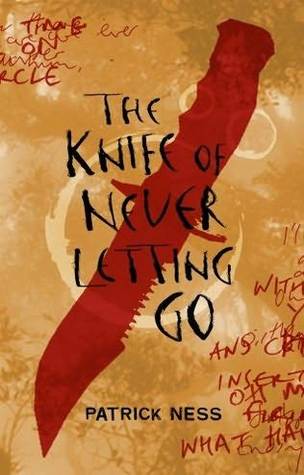
1. Chaos Walking Trilogy by Patrick Ness
2118745
I've been waiting for an opportunity to talk about these amazing books, and world-building is the perfect occasion! The series is based on a planet where a small civilization of humans has settled. In this New World, men can hear each others' thoughts, creating Noise. One of the things I enjoyed most about this trilogy was how integral Noise was to the entire plot. As one would imagine, having their thoughts known by everyone around them has a huge impact on how the characters act, especially when dealing with secrets. In addition, women's thoughts aren't audible (but they can hear Noise), a distinction that creates a great deal of conflict and division. Over the course of the books, the main character, Todd, learns to control his Noise, to the point that he can produce physical reactions in others just using his thoughts. Ness's world also has a complex history including relations with an indigenous species called Spackle. The way his world-building elements come together makes the reader fully experience his speculative world, yet creates moral dilemmas that are all too familiar.


Have you read any of these series? What are some of your favorite speculative worlds? What elements make a fantasy world stand out for you?


Thanks for reading!
Laurie

Saturday, September 10, 2016

Top 3 Speculative Explanations (Elizabeth)

Have you ever wondered how the Egyptians really built the pyramids? Or what happened to the famous mystery writer, Agatha Christie, when she disappeared? Or what happened to the lost colony of Roanoke? It's always fun to see reality clash with fiction, so let's see what our favorite genre has to say about these mysteries.

3. The Great Pyramids

We now know that the Egyptians didn't really build the pyramids. It was aliens! How do we know this? According to Fox News, the pyramids have mystery heat spots. Other sources say the pyramids almost perfectly face north, south, east, and west and that the sun sets perfectly between two of the pyramids. Must be the work of aliens.
Other theories suggested that Noah built the pyramids, Atlantis built the pyramids, and the pyramids foretell the date of the apocalypse.

2. The Disappearance of Agatha Christie
In 1926, Agatha Christie disappeared for 11 days. Her car was found abandoned and she was eventually found in a hotel with no recollection of what had happened.
According to Doctor Who, Agatha Christie's mind was linked to that of a giant, alien wasp via a necklace called the Firestone. The wasp disguised itself as a human. To keep his true identity a secret, he had to murder people. After discovering this and how she's linked to the wasp, Agatha Christie drives her car to a lake. If she dies, the giant wasp will die too, but then someone grabs the necklace and throws it into the lake. The wasp dives after it and drowns. Since the wasp and Agatha Christie are connected, she almost dies, but in the end instead of dying, she just has her memory wiped. Eventually, she wanders into a hotel and is found later by authorities.

1. The Lost Colony of Roanoke
On August 18, 1590, John White stepped foot into the abandoned colony of Roanoke. He had left three years earlier to get supplies. What was once a bustling colony was now abandoned. Even the houses had been neatly disassembled with no signs of struggle or destruction to the fort. The only two clues left behind were the word "Croatoan" carved into the post of the fort and the letters "CRO carved into a tree. The Croatoan were a peaceful group of Indians nearby. John White searched for the next 12 years, but never found the colonists.
But now we know what happened. According to the Zombie Research Society, it was obviously an undead plague sweeping through the colony.
Of course, this doesn't explain why the houses were disassembled and why the name of a nearby Indian tribe was carved into the fort...

What real life mysteries fascinate you?

Thanks for reading!
Elizabeth Newsom

Thursday, September 8, 2016

Relationships Beyond Romance: Recap and Your Opinion (Hannah)


Welcome to the Relationships Beyond Romance Index

The Relationships Beyond Romance series is now complete with a total of seven posts!  If you missed one, check it out!

1) Overt Friendships are friendships between non-related people that are characterized by positive interactions.

2) Covert Friendships also involve non-related people who genuinely care about each other, but to outsiders, the interactions between the two do not appear friendly because the characters consistently tease each other, compete with each other, or in some other way act unkindly to each other.

3) Parent-Child relationships are the first and most powerful, because they can prepare a child for a bright future or leave deep emotional scars.

4) Siblings have unique relationships.  Although every situation is different, the defining characteristic here is family.  Siblings generally don't choose each other, like friends do.  Whether through birth, marriage, adoption, or other circumstances, siblings are linked together forever through the special bond of family.

5) Sibling groups can be some of the most riveting bonds in fiction, and can even link together several series.

6) Mentors drive the inner growth of the main character and push him to grow and become a better person.

7) Partners and Companions are the most common types of non-romantic relationships.  Stories are often driven by the cooperation or conflict between teammates.

What did you think?

This is the first series on this blog, so how do you think it turned out?

a) Do you like having a series of posts on one topic, or would you rather have use cover many different topics?

b) Did the series feel too long, too short, or just right?

c) Did you like how the series posts were spread out so there were other posts in between, or would you rather have the series posts closer together?

d) Is there anything you particularly liked, or something we could improve?

e) Most importantly, would you be interested in seeing another series on this blog?

We would love to hear your input!

Thanks so much for reading!
~ Hannah

Saturday, August 27, 2016

Relationships Beyond Romance: Top 3 Companions (Hannah)

Hello, and welcome back to the ongoing series Relationships Beyond Romance!  This is the last real post in the series, so if you missed the first few posts, here is a short recap:

1) Overt Friendships are friendships between non-related people that are characterized by positive interactions.

2) Covert Friendships also involve non-related people who genuinely care about each other, but to outsiders, the interactions between the two do not appear friendly because the characters consistently tease each other, compete with each other, or in some other way act unkindly to each other.

3) Parent-Child relationships are the first and most powerful, because they can prepare a child for a bright future or leave deep emotional scars.

4) Siblings have unique relationships.  Although every situation is different, the defining characteristic here is family.  Siblings generally don't choose each other, like friends do.  Whether through birth, marriage, adoption, or other circumstances, siblings are linked together forever through the special bond of family.

5) Sibling groups can be some of the most riveting bonds in fiction, and can even link together several series.

6) Mentors drive the inner growth of the main character and push him to grow and become a better person.


Part Seven: Partners and Companions

Although partners are often friends (overt or covert), their interactions look different because they are framed by a different scenario.  Friends like each other (usually) and will often spend time together because they enjoy each other's company.  While friends are often loyal and would put themselves in great danger for each other, this only occurs in dire circumstances.  Partners and companions, on the other hand, have a relationship that is defined more by what they do than by how much they like each other.  Partners and companions spend large amounts of time together because they are working together to accomplish a goal.

One definition of "companion" is: a person who is frequently in the company of, associates with, or accompanies another.  Whenever I think of a companion, I think of the Fellowship of the Ring from the eponymous book by J.R.R. Tolkien.  In particular, Sam comes to mind as one of the most supportive, loyal, and caring companions I have ever seen.  However, in fantasy, any two or more characters who travel together or work together to accomplish a single goal can be considered companions.  They might be friends, rivals, enemies, or anything else, but at least temporarily, they are companions.

Generally, partners are permanent companions who expect to work together on many similar endeavors over a long period of time.  Companions, like the aforementioned Fellowship of the Ring, stay together as long as the goal has not been accomplished.  Once they have reached the end of their literal or figurative journey, they can go their separate ways.  These heroes often step up to help defeat evil, but once the main villain is defeated, they return to their normal lives.  Partners in fantasy are usually involved in a permanent evil-fighting occupation.  Police, spies, agents, and many more work in teams to fight each new evil as it arises.  These long-term partners often grow close, since they must trust each other with their lives and rely on each other to survive the regular dangerous encounters.

Onward to my Top 3 Partners and Companions!  Beware of spoilers below.

3. Shasta, Aravis, Bree, and Hwin (The Horse and His Boy, by C.S. Lewis)

This third book in the Chronicles of Narnia series is largely overlooked.  It differs greatly from the rest of the series in that it focuses on an entirely new cast of characters and setting.  Only Aslan is an important recurring character.

Shasta, a slave boy in the land south of Narnia known as Calormen, was sold to a cruel Calormene warlord.  Just before he was taken away, the magnificent horse Bree spoke, and revealed that he too was a slave, kidnapped at birth from Narnia, where talking horses were common.  Bree helped Shasta escape and head north for the land of Narnia.

Aravis, the young Tarkheena (noblewoman), was forced into an arranged marriage to an abominable man.  To avoid this, she and her talking mare Hwin fled from the high life of nobility.  On the way, they fled from a lion attack and met Shasta and Bree.  The four joined together to journey north toward Narnia, the horses' birthplace and a land of freedom for Shasta and Aravis.

Although canonically Shasta and Aravis marry once they reach adulthood, this book focuses on their childhood, therefore avoiding any romantic interaction between the two.  At this point in their lives, I would consider them companions.  They worked together to accomplish the common goal of reaching Narnia and finding freedom, and afterward, they were no longer bound to stay together.

I love the way Shasta, Aravis, Bree, and Hwin all have some admirable character qualities, but also must realize their flaws and learn to overcome them.  Aslan, the Christ figure in this series, forced each one to face his or her greatest weakness and choose to follow him instead.  Like a true gentleman, Shasta proved his courage when he defended Aravis from a lion attack.  Aravis herself learned to overcome her arrogance and selfishness in order to be able to care about others.  Bree similarly overcame his pride and found courage instead, and Hwin passed her test of humility as well.  I enjoyed reading about this group because they genuinely cared for each other and were always looking out for each other's best interests.

2. Thorin Oakenshield, Bilbo Baggins, and the dwarves (The Hobbit, J.R.R. Tolkien)

I know I use Lord of the Rings often as an example for my posts, so this time, I chose to include The Hobbit.  In this case, I am referring specifically to the book version, which (I believe) is better.  After all, the book is always better than the movie.

At the beginning of the book, neither Bilbo nor Thorin were happy with being forced into each other's company by Gandalf.  Thorin, a mighty warrior and dwarf king, viewed Bilbo as weak and simple because of his love for his proper home in the ground, food, tea, pipes, and a simple, quiet life.  Bilbo found Thorin too warlike, arrogant, and brash.  This led to many heated interactions between the two, which reached a head at several important points.  While in Rivendell as guests of the elves, Thorin was in no mood to cooperate with anyone, particularly Bilbo.  Later, the conflict increased again while traveling through Mirkwood and the incident with the elves in Thranduil's kingdom.  Finally, their conflict climaxed when Bilbo took the Arkenstone, Thorin's most treasured possession, and attempted to use it to keep Thorin and the hostile Men of Laketown and Elves of Mirkwood from going to war.  After Thorin was mortally wounded, he finally reconciled with Bilbo, resolving the long conflict.

This book showcases the fascinating tension that can arise from a companionship between two hostile people.  By forcing their heated tempers into the confined space of a traveling party, Tolkien masterfully used this conflict among "good guys" to weave a riveting story.

1. Captain America and Black Widow (Captain America: Winter Soldier, Averngers: Age of Ultron, and Captain America: Civil War)

For those of you who read my "Top 3 Marvel Movies" post, it should come as no surprise that at least one super hero team-up appeared on this list.  There are several important pairs in the series: Iron Man and War Machine/Iron Patriot/Rhodey, Captain America and Bucky, Captain America and Falcon, and Black Widow and Hulk come to mind.  However, I would file the first two under "friendships" and the last one under "romance."  I like the Captain America and Falcon pair (and the original comic version even more so), but it hasn't been developed as well as my favorite: Captain America and Black Widow, or Natasha Romanoff.

Captain America (Cap) and Romanoff are both full-time members of S.H.I.E.L.D. and later the Avengers, so I would consider them partners more than companions.  The true beauty of this relationship comes from their built-in conflict.  Yet, despite their great differences and many disagreements, they grow to have a strong respect for each other that seems mostly absent among the other team members.

Reaching adulthood in the midst of World War II, Captain America was the image of a true, noble hero.  Patriotic, sacrificial, and morally upright, he fought for goodness and freedom.  Even after he was torn from his time and thrust seventy years into the future, he acted selflessly and immediately resumed his quest to make the world a better place.  In contrast, Nathasha Romanoff was a Russian super spy, trained to ignore any moral lines and kill without remorse.  After several years of living this destructive lifestyle, she defected and joined S.H.I.E.L.D., an international peacekeeping force dedicated to dealing with alien and superhuman threats.  Nevertheless, she retained her amoral tactics and tendency toward lethal options.

Cap and Romanoff first met in The Avengers, but had little specific, meaningful interaction with each other.  It wasn't until Captain America: Winter Soldier that we saw their differences cause much conflict.  Nevertheless, they were able to work together to survive the fall of S.H.I.E.L.D. and foil the attempted Hydra takeover.  Later, in Avengers: Age of Ultron, they are seen leading the new group of Avengers, presumably together.  In Captain America: Civil War, they found themselves on opposite sides of the main issue: should superheroes be forced to be accountable for the destruction caused while they were attempting to save the world, and should the Avengers submit to an outside authority, who would dictate how and when they would be allowed to operate?  Romanoff reluctantly agreed to the oversight, since she never intended to become a vigilante.  However, Cap initially refused because he felt it would bog the Avengers down in politics when their real job was keeping the world safe.  It quickly turned into a personal issue for him, though, when agreeing to the oversight meant he would have to betray his longtime best friend Bucky.  Cap and Romanoff were on opposite sides throughout most of this movie, but the bond of respect and companionship was clearly strong.  In the end, Romanoff allowed Cap to escape capture, and was consequently labeled a traitor herself.

In my opinion, this partnership combines the desirable elements of Shasta and Aravis, and also Thorin and Bilbo.  The camaraderie and strong friendship keeps them together, but the conflict adds depth, conflict and meaning.  Cap and Romanoff share a difficult relationship because of their diametrically opposed viewpoints, but this only makes it more satisfying when they are able to transcend their differences and remember why they became friends in the first place.

What do you think?

Are you familiar with any of these characters?  In books and movies, do you prefer the teamwork that characterized The Horse and His Boy, the conflict and tension that characterized The Hobbit, or a combination of the two, like what we see in the Marvel movies?  Let us know in the comments!

~ Hannah


Thanks so much for reading!  Next time, I will officially wrap up the Relationships Beyond Romance series with a final Your Turn! post, and I hope you will all come give me your opinion on this blog's first attempt at creating a running series.  If you would like to read the other posts in this series, check out...

Part 1: Overt Friendships
Part 2: Covert Friendships
Part 3: Parent-Child Relationships
Part 4: Siblings
Part 5: Siblings (Again!)
Part 6: Mentors
Part 7: Partners and Companions


Attributions
The Horse and His Boy: http://d2arxad8u2l0g7.cloudfront.net/books/1388210968l/84119.jpg
The Hobbit: https://upload.wikimedia.org/wikipedia/en/a/a9/The_Hobbit_trilogy_dvd_cover.jpg
http://vignette2.wikia.nocookie.net/marvelcinematicuniverse/images/2/26/Cap_2_poster.jpg/revision/latest?cb=20140131142227
Captain America: Civil War: https://upload.wikimedia.org/wikipedia/en/5/53/Captain_America_Civil_War_poster.jpg

Thursday, August 18, 2016

Blood of Kings Trilogy (By Darkness Hid, To Darkness Fled, From Darkness Won) by Jill Williamson (Elizabeth)

The Blood of Kings trilogy is an epic medieval fantasy tale about Achan Cham, a young man who is a slave, and Vrell Sparrow, a young noblewoman disguised as a boy to avoid a forced marriage. They discover their ability to speak to and hear the minds of others, which is called bloodvoicing, as they battle back the darkness covering half the land of Er’Rets.


After reading about this book in snippets from The First 50 Pages by Jeff Gerke and Storyworld First by Jill Williamson, I knew I had to check it out. Just the concept of bloodvoicing was intriguing. The world is vividly three-dimensional, from its history of the murdered king and queen to the half dead tree in the middle of the land to the Cham, a fire-breathing bear.
Even when he’s nothing more than an abused slave, Achan is noble and honorable, protecting those weaker than himself. His heart is pure and his compassion is astounding. Though he makes several terrible mistakes, giving us a glimpse of his darker side, he never fails to return to Arman, the One God.
Vrell is 17, and her plight caught my interest right away. What would it be like to have to disguise yourself as a 14 year-old boy in order to avoid a miserable marriage? Her situation becomes increasingly precarious and interesting as she eventually joins Achan in his journey. Achan thinks she’s a weakling (since he’s under the impression that she is a he) and sees it as his responsibility to teach her how to fight and wrestle.
Eventually—much to my elation—their relationship does take a turn for the romantic. The romance is most prominent in the second book, but throughout the story, it’s often a huge source of motivation for the two of them, but the book is predominantly a medieval fantasy adventure. Though the romance is present, we don’t see enough of it, in my humble opinion ;) In case you can’t tell, I totally ship them!

Overall, I thoroughly enjoyed this book and seeing both of the characters grow over the course of the story. It has some wonderful examples of God (or Arman) and His love. (Note: The first book, By Darkness Hid, is free on Kindle!)


Do you like a thread of romance in a story? What are some of your favorite medieval fantasy epics?

Thanks for reading!

Tuesday, August 16, 2016

Relationships Beyond Romance: Mentors (Hannah)

Hello, and welcome back to the ongoing series Relationships Beyond Romance! If you missed the first few posts, here is a short recap:

1) Overt Friendships are friendships between non-related people that are characterized by positive interactions.

2) Covert Friendships also involve non-related people who genuinely care about each other, but to outsiders, the interactions between the two do not appear friendly because the characters consistently tease each other, compete with each other, or in some other way act unkindly to each other.

3) Parent-Child relationships are the first and most powerful, because they can prepare a child for a bright future or leave deep emotional scars.

4) Siblings have unique relationships.  Although every situation is different, the defining characteristic here is family.  Siblings generally don't choose each other, like friends do.  Whether through birth, marriage, adoption, or other circumstances, siblings are linked together forever through the special bond of family.

5) Sibling groups can be some of the most riveting bonds in fiction, and can even link together several series.


Part 6: Mentors

From Gandalf to Obi-Wan Kenobi to Professor Xavier and beyond, mentors are one of the most common of the character archetypes.  They fill a unique and necessary role in fiction, and just like their real-life counterparts, are often instrumental in the personal growth and development of their students.

What is a mentor?

Merriam-Webster defines a mentor as "a trusted counselor or guide; someone who teaches or gives help and advice to a less experienced and often younger person."  In fiction, mentors most often appear in stories featuring a character who is discovering new powers, a hidden destiny, or an inherited legacy or conflict.  These often take the form of "coming of age" stories, as is the case with Obi-Wan Kenobi, Yoda, and Luke Skywalker (Star Wars), Gandalf and Bilbo and Frodo Baggins (Lord of the Rings), or Professor Xavier and his X-Men (X-Men).  Mentors also feature when the main character must undergo a drastic change, whether it is a change in circumstances or in character.  Examples of this include Genie and Aladdin (Aladdin) and Dr. Erskine and Steve Rogers (Captain America: The First Avenger).

Why are mentors so common in fiction?

Many stories, especially the aforementioned "coming of age" and "change" stories, feature the main character's personal growth. She will learn an important lesson and become a better person because of it.    The mentor often plays a key role in showing the main character the way to improvement.  He is the one with the knowledge, wisdom, and tools that will allow the main character to learn her lesson, defeat the antagonist, and achieve her goal.

Unfortunately, there is a catch in this simple scenario.  In order for the main character to prove her progress, she must show she doesn't need the mentor's help anymore.  Many writers give the main character a chance to act on her own by removing the mentor altogether.  The most well-known and emotional way to accomplish this is to have the mentor die just before the climax.  Gandalf, Obi-Wan, Yoda, Dr. Erskine, and many, many more have perished this way.  It is so common that TV Tropes created a page for it, and hilariously dubbed this phenomenon the Mentor Occupational Hazard.  In other cases, the mentor is simply kidnapped, disappears, or is busy elsewhere, still giving the hero a chance to act on her own.

Whatever happens to the mentor once his role is fulfilled, he is critically important because he often performs the function of an "Impact Character."  The antagonist is responsible for the surface conflict in a story, but the impact character has a deeper function.  The impact character is responsible for the inner conflict that ultimately drives the protagonist to grow or become a better person in some way.  Every story needs an impact character.  Although the impact character isn't always an older and wiser teacher, using a mentor is one of the safest, easiest ways to help guide a protagonist toward truth.

Do you have any examples?

1) Lord of the Rings

It is virtually impossible to talk about famous fictional mentors without mentioning Gandalf the Grey from The Hobbit and Lord of the Rings.  Gandalf played the role of mentor for both Bilbo and Frodo Baggins, as well as many other characters.  In The Hobbit, he is the one who "encouraged" Bilbo to join the adventure in the first place, and consistently helped to guide him as they quested toward the Lonely Mountain.

Later, in The Fellowship of the Ring, Gandalf was the one who taught Frodo the importance of the One Ring and sent him on his quest to destroy it.  Gandalf accompanied Frodo and the rest of the Fellowship for most of the first book, but was apparently killed in the Mines of Moria by the Balrog, just in time to leave Frodo all on his own for the climax.  Without Gandalf, Frodo was forced to face the corrupted Boromir alone, and ultimately escape with Sam.  Gandalf reappeared in The Two Towers as Gandalf the White, an even more powerful wizard than before.  When Pippin looked into the palantir, Sauron believed Pippin was the hobbit carrying the One Ring.  To protect Pippin, Gandalf kept the hobbit close to him for the rest of the book, until Pippin pledged his service to the Steward of Gondor.

2) Screwtape Letters

In this book by C.S. Lewis, we see an entirely different sort of mentor.  Although most people consider mentors to be good, there are many notable exceptions, including Emperor Palpatine/Darth Sidious (Star Wars), Sebastian Shaw (X-Men: First Class), and Screwtape (Screwtape Letters).  Lewis wrote Screwtape Letters as a series of letters from the older, more experienced demon Screwtape to his nephew Wormwood.  Screwtape advised Wormwood on how to ensure a particular man, known as "The Patient," does not find Christ and therefore eternal salvation.  Lewis used this structure to emphasize different tactics evil forces use to turn us away from God, all through the lens of a unique premise.

Screwtape functioned as a mentor to Wormwood, albeit a terrible one.  Some mentors can be genuinely evil and yet be supportive, wise mentors who prepare their students to excel in the future.  Screwtape was not like this.  He encouraged Wormwood to pursue evil and attempt to bring others down with him, expressed no actual affection for his nephew, and when Wormwood ultimately failed and was condemned to death at the hands of the other demons, Screwtape was the most eager to kill him.   Screwtape is a classic mentor and a fantastic example of exactly what a mentor should not be.

3) The Key of Living Fire

In this third book in the Sword of the Dragon series by Scott Appleton, Specter was guided through his difficult spiritual journey by the great white dragon Albino and the prophet Patient.  In the prologue to the first book, Specter was the leader and mentor for the elite warriors that served Albino, but when they all betrayed him for their own personal gain, Specter grew bitter.  Two of them died immediately, another was later killed by Albino's daughters, but the two remaining warriors turned to dark magic in order to bolster their power.  Specter spent much of The Key of Living Fire chasing his former pupil Auron.  If Auron wouldn't repent of his evil ways, Specter would kill him.  After all, Auron was responsible for the deaths of hundreds of innocents, and fully intended to continue his rampage of destruction.

Even though Specter was a godly man, he became blinded by his own anger.  His obsession with bringing down his former students consumed him.  Albino was not able to interfere with the situation directly, but he and Patient worked hard to show Specter a better path.  Auron could not be allowed to continue, but if Specter let his anger get out of control, he would no longer be doing God's work.  He needed to remember that God was the ultimate judge, and find the peace that comes with surrender to God's control.  Patient and Albino were devoted mentors to Specter and brought him closer to God even as Specter's own former students followed darkness.

Thanks for reading!

Have you noticed how common mentors are in fiction?  What are some of your favorite mentor relationships?  Do you have a mentor, or are you mentoring someone else?  Let us know in the comments!

~ Hannah


Next time, I will finish up the Relationships Beyond Romance series with a final Top 3s post.  If you would like to read the other posts in this series, check out...

Part 1: Overt Friendships
Part 2: Covert Friendships
Part 3: Parent-Child Relationships
Part 4: Siblings
Part 5: Siblings (Again!)

Other Resources
Dramatica has a comprehensive, in-depth article about the eight major character archetypes.
K.M.Weiland gives a shorter and more reader-friendly post that covers the same archetypes, plus one more.
Janice Hardy also complied a list of important characteristics of a mentor.

Attributions
Professor X: https://upload.wikimedia.org/wikipedia/en/c/c9/Xav-lopr.png
Obi-Wan Kenobi: http://vignette4.wikia.nocookie.net/starwars/images/4/4e/ObiWanHS-SWE.jpg/revision/latest/scale-to-width-down/500?cb=20111115052816
Gandalf: http://vignette2.wikia.nocookie.net/lotr/images/8/8d/Gandalf-2.jpg/revision/latest?cb=20130209172436
Screwtape Letters: https://images-na.ssl-images-amazon.com/images/I/81EDnN1NR2L.jpg
The Key of Living Fire: http://d.gr-assets.com/books/1344605459l/13185621.jpg