Showing posts sorted by relevance for query star wars. Sort by date Show all posts

Tuesday, January 2, 2018

Writing Lessons from Star Wars: The Last Jedi (Lizzie)

Probably like many of you, I went to watch Star Wars: The Last Jedi over Christmas break. Don't hate me, but I must admit being disappointed with it--I wasn't expecting to ask myself "when will this movie be over?" while watching Star Wars! Don't get me wrong, I didn't dislike it--I actually did like it, but was still somewhat disappointed.

As a writer should, I considered what I did and didn't like about the story and how I could apply those lessons to my writing. Here are some takeaways. Note: There are some spoilers. Many references are to the original three films, however.

Lessons from Star Wars: The Last Jedi

1) Humor is huge

I loved the opening scene where Poe tricks a First Order leader during the radio call, pretending not to hear the officer's replies in order to buy time. It was bold, impudent, and perfectly fit Poe's character.

Humor of various types was scattered throughout the movie. Star Wars is known for what I think of as "creature humor" (the mechanical mice and R2D2's reactions and so on) as well as the arrogance and sarcasm of some characters (Han Solo's arrogance, Leia's calling Chewy a walking carpet), and situational humor (Han, Luke, and the rest "escaping" into a garbage compactor in A New Hope). This movie also employed humor that was less subtle, obvious ploys for laughs like the standard "I don't think they like me very much." "I can't imagine why." routine. This begs the question, what type of humor fits my voice or my genre?

Cute critters like these from The Last Jedi add humor to the story.

Take away: Humor is usually a plus. The caveat is that the humor should match the expected tone of the story. Should the humor be subtle, clever, slapstick? And what is the balance of humor to seriousness? Is the story meant to be humorous overall or does the humor help keep the violence or sadness from overwhelming? (For more on humor, read K.M. Weiland's post How to Write Funny, which is based on Thor: Ragonk.)

2) Have a Hero; it's expected

It took a loooong time, but Luke finally showed up to save the day. We were expecting it; we would have been very, very angry if he hadn't. Also, Rey didn't turn to the dark side, and Poe managed some pretty good tricks too. This is good.
Luke Skywalker

Takeaway: If a hero and heroic actions are expected in your story, you'd better have them. If your genre calls for something, like a happy ending or a dramatic sacrifice or romance, be sure to give it to your readers. Don't be too stingy with small payoffs along the way or make your readers wait too long. The longer you make them wait, the bigger the pay off had better be.

3) Inside or Out: Action or change of heart

For a movie titled The Last Jedi, Rey and Luke (a possible new Jedi and an old Jedi) add little to the overall storyline of saving the rebel forces. Rey was supposed to find Luke, get some training, and bring him back. Instead, they are hidden away on a remote island arguing most of the movie, with Luke being difficult about returning to the rebels because of an issue in his past. This is all tied to Kylo Ren and his internal conflicts. So the jedi characters are all stuck doing "inside stuff" for a good portion of the movie. Drama instead of the action/adventure I expect from a Star Wars movie. Rey does go off on a separate quest with some action, but even though this results in the death of a major bad guy, don't make any difference in the goal of saving the rapidly dwindling rebel forces. Leia, Poe, Finn, and new character Rose, are responsible for that plot line, which does have the expected action/adventure.

The conflicted, highly troubled Kylo Ren, subject of much of Rey and Luke's time together.

Takeaway: Know your reader's expectations about the balance of action and introspection/convince-the-bad-guy-to-change. Are your characters doing what they are expected to do? 

4) Streamline your plot line: hanging around too long could be fatal

The Last Jedi was two hours and thirty minutes long. I think they could have chopped off thirty minutes easy. This movie, as some stories do, felt like beads on a string--one small goal/fight after another after another, getting bigger, but when you think you it should be time to wrap it up, it just keeps going. Yes, the overall goal was to save the rebel forces, but there were so many side jaunts it didn't feel like a true goal. Finn and Rose and the droid go on a quest, but they didn't actually succeed, so what was the point? (This is Star Wars; I expect the main characters to succeed. Or was the quest simply "fun enough" to justify it? But that's a subject for another day.) There's Rey/Luke/Kylo Ren's plot line that didn't really affect the rest of the story until the end and was mostly about internal conflict. There was a mutiny of sorts among the rebels that could have be avoided if purple-haired lady had answered Poe's question with "Yes, I have a plan to protect us and this is it..." In my opinion, Poe's mutiny was adding unnecessary drama and length.

Visiting a jazz club-type setting is practically a given in a Star Wars 
movie, but like any setting or plot point, it must fit organically into the overall
storyline. 


Takeaway: Before adding a plot point, subplot, battle, trouble between hero and heroine, etc., ask if it is really necessary. Are you simply adding drama or length? Are you adding subplots merely to utilize characters that don't fit into the main storyline? Is a subplot entertaining enough to justify adding the length to an already long story? Could a very simple communication (which any rational person would make) have prevented the episode (like Poe's mutiny)? Readers hate this type of drama, or at least I do; figure out a better way to up the tension or move the story along.

5) Death and Destruction

An epic fantasy is expected to have a lot more death and destruction than say a fairy tale or a romance. Even though Star Wars is an epic fantasy, I wasn't expecting quite so much loss. When Catniss's sister dies in The Hunger Games, the reaction is "wasn't the point keeping her alive?". You have to consider whether the losses will make readers wonder if the characters failed. It's okay to have national or cosmic success in defeating the bad guys but still have characters suffer great personal loss, just consider whether you would accept it if you were the reader. 

Likable droids add to the humor and help us
tolerate the death and destruction of action movies.

Take away: Consider the level of death, destruction, or cruelty your readers expect and care to deal with. Near total destruction, rape, death of certain characters (beloved ones or children) are deal- killers to some readers, so just know your audience and be okay with some readers disliking your stories.

6) So many characters, so little time together

Maybe those who've read all the Star Wars books and watched the movies multiple times knew who all the characters in this movie were, but it seemed to me there were way more characters than I cared to keep up with. Was I really supposed to remember that Storm Trooper Finn has a showdown with? Enough to care for a showdown?

More importantly to me, we didn't get a building of the relationship between Poe, Rey, and Finn, which I was hoping for based on the tight connection between Leia, Luke, and Han. I was hoping for friends adventuring together; that's not what I got.

Poe off to blast something. Alone.
Take away: Do your readers want action or character interaction? How can you balance them? How many characters does your story really need? Which ones will your readers remember for later interactions?

7) Replay: we've seen this before

If you're doing a series, be conscious and careful of reusing themes, settings, or events. A trip to a jazz club-type place, a soul-seeking jaunt to a creepy cave, a foolish mission to turn Dark Vader or Kylo Ren away from the dark side. Been there, done that in the original three and again in The Last Jedi. Good or bad? Die-hard fans or new watchers may love the hat-tip to the old, or just be ignorant of the reuse of material. The in-betweens may not be enamored enough to enjoy the repetition.

Take away: Be wise in your reuse of settings, events, and character-types. It can enhance the story or appear like a lack of creativity.


Have you seen The Last Jedi? What did you think of it? Or what were some writing tips you picked up from a recent book or movie?

Thursday, January 14, 2016

Poll: Best Movie of 2015 (Laurie)


Before we get too far into the New Year, let’s take a moment to reflect back with Lands Uncharted’s very first poll!  What was your favorite movie that came out in 2015?  Vote for one of the options listed, or feel free to add your own write-in:
File:YfLuLZi.jpg
a.) Jurassic World
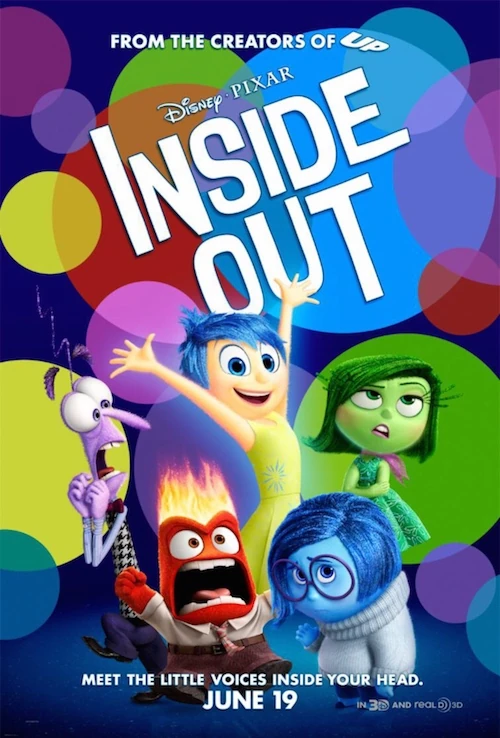
b.) Inside Out
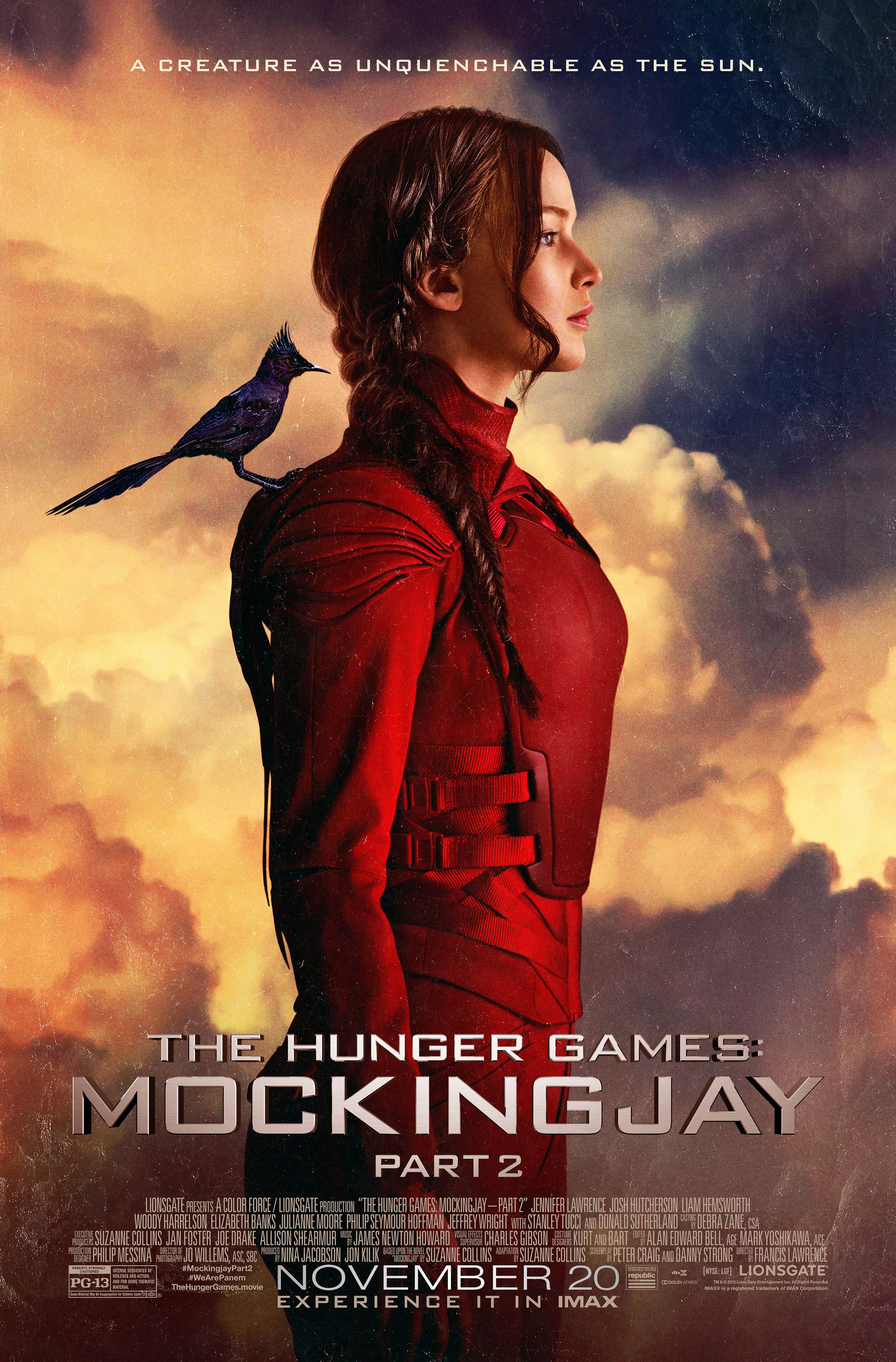
c.) The Hunger Games: Mockingjay - Part 2
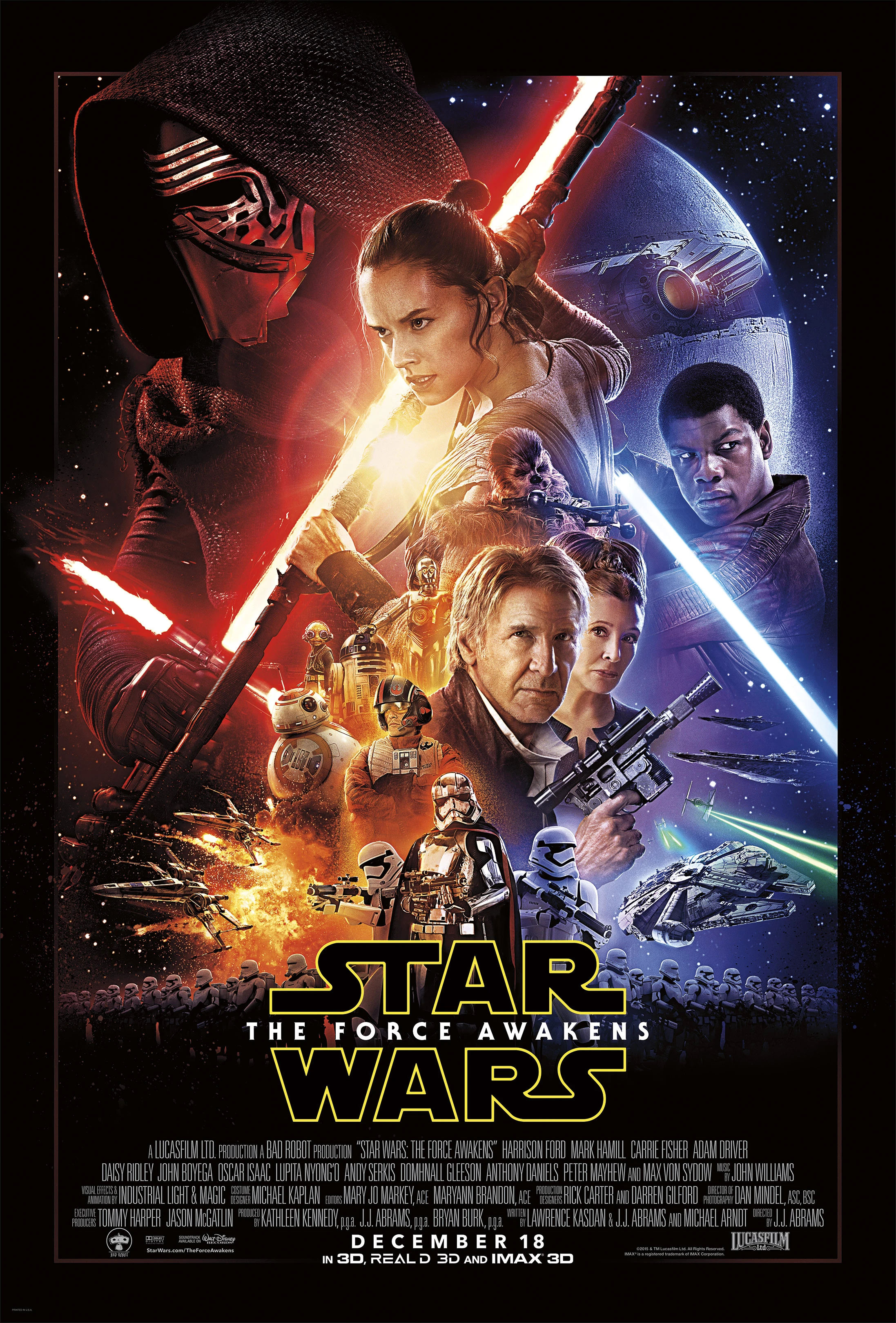
d.) Star Wars: The Force Awakens

File:Star-Wars-The-Force-Awakens-POSTER.jpegFile:Inside-Out-Official-Poster.jpgFile:Mockingjay2-bluejayposter.jpg


Make sure to check back in a few days to see the results!

See you next time!
Laurie

P.S. With two young kids, my husband and I rarely make it to the movie theater, so we're counting on you to help us prioritize which 2015 movies we need to make sure to check out :)

Attributions:
Jurassic World: http://jurrassic-wolrd.wikia.com/wiki/File:YfLuLZi.jpg
Inside Out: http://insideout.wikia.com/wiki/File:Inside-Out-Official-Poster.jpg
The Hunger Games: Mockingjay - Part 2: http://thehungergames.wikia.com/wiki/File:Mockingjay2-bluejayposter.jpg
Star Wars: The Force Awakens: http://starwarsfans.wikia.com/wiki/File:Star-Wars-The-Force-Awakens-POSTER.jpeg

    Saturday, December 16, 2017

    Top Three Graphic Novel Choices to Gift for Christmas

    Good Morning! In case you are, like me, still trying to find something fun for the hard-to-please tweens and teens on your Christmas list, there are several graphic novel sets out lately that are a fun way to experience fantasy.


    3. Star Wars: The Original Trilogy. This graphic novel would be great for the people in your life who are excited to see the newest Star Wars: The Last Jedi, (the newest Star Wars movie that came out yesterday!), but who are too young to really understand all the backstory.


    2. Flashpoint. As a fan of the DC Universe, I am excited about this re-release of a miniseries that imagines an alternate universe for Barry Allen. Barry is my favorite DC hero because he always does the right thing and has a strong moral compass. This series by Geoff Johns and Andy Kubert, like other DC Comics, is bright, colorful, and full of action, but do be sure to flip through and make sure the ones you are interested in are appropriate for your intended recipient. 


     1. Amulet. By Kazu Kibuishi, the Amulet series follows Emily and her brother, Navin, through moving, having to rescue their kidnapped mom, and realizing Emily is a Stonekeeper. Not only does Emily need to rescue her mom, the weight of her world and the new worlds she discovers hangs in the balance. Full of endearing characters and plot twists, I also appreciate the nuggets of wisdom hidden throughout. 

    What is your favorite graphic novel? Leave a comment and let us know!

    Friday, July 22, 2016

    Interview with John Otte, Author of Failstate and Ministrix Series (Erin)


    I am so excited to welcome John Otte to Lands Uncharted this

    week! Author of the Failstate series and the Ministrix series, John

     is also a pastor serving a congregation in Missouri.

    Laurie and I had the pleasure of listening to John tell some funny

     stories a few months ago, at our local ACFW (American

     Christian Fiction Writer’s) meeting, just before he moved.

    Shortly after that meeting, I purchased Failstate and enjoyed it

     immensely. Failstate is an anti-superhero

    book written with a comic-book flair. You can read my review of the Failstate series here.

    Let’s hear from John about his two series, as well as his books in the works!


    1. Thank you for visiting, John! First, can you tell us a little bit about yourself?

    Absolutely! I’m a Minnesota-transplant to the Kansas City area. I’m a colossal

    geek, a father, husband, author, gamer, and child of God (but not necessarily in

    that order).

    2. When and why did you start writing?

    I’ve been writing in some way, shape, or form pretty much as long as I can remember. When I was in

    elementary school,I created horribly drawn comic books. In junior high, I “graduated” to poorly

    written novels. I’ve tried my hand at stage plays and screenplays. But I’ve

    always come back to writing novels. There’s just something about writing a book

    that resonates with me.

    3. You recently moved from South Saint Paul, Minnesota (my hometown) to Blue

    Springs, Missouri. What is the most striking difference between the two cities? 


    The heat! Seriously! My family moved in early February and, within the first week,

    we hit 70 degrees! And for the past two weeks, we’ve had temperatures in the

    high 90s. People keep telling me that this has been an unusually warm year,

    which makes me all the more nervous as July and August are approaching.

    Related to that, while we were moving, one of the local movers found my roof

    rake in our garage. He asked if I ever worked with concrete. When I said it was

    a roof rake, he wondered aloud if it was for scraping off shingles. When I

    explained what it’s really used for, he looked so confused!

    4. Do you have any tips on moving you could give our readers? 

    Don’t do it in winter if at all possible, especially if you’re moving to or from Minnesota. The last two

    times my family has moved, it’s been in winter (once in December, and this last

    time in February). I keep promising my wife we’ll never have to do that again,

    but I’ve already broken my word once.

    5. You’ve written the Failstate trilogy, two supplemental Failstate books, and the two

    Ministrix books so far. You’ve submitted another book and are working on the outline

    of yet another! Tell our readers a little bit about what they can expect from the

    Failstate trilogy as well as the Ministrix series. 

    Purchase on Amazon

    In Failstate, you can find the adventures of a teenage superhero who saves

     the world in spite of his lunk of a big brother. With the Ministrix series, it’s

    a space opera (think Star Trek) about a future where the church has become

    extremely legalistic and violent. The only alternative is an atheist regime

    that’s hostile to all expressions of faith. The stories in that series are of

    people who are caught between the two in some way.

    6. When you think of all the characters you’ve written, is there one you like the best, or

    one that you relate to the most? Why?


    Purchase on Amazon
    Probably the one I like best is Etzal’el from the Failstate series. I actually

    created him in a computer game many years ago and then “imported” him

    into the series. He’s just a lot of fun. The one I relate to most, though, is

    Failstate. I think I put a lot of myself into him when I created him as a

    character.

    7. Besides being an author, you are also a pastor. How does being a 

    pastor affect your fiction writing? 

    In some ways, it makes it difficult, simply from a time

    management perspective. Being a pastor is not a 9-to- 5 type of job; it’s very

    difficult to eke out the time I need to actually write. But it also gives me an

    interesting perspective since I write Christian fiction. Lutherans don’t quite see

    eye to eye with a lot of other denominations, so I’ve tried to bring a different

    perspective to my stories.

    8. Here at Lands Uncharted, we love Top 3 lists. Could you humor us and give us your

    list of Top 3 fantasy lands you would like to visit? 


    Okay: 3) The Star Wars universe. I’ve been a Star Wars fan for almost as long as I can remember,

    and I would love to be able to visit that world for at least a little bit, preferably as a

    Jedi (although not during the Clone Wars, for obvious reasons).

    2) The Star Trek universe, mostly because I’ve always wanted to try out a holodeck and see

    what it can do.

    And finally, 1) Brandon Sanderson’s Mistborn world. If you

    haven’t read these books, you absolutely should. Sanderson is a master at

    fantasy worldbuilding, and it is so incredibly cool.

    9. What is next for John Otte? Can you tell us a little bit about your current work in

    progress? 


    Well, right now I’m kind of between projects. I’m waiting to hear from

    my publisher about one idea and, while I’m waiting, I’m taking a stab at my first

    fantasy novel (at least, my first in a while; it’s been ten years since I’ve tried

    this). The story at my publisher is another Ministrix book and tells the story of a

    crew of thieves and grifters trying to steal the most sacred object in that

    universe. The one I’m working on right now is the story of a young woman

    who’s part of an acting troupe and who desperately wants to be a hero, either on

    stage or in real life.

    10. Would you leave us with a favorite line or passage from one of your books? 

    Boy, that’s a tough one. But if I have to choose, I’d go with the opening lines of

    Failstate: “Being a superhero was hard enough. Being one on reality television…

    Why had I thought this was a good idea?”

    Saturday, January 9, 2016

    Top 3 Villains (Elizabeth)

    Villains are so much fun, especially when you have a reason to like them, or at least be sympathetic towards them. So, here are my top 3:


    3. Gaston


    If I had to describe him in a word, it’d be somewhere between conceited and narcissistic. His vanity is absolutely hilarious. Though he’s good for laughs, he falls rather flat, which is why he’s at the bottom of my favorites list.

    Belle: Gaston, you are positively primeval.
    Gaston: Why thank you, Belle. What would you say if you and I took a walk over to the tavern and took a look at my trophies?
    Belle: Maybe some other time.

    Gaston: Lefou, I'm afraid I've been thinking...
    Lefou: A dangerous pastime?
    Gaston: I know.

    Gaston: [singing] Here in town there's only she, who is beautiful as me, so I'm making plans to woo and marry Belle.

    Gaston, Lefou: No one plots like Gaston.
    Gaston: Takes cheap shots like Gaston.
    Lefou: Plans to persecute harmless crackpots like Gaston!

    Gaston: It's not right for a woman to read. Soon she starts getting ideas, and thinking…

    Gaston: I'd like to thank you all for coming to my wedding. But first I'd better go in there and propose to the girl.

    Like I said, shallow but hilarious. I couldn’t help but include him ;)

    2. Levana


    You won’t truly be able to understand Levana until you read Fairest by Marissa Meyers. I was reluctant to read this, but there weren’t any more Lunar Chronicle books coming out for a while, so I figured I’d try it. You can’t help but feel a little sympathetic towards her after seeing what her life was like.


    1. Boba Fett


    He is my favorite Star Wars character. There’s a series about him as a kid, starting with The Fight to Survive by Terry Bisson and the ones later in the series are by Elizabeth Hand. Boba is noble and honorable. You’ll see him striving as a 10-year-old boy to follow in his father’s footsteps, while fending for himself in a vast galaxy filled with deceit and danger. He’s is the epicest (I know that's not a word--but it should be) Star Wars character ever!

    Alright, I’ve shown you my favorite villains. Now it’s your turn. Who are your favorite villains and why?

    Thank you for reading!

    -Elizabeth


    Attributions

    Gaston: http://disney.wikia.com/wiki/File:Beauty-and-the-beast-disneyscreencaps.com-541.jpg

    Levana: http://lunarchronicles.wikia.com/wiki/File:Fairest_Cover.jpeg

    Boba Fett: By Richie S from Brooklyn, NY, United States (New York Comic Con 2014 - Boba Fett) [CC BY 2.0 (http://creativecommons.org/licenses/by/2.0)], via Wikimedia Commons

    Tuesday, August 16, 2016

    Relationships Beyond Romance: Mentors (Hannah)

    Hello, and welcome back to the ongoing series Relationships Beyond Romance! If you missed the first few posts, here is a short recap:

    1) Overt Friendships are friendships between non-related people that are characterized by positive interactions.

    2) Covert Friendships also involve non-related people who genuinely care about each other, but to outsiders, the interactions between the two do not appear friendly because the characters consistently tease each other, compete with each other, or in some other way act unkindly to each other.

    3) Parent-Child relationships are the first and most powerful, because they can prepare a child for a bright future or leave deep emotional scars.

    4) Siblings have unique relationships.  Although every situation is different, the defining characteristic here is family.  Siblings generally don't choose each other, like friends do.  Whether through birth, marriage, adoption, or other circumstances, siblings are linked together forever through the special bond of family.

    5) Sibling groups can be some of the most riveting bonds in fiction, and can even link together several series.


    Part 6: Mentors

    From Gandalf to Obi-Wan Kenobi to Professor Xavier and beyond, mentors are one of the most common of the character archetypes.  They fill a unique and necessary role in fiction, and just like their real-life counterparts, are often instrumental in the personal growth and development of their students.

    What is a mentor?

    Merriam-Webster defines a mentor as "a trusted counselor or guide; someone who teaches or gives help and advice to a less experienced and often younger person."  In fiction, mentors most often appear in stories featuring a character who is discovering new powers, a hidden destiny, or an inherited legacy or conflict.  These often take the form of "coming of age" stories, as is the case with Obi-Wan Kenobi, Yoda, and Luke Skywalker (Star Wars), Gandalf and Bilbo and Frodo Baggins (Lord of the Rings), or Professor Xavier and his X-Men (X-Men).  Mentors also feature when the main character must undergo a drastic change, whether it is a change in circumstances or in character.  Examples of this include Genie and Aladdin (Aladdin) and Dr. Erskine and Steve Rogers (Captain America: The First Avenger).

    Why are mentors so common in fiction?

    Many stories, especially the aforementioned "coming of age" and "change" stories, feature the main character's personal growth. She will learn an important lesson and become a better person because of it.    The mentor often plays a key role in showing the main character the way to improvement.  He is the one with the knowledge, wisdom, and tools that will allow the main character to learn her lesson, defeat the antagonist, and achieve her goal.

    Unfortunately, there is a catch in this simple scenario.  In order for the main character to prove her progress, she must show she doesn't need the mentor's help anymore.  Many writers give the main character a chance to act on her own by removing the mentor altogether.  The most well-known and emotional way to accomplish this is to have the mentor die just before the climax.  Gandalf, Obi-Wan, Yoda, Dr. Erskine, and many, many more have perished this way.  It is so common that TV Tropes created a page for it, and hilariously dubbed this phenomenon the Mentor Occupational Hazard.  In other cases, the mentor is simply kidnapped, disappears, or is busy elsewhere, still giving the hero a chance to act on her own.

    Whatever happens to the mentor once his role is fulfilled, he is critically important because he often performs the function of an "Impact Character."  The antagonist is responsible for the surface conflict in a story, but the impact character has a deeper function.  The impact character is responsible for the inner conflict that ultimately drives the protagonist to grow or become a better person in some way.  Every story needs an impact character.  Although the impact character isn't always an older and wiser teacher, using a mentor is one of the safest, easiest ways to help guide a protagonist toward truth.

    Do you have any examples?

    1) Lord of the Rings

    It is virtually impossible to talk about famous fictional mentors without mentioning Gandalf the Grey from The Hobbit and Lord of the Rings.  Gandalf played the role of mentor for both Bilbo and Frodo Baggins, as well as many other characters.  In The Hobbit, he is the one who "encouraged" Bilbo to join the adventure in the first place, and consistently helped to guide him as they quested toward the Lonely Mountain.

    Later, in The Fellowship of the Ring, Gandalf was the one who taught Frodo the importance of the One Ring and sent him on his quest to destroy it.  Gandalf accompanied Frodo and the rest of the Fellowship for most of the first book, but was apparently killed in the Mines of Moria by the Balrog, just in time to leave Frodo all on his own for the climax.  Without Gandalf, Frodo was forced to face the corrupted Boromir alone, and ultimately escape with Sam.  Gandalf reappeared in The Two Towers as Gandalf the White, an even more powerful wizard than before.  When Pippin looked into the palantir, Sauron believed Pippin was the hobbit carrying the One Ring.  To protect Pippin, Gandalf kept the hobbit close to him for the rest of the book, until Pippin pledged his service to the Steward of Gondor.

    2) Screwtape Letters

    In this book by C.S. Lewis, we see an entirely different sort of mentor.  Although most people consider mentors to be good, there are many notable exceptions, including Emperor Palpatine/Darth Sidious (Star Wars), Sebastian Shaw (X-Men: First Class), and Screwtape (Screwtape Letters).  Lewis wrote Screwtape Letters as a series of letters from the older, more experienced demon Screwtape to his nephew Wormwood.  Screwtape advised Wormwood on how to ensure a particular man, known as "The Patient," does not find Christ and therefore eternal salvation.  Lewis used this structure to emphasize different tactics evil forces use to turn us away from God, all through the lens of a unique premise.

    Screwtape functioned as a mentor to Wormwood, albeit a terrible one.  Some mentors can be genuinely evil and yet be supportive, wise mentors who prepare their students to excel in the future.  Screwtape was not like this.  He encouraged Wormwood to pursue evil and attempt to bring others down with him, expressed no actual affection for his nephew, and when Wormwood ultimately failed and was condemned to death at the hands of the other demons, Screwtape was the most eager to kill him.   Screwtape is a classic mentor and a fantastic example of exactly what a mentor should not be.

    3) The Key of Living Fire

    In this third book in the Sword of the Dragon series by Scott Appleton, Specter was guided through his difficult spiritual journey by the great white dragon Albino and the prophet Patient.  In the prologue to the first book, Specter was the leader and mentor for the elite warriors that served Albino, but when they all betrayed him for their own personal gain, Specter grew bitter.  Two of them died immediately, another was later killed by Albino's daughters, but the two remaining warriors turned to dark magic in order to bolster their power.  Specter spent much of The Key of Living Fire chasing his former pupil Auron.  If Auron wouldn't repent of his evil ways, Specter would kill him.  After all, Auron was responsible for the deaths of hundreds of innocents, and fully intended to continue his rampage of destruction.

    Even though Specter was a godly man, he became blinded by his own anger.  His obsession with bringing down his former students consumed him.  Albino was not able to interfere with the situation directly, but he and Patient worked hard to show Specter a better path.  Auron could not be allowed to continue, but if Specter let his anger get out of control, he would no longer be doing God's work.  He needed to remember that God was the ultimate judge, and find the peace that comes with surrender to God's control.  Patient and Albino were devoted mentors to Specter and brought him closer to God even as Specter's own former students followed darkness.

    Thanks for reading!

    Have you noticed how common mentors are in fiction?  What are some of your favorite mentor relationships?  Do you have a mentor, or are you mentoring someone else?  Let us know in the comments!

    ~ Hannah


    Next time, I will finish up the Relationships Beyond Romance series with a final Top 3s post.  If you would like to read the other posts in this series, check out...

    Part 1: Overt Friendships
    Part 2: Covert Friendships
    Part 3: Parent-Child Relationships
    Part 4: Siblings
    Part 5: Siblings (Again!)

    Other Resources
    Dramatica has a comprehensive, in-depth article about the eight major character archetypes.
    K.M.Weiland gives a shorter and more reader-friendly post that covers the same archetypes, plus one more.
    Janice Hardy also complied a list of important characteristics of a mentor.

    Attributions
    Professor X: https://upload.wikimedia.org/wikipedia/en/c/c9/Xav-lopr.png
    Obi-Wan Kenobi: http://vignette4.wikia.nocookie.net/starwars/images/4/4e/ObiWanHS-SWE.jpg/revision/latest/scale-to-width-down/500?cb=20111115052816
    Gandalf: http://vignette2.wikia.nocookie.net/lotr/images/8/8d/Gandalf-2.jpg/revision/latest?cb=20130209172436
    Screwtape Letters: https://images-na.ssl-images-amazon.com/images/I/81EDnN1NR2L.jpg
    The Key of Living Fire: http://d.gr-assets.com/books/1344605459l/13185621.jpg

    Friday, May 27, 2016

    Interview with A.J. Cattapan

    I am thrilled to welcome A.J. Cattapan to Lands Uncharted today! She is the award-winning author of Angelhood and 7 Riddles to Nowhere, which releases this summer! A.J. took the time to answer some questions for us about herself and her writing:


    Tell us a little bit about yourself.

    I’m an award-winning author, speaker, and middle school English teacher living and working in Chicagoland, but I like to spend my summers in Italy. While trying to balance teaching, writing, and an increasingly active speaking schedule, I’m also working on a doctorate in curriculum and instruction. That is actually what is bringing me to Italy this summer. I’ll be studying how they are handling immigrant and refugee children for a class I’m taking at Loyola University’s Rome Center. When I’m not busy doing all the afore-mentioned, I love to bake, but there hasn’t been much time for that lately!


    What prompted you to start writing? Are you one of those authors who knew you were meant to write since childhood, or did it come as a discovery later in life?

    I started writing stories in the third grade. Suspiciously, the main character always seemed to be a girl named Amy. Let’s just say, I get inspired by real life! However, writing as a career seemed like an unrealistic dream, so I focused on becoming a writing teacher instead. It wasn’t until I had been teaching for eight years that I decided to give writing a real shot. I was motivated by an ad I saw in my mom’s Better Homes and Gardens magazine for taking a class on writing for children. I sent away for the materials and soon started submitting small pieces to magazines. It was a long time before I got anything published, but it was worth the wait!


    What character (book or movie) do you most relate to?

    This is easy for me: Anne of Green Gables. Not that I was ever an orphan, but Anne was always a daydreamer and a reader, and so was I. We even “grew up” to do the same things: teach and write. One of my friends saw the movie version of Anne of Green Gables not too long ago, and she said, “I get why you like it so much. You and Anne have a lot in common!” Now if only I had a Gilbert!


    Since we're all about exploring new worlds here at Lands Uncharted, if you could choose one place to visit, real or fictional, where would you go?


    Well, I already visit Italy a lot, so I’m not sure that counts! My goal in getting my doctorate is to be able to teach at Loyola’s Rome Center in the summers when I’m not teaching middle school. And I’ve already been to Prince Edward Island, where Anne of Green Gables takes place. So if I were going to go someplace different . . . oh boy, my travel bucket list is a mile long . . . how about a fictional place? Then I’d have to pick Hogwarts. If I could be any teacher at Hogwarts, I’d be Professor McGonagall. Turning into a cat seems fitting given my last name.


    How has your career as a middle school / high school teacher influenced your writing?

    There are three great things about being an English teacher (who has worked at both the middle school and high school levels) that are very helpful when it comes to being a middle grade and YA writer. First, I read a lot of books in my age categories, which is very important as a writer. Sometimes, I can tell when another YA author hasn’t read a lot of YA. They don’t quite get the differences between YA and middle grade and often mislabel their work. Second, I hear what’s popular with my students, so I know what they like in a book and what they don’t like. Third, I know what kids today sound like, how they interact, what interests them. I’m with them all the time!


    Please share one of your favorite writing tips with us.


    I’m a huge fan of the book Save the Cat. It’s really a screenwriting book, but it covers the basic elements of any good storyline. I use the Save the Cat model for all my stories. I couldn’t imagine plotting a novel without it.


    Your first novel, Angelhood, deals with the difficult topic of teen suicide. What inspired you to write Nanette's story?

    Honestly, I was going through a pretty dark time in my own life. I had written two novel manuscripts that hadn’t sold and my magazine work didn’t seem to be taking off at the pace I wanted it to. I’d been working on a plan for a middle grade mystery, but the puzzle pieces just weren’t lining up right. I’d been planning on writing that mystery during November for National Novel Writing Month (NaNo, for short), but on October 29, 2011, I still didn’t have the plot worked out. I was standing in the shower after a 5K race that Saturday morning, distraught that I didn’t have a novel to work on for NaNo when I suddenly got an idea for a story about a girl who feels like all her artistic dreams and goals were falling apart, too. Within three days, I had the entire novel plotted (using the Save the Cat method) and all the character maps made. So on November 1, 2011, I started Angelhood, and the end of the month, the first draft was finished!


    In Angelhood, Nanette is very involved in theater, and her sister loves to dance. Did any of these interests stem from your own experiences?

    I only did ballet for a couple years. I dropped out when they changed it to a ballet/jazz class. I wasn’t interested in jazz back then, but I love it now! Theater is something I’ve been interested in since sixth grade when my mom took me to see the local high school’s production of Guys and Dolls. I did theater all throughout high school, did some community theater in my early years of teaching, and even had a minor role in one professional production of Shakespeare’s The Taming of the Shrew.


    What challenges have you faced in switching from writing Angelhood, a young adult fantasy, to 7 Riddles to Nowhere, a middle grade mystery?

    I’ve always been a fan of middle grade (especially that upper kind of middle grade like the early Harry Potter books) and YA so to me it’s a natural switch back and forth between the two. My sixth grade students read both middle grade and YA. Each has its own voice certainly, but I enjoy them both.


    And finally, no visit to Lands Uncharted is complete without Top 3s! Give us a Top 3 list in the category of your choice.

    Top 3 Hero Stories:

    I love a good hero story! I’m a huge fan of Joseph Campbell’s theory of the Monomyth, the idea that all hero stories across cultures are essentially the same. In fact, I spend a whole unit on this with my sixth grade students, and it’s one of my favorite times of the year. With that said, here are my three favorite hero stories:

    1) Star Wars—Luke Skywalker is a great hero, but you know what? So is Princess Leia. I wrote a whole paper on her being a heroine in her own right and how that fit into Campbell’s theory for a classical mythology class I took in high school. This school year, one of my students took on the challenge of proving that Rey from the latest Star Wars movie also fits Campbell’s theory. Yep, she’s a heroine, too!

    2) The Wizard of Oz—Yes, Dorothy is a heroine! She perfectly fits Campbell’s theory, and I’d be lying to you if I didn’t admit that The Wizard of Oz is so deep in my literary subconscious that I can see its influence on both Angelhood and Seven Riddles to Nowhere.

    3) Harry Potter—I didn’t start reading the Harry Potter series until the third book came out, but by then it was pretty clear that Rowling was setting us up for a character destined to be one of the great heroes of children’s literature. 


    Thank you so much for visiting, A.J.! I just finished Angelhood this week, and it was a beautiful, unique story that kept me up too late reading on more than one occasion :)  Purchase Angelhood here, or connect with A.J. on her website, Facebook, Twitter, and Pinterest.