Showing posts with label writers' conference. Show all posts

Thursday, June 14, 2018

Intentional Rest (Lizzie)

The spring semester was a very stressful one for me for many reasons, including several sick family members and a time-consuming and mentally exhausting job of teaching a new class (anatomy and physiology I). During this time, I had two "eye-pisodes" (possibly ocular migraines) where my vision was distorted for about twenty minutes. It's scary not being able to read anything. And, while shopping at the grocery store, I noticed one of my fingers had turned a ghastly white (pallor), and it was some time before its color returned to normal, despite me trying to rub the circulation back into it.

Then, one Saturday, the power went out in the house, which, however, led to one of the best days of the semester. I was the only one home, the power was out inside, I couldn't focus to do my work (class prep) outside in the glaring sun, and I felt like God wanted me to take a much-needed break anyway, so I went for a walk. I roamed the woods noting all the beautiful details it's so easy to miss on a quick walk, like the supplejack vines that seem to climb the air or the mud dabber nests lined up on a rock like colorful houses on a Portuguese coast. When I returned to the house, I played the piano and sang. I did no homework, just enjoyed a Sabbath rest. And guess what? All my work got done on time anyway. No trouble came of me taking a day off. 

Do these remind anyone else of the tall, narrow houses of coastal villages?
Don't you love the different colors?
That day drove home a very important lesson: Rest and recreation time isn't something I use my leftover time for (just like I don't wait until the end of the month to put money in savings). I have to be intentional about them. One of the hardest things to do for me, but something I am working on now, is to stop worrying about getting everything done, and actually take those breaks. But it's worth it. I haven't had any more "eye-pisodes" or attacks of pallor; I feel better, and I am more creative. So take a day off every week and an evening off here and there. The world won't end, and you'll be able to enjoy it much more. 

Do you find taking breaks difficult? How do you keep from worrying about getting everything done?

P.S. Happy Flag Day!

Tuesday, October 10, 2017

On Writing: Seven Books for Writers (Jill)

The summer conferences are over. I managed to attend Realm Makers in Reno this summer, but that was it. It's just too expensive to go to all the ones I'm interested in. So, I often try to read a couple books on writing each year. Some books on the craft are a good substitute. I riffled through my mental and actual bookshelves to share some of the most helpful books I've read. They are in no particular order.


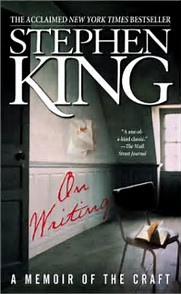
On Writing: A Memoir of the Craft by Stephen King
Despite the differences in genre between me and Mr. King, this book was informative  (and shared a wonderful analogy between dandelions and -ly adverbs). It touched on not only the specifics of writing, but also his experiences as well, letting every writer know he (or she) is not alone.


The Art and Craft of Writing Christian Fiction by Jeff Gerke
This guy is a great teacher.  His books are written in a casual informative style as if he were having a cup of coffee with you. This book includes a section on writing a Christian novel and also covers topics like character, POV, and description, among others.


The Irresistible Novel (also) by Jeff Gerke This book covers writing rules and myths, as well as a section on hacking the brain and plotting. The Irresistible Novel is full of interesting, useful information (as is the previously mentioned title).  I enjoyed reading them. And that's really saying something, because most non-fiction books put me to sleep. Sad, but true.


Proofreading Secrets of Best-selling Authors by Kathy Ide
This book is based off of The Chicago Manual of Style, but at a quarter of the size, it's a lot less intimidating. Kathy covers punctuation, usage, grammar, and spelling. This book hasn't made me perfect, but it's helped me with my punctuation and answered those questions that show up during late-night revisions.


The Emotion Thesaurus by Angela Ackerman & Becca Puglisi
I love this book -- many thanks to my author friend Deanna Fugett who sent it to me. It helps immensely with showing vs. telling, and prevents an author from writing the same action over and over to show certain emotions. For example, rather than telling your reader about John who's anguished, you can show him muttering and rocking back and forth, while visibly sweating.


The Writer's Digest Guide to Science Fiction and Fantasy by Orson Scott Card and the Editors of Writer's Digest
At 422 pages, this is an encyclopedia on the subject of writing science fiction and fantasy, and I've turned to it many times, sometimes even just to refresh my memory on something like world cultures or ritual and ceremonial magic. I haven't read it all the way through. Instead, I treat it like a buffet of ideas and information, picking and choosing as needed.


The Artist's Way by Julia Cameron
The Artist's Way deals with writer's block and creativity. It's originally set up as a 12-week process, but I personally went through it as I had time. I also appreciated the author mentioning God as the Great Creator, the Beginning and Ending of creativity .


Now, it’s your turn. What books have you found the most helpful in your writing journey? Leave your favorite titles in the comments section.


Tuesday, August 1, 2017

On Writing: Realm Makers Recap (Jill)

This past weekend, I had the wonderful opportunity to attend Realm Makers. I met old and new friends and learned some more about writing to help me with my craft. While Ted Dekker gave an inspiring opening keynote message, my biggest takeaway came from the smaller sessions.

Mary Weber (author of The Storm Siren Trilogy and The Evaporation of Sofi Snow) and James Rubart (author of Rooms, Book of Days, and Spirit Bridge, among others)  presented an excellent series on "Heroes, Villains, and the Heart of Your Story." This series covered so much fantastic, in-depth material, I made copious notes on all of it.
David Farland's session on "Plotting a Best-Selling Series" focused on a common variation of Freytag's Triangle with three attempts by the hero before the climax of the story. This, as well as the other information, was stellar, and my hand cramped while I tried to get all of it down.
Mary Weber's session titled "Networking Beyond Your Mom" wasn't full of tips and techniques. Instead, it focused on creating relationships with others, not because of what they can do for you, but because they matter. No matter where we are in our journey, we sometimes forget that. The push for a bigger platform and higher numbers makes us forget what the numbers are. They're people, and they don't like feeling used anymore than we do. My favorite quote? "Networking is not meeting the twenty people in the room who'll barely remember your name. It's meeting the one person whose heart will feel remembered by you."
Friday night was the Awards Gala. A lot of people showed up in their best cosplay costume (I went as The Black Canary) and we dined on steak, crab cakes, and cheesecake for dessert. The award winners are listed on Speculative Faith website here. Although there was a big Nerf game/war afterward, I had to be up at 4 AM to catch a 6 AM flight -- I sadly had to miss it this year.

After reviewing all the sessions I attended and the new friends I made, I realized it will take awhile to unpack all the information stuffed in my brain. But the overwhelming theme I experienced at Realm Makers 2017 was love. That might sound vague. Sometimes we're so focused on the craft of writing we forget the love that is a part of it -- love for our Creator, love of storytelling, and specifically the love for others we should be carrying wherever we go.

I can't recommend the Realm Makers conference enough. If you can afford only one conference next year, pick this one. It's well worth it.


Tuesday, March 14, 2017

To Be A Better Writer...Keep Learning (Jill)

When I was in college, I loved the learning experience. Not so much the general education classes that everyone took, but the core classes I needed to obtain my degree. Those days are long gone. But if you don't learn, your ability grows stagnant, or worse, deteriorates. So what are the options available for adults who can't afford to go back to class? I'm glad you asked.

1) Webinars: Now before some of you howl in protest, let me explain. Yes, some of the free webinars offered don't amount to much more than a sales pitch. But some of them offer nuggets of helpful wisdom. As long as you expect there to be a sales pitch at the end, it's not such a blow when the host asks the instructor, "What great deal are you offering us today?"
The most informative (but not free) webinar I attended was WordPress at 10,000 Feet. It was invaluable and worth every penny, especially since I tried to set up a website on my own before and failed spectacularly.  Some free helpful webinars I've taken have been on topics like "Heart" Sell vs. Hard Sell, Marketing Strategies for Pinterest, Double Your Social Media Traffic, and Why You Suck at E-mail (& How to Fix It).

2) Books on the craft: If your time isn't flexible and your employer frowns on you using company time to attend webinars, books on the writing craft might be a better fit. There are many good ones out there covering a variety of topics (Sell Your Book Like Wildfire by Rob Eager, Proofreading Secrets of Best-Selling Authors by Kathy Ide, Self-Editing for Fiction Writers by Renni Browne and Dave King--which many authors swear by, although I didn't care for it). I try to read a couple a year, mixed in with all my fiction choices. Pick up a few or request them from your local library.

3) Conferences: This is the most expensive option out there, even if it's just a one-day workshop. If you can handle the finances for one or two a year, then definitely spend the money. Find a conference covering interesting topics with agents, editors, and publishers who are interested in your genre. Then start saving. I've attended one-day workshops and three-day conferences, and it's always been worth it. This year, I'm saving my pennies for Realm Makers in Reno, Nevada, the perfect choice for all speculative writers (plus the people there are truly kind, cool, and talented individuals).

So keep writing, reading, and listening. And never stop learning.


Tuesday, February 28, 2017

Highlights from MN Writing Workshop 2017 (Erin)


“Write with the door closed, rewrite with the door open. Your stuff starts out being just for you, in other words, but then it goes out. Once you know what the story is and get it right — as right as you can, anyway — it belongs to anyone who wants to read it. Or criticize it."

Stephen King


In yet another step on my writing journey, I attended my first writing conference last weekend. A few weeks ago, I told you I was nervous about attending, but my misgivings were unfounded. The high energy of conference participants, the professional and encouraging presentations, and meeting up with fellow MN-NICE author, KaLyn, made the day not just educational, but enjoyable.

The sessions were packed with so much helpful information that I haven't had a chance to process everything yet. I took over 20 pages of notes, and am looking forward to going back over them in small doses, as they are relevant to my work.

However, I want to tell you about the two sessions I found most helpful. The first was a flurry of impromptu pitch rehearsals offered by editor and publisher Madeline Smoot, before she began her presentation on writing young adult and middle grade fiction. I have read about pitches, and talked to other writers about how to pitch, but it was much more helpful to actually see authors give a pitch. Madeline's feedback was kind and encouraging, but also specific. The brave authors who volunteered helped me see how fun and creative pitches can be, and Madeline's suggestions offered an inside perspective into what agents and editors are looking for.

The second session I found immensely valuable was the Page 1 Critique Fest. Perhaps you have been to a session like this before, but in case you haven't, let me explain. Authors were encouraged to bring several copies of the first page of their manuscript. The facilitator distributed a copy of a page to each of the six literary agents on the panel. Then, our facilitator would read the submission aloud. Each agent would raise their hand at the point they would have stopped reading. Once four hands had gone up, an audience member would call "Four" and the facilitator would stop reading. At this point, each agent detailed why they would have stopped reading.

My stomach dropped every time they passed out pages. I am still not sure whether I was hoping the words read would or wouldn't be mine.  Despite the fact my page wasn't selected, the feedback was fascinating. Overall, the agents were looking for energy and adrenaline on the first page. Even if they thought the descriptions were beautiful, they wanted to see action hook the reader first. There is always time to describe later. Also, agents tended to be disappointed if a great first line didn't deliver through the rest of the paragraph or page. Errors in grammar and point of view were distracting, and cliche tropes (new kid in town) and openings (waking up, looking in a mirror, having a dream) didn't hold the agents' attention.

I could probably write an entire series on all the lessons I learned at #mnww, but I have a long list of edits, cuts and revisions to work on. Instead, may I recommend you sign up for a writer's conference near you? Whether it is your first or your fifteenth, I am sure you will learn something you can apply to your work.


Tuesday, January 24, 2017

Prepping for My First Conference (Personal Notes)

Most of you are probably veterans of the Writing Conference scene, but I have to confess, this is new for me. In a little over two weeks, I will bundle up on a (potentially) cold day, pack up my completed manuscript, my WIP, a notebook and some (hopefully) new pens, and head out my door.

I am terrified.

Don't get me wrong--the workshops sound right up my alley. They cover topics such as writing for young adults, writing speculative fiction, writing query letters, and talking to agents. So why am I worried, you ask?

One of the workshops asks me to submit my first page of my manuscript anonymously and listen to the presenters give feedback. Now, there are other workshops scheduled for the same time slot, but none of them remotely interest me. And it would be great to get some professional feedback on my novel opening. BUT. . .

What if my face turns red when they start reading my page?

What if they say terrible things and I cry? It could happen. I cried at end of The Lego Movie.

What if they say nice things and I regret not signing up for one of the $30 pitch sessions? (Not as likely, but you never know.)

And, assuming I live through the session, what am I going to do with my hour-and-a-half lunch break?

What if people talk to me? I'm an introvert, so that could be awkward. Just leave me with my coffee and a book, and I am good. . .

. . .but, what if no one talks to me? Just because I'm quiet doesn't mean I don't like people.

I love listening to lectures and taking notes. It is just the rest of conference that terrifies me.

Have any of you been to a conference? What advice do you have for those of us who have never been to one? Leave your tips here, and many thanks!

Attributions:
https://pixabay.com/en/startup-meeting-brainstorming-594090/
https://pixabay.com/en/morning-coffee-coffee-cup-cafe-1035090/

Tuesday, August 30, 2016

ACFW vs Realm Makers (Elizabeth)

Which writer’s conference should you go to this year? American Christian Fiction Writers? Or Realm Makers, the hub for Christian speculative writers? Today, I’d like to compare these two conferences, so we can find out which is the conference for you.


Note: I’ve been to a grand total of two conferences: one ACFW conference and one Realm Makers conference, so I haven’t been able to include as many comparisons as I’d like, since I’m uncertain how similar the conferences are from year to year. As the conferences change, some of the following may be inaccurate.

Size

ACFW: Huge (around 500)

Realm Makers: Medium (around 200)

My critique partner and I were trying to find each other at ACFW, but couldn’t for the first few days. We kept on texting back and forth until we found a snippet of time and a clear hallway to meet in.
At Realm Makers, I easily found all of my critique partners. It’s a sizable conference, but small enough that you can find the people you need to.
While Realm Makers makes it easier to find people, ACFW’s size means that there are more opportunities to meet an agent, author, or writing coach you’ll click with. The appointments themselves offer more opportunities. This year, ACFW has 13 agents available for appointments, while Realm Makers had two, but to be fair only four agents in ACFW are open to speculative.

Formality

ACFW: Formal

Realm Makers: Casual

For ACFW, think business casual to business professional.
For Realm Makers, think casual to business casual.
As a rule of thumb, try to dress at the upper end of the spectrum. At ACFW, I brought two sets of business suits with matching skirts and blazers along with two professional dresses. For Realm Makers, I packed pretty blouses and nice jeans. Even some business casual outfits would be pushing it.

Activities

ACFW: Worship and Market Place Browsing

Realm Makers: Splickety Kick-Off Party Games and Nerf War

I don’t remember how frequently, but at ACFW, there was a part of the conference where everyone gathered in the main room and a worship band played. ACFW also has a marketplace available, which essentially means an area with folding tables where people who have something to offer authors can set-up a stand. Realm Makers did have a bookstore (where they sold gorgeous Elven crowns, which you can see me wearing below with a couple from Star Trek behind me), but it didn’t offer the things that the ACFW market place did, like writing coaches and website design.

The first evening at Realm Makers was the Splickety Kick-Off Party. In one of the games they offered, you had to hold two wooden skewers inside either side of your mouth and move them like chopsticks with your lips to take three marshmallows to a table a few feet away. Then you had to stack the marshmallows on top of each other, so they stayed upright for three seconds. I participated and—unfortunately—lost, due to the fact that one of the competitors was “using his head.” ;) In other words, he mashed the marshmallows together with his forehead.
And the Nerf War. That was definitely one of the highlights. If you go to Realm Makers, take a Nerf gun and Nerf darts—just in case. They’ve had a Nerf War for the past two years, but I’m not completely sure they’ll have one next year. On the last night, I stayed up until 1:30 playing capture the flag. It’s a ridiculous amount of fun. Until you die. Then you have to hang out in the morgue, talking with other dead people and eating brownies. 

An activity that both conferences offer is a costume dinner. At ACFW, you dress according to your genre. For Realm Makers, you dress up as your favorite speculative character or a character that interests you.

And here are a few Realm Makers and ACFW terms translated:
ACFW Continuing Education=Realm Makers Continuing Session
ACFW Workshop=Realm Makers Elective

At ACFW, you specifically sign up for all of your classes. At Realm Makers, you sign up for the Continuing Session and just show up at the electives.

Both offer panels and various appointments with agents and editors. Many appointments offered at Realm Makers were with small publishers.

Both have early bird sessions, while ACFW has a post conference session in addition.

Both offer opportunities to volunteer and have people available to pray for you.

Both have recordings of the conferences. I haven’t listened to the recordings from Realm Makers yet, but judging from the device used to record (a black, plastic recorder), the recording probably won’t be as high quality as the ACFW recording, since they had some sort of recording program connected to the microphones.


After Thomas Locke’s Continuing Session, he asked me which conference I liked better. I couldn’t say then, and I can’t say now. Both have an amazing community and offer amazing opportunities. It simply depends on what you’re trying to get out of the conference. If you want to have as many agent appointments as possible, go to ACFW. Want a more casual environment? Go to Realm Makers. If you write speculative, you’ll obviously find more like-minded people at Realm Makers and more agents/publishers looking for your genre, but the diverse group of authors you’ll meet at ACFW is worth meeting too.


Which writer’s conference would you like to attend? Have you been to an ACFW or Realm Makers writer’s conference?

Thanks for reading!
SaveSaveSaveSave

Tuesday, July 19, 2016

Conference Advice (Laurie)

I'll be traveling to Philadelphia, PA in just over a week to attend the Realm Makers writers' conference! Eeek!!! I'm so excited but also a little terrified because I'll be pitching my work-in-progress to agents and editors while I'm there. Wish me luck!

Between editing, getting my pitching materials together, and pre-conference jitters, I have to admit my brain has not been in any condition to come up with something original for an On Writing post. But since I'm doing lots of conference prep anyway, I thought I would share some of the other great conference advice posts I've found (with my commentary). Enjoy!


Preparing for Conferences, Your One-Sheet: Covers the purpose of a one-sheet and what it should contain, including examples!

What to bring when you pitch: A list of what to bring to a meeting with an agent or editor, with helpful explanations.

How do I prepare for a writing conference?: Advice from agent Chip MacGregor on how to prepare for a meeting with an agent or editor and how to make a good impression.

That Conference Appointment: Agent Steve Laube answers questions about his experiences with conference appointments.

Pitching at a Conference: Agent Rachelle Gardner shares her perspective on pitch appointments and other interactions with agents and editors.

Preparing for a Conference: Practical tips for feeling your best at a conference and getting the most out of it.

Conquering Conference Jitters: Suggestions on what to wear, what to bring, and what to expect to get out of a writers' conference.
How do I get the most out of a writers' conference?: Tips for making the most of attending a writers' conference.

The Introvert's Guide to Conferences: Advice specific to introverts on how to prepare for and cope with the many social interactions inherent to conferences.

Writers Conferences and Networking: Details the various types of connections writers may make by embracing networking at a conference.

Writers' Conference Follow-Up: A list of what to do post-conference to make the most of your investment.

Fellow Lands Uncharted blogger Elizabeth had an awesome series of conference tips, including quotes from other authors, on her author website on the following topics:
Part 1 - Agents
Part 2 - Learning
Part 3 - Network
Part 4 - Miscellaneous

And lastly, here's a post listing 36 posts on the Steve Laube Agency blog regarding writers' conferences: 36 Pieces of Advice about Writers Conferences


Have you been to any writers' conferences? Do you have any advice for me and other conference-goers?

See you next time!
Laurie