Tuesday, July 31, 2018

10 Tips for Copyediting a Manuscript (Lizzie)

Editing a manuscript may be a pleasure or a pain, depending on your personality, and either affordable or not, depending on your purse. Either way, as writers, it's our job to write the best we can and self-edit the best we can before our material goes to the public--whether the public is the audience or the hired editor. Although I completed a certificate in copyediting last year, I haven't done much with it, and now that I'm in the process of editing my novel TO CATCH A MAGIC THIEF, I am struggling to regain those copyediting skills. I'd like to share some of what I learned in my classes and in my current editing experience. Please note, these are for a light copyedit not a line edit. The text is pretty clean already. Copyediting is the final editing before proofing and should catch all grammar errors, inconsistencies,  usage errors, and so on. The story structure, character arcs, and general clarity of sentences should already have been checked and approved.

10 Tips for Copyediting a Manuscript


The Process

1) Read very, very slowly on the first pass. This makes it easier to catch missing words as well as other mistakes. Running your finger or a pencil under each word also helps. Printing out the manuscript for your last editing pass (two or threes passes is common for editors) is a good idea. A professional editor may skim your manuscript first and then do a slow, thorough edit on a the second pass, and then faster third pass to catch any missed mistakes.


2) Read aloud or listen to a text-to-speech program read the manuscript to you. This is great for catching similar words you may have used incorrectly as well as words used twice or left out. You can also catch accidental rhymes you may not want or long, convoluted sentences.


3) Don't try to binge edit. You'll tire and miss errors--or add them in. Realize that a good edit takes time and divide your editing into chunks, say five pages at a time or a chapter, depending on how good you are at staying the editor mindset.


4) Create a style sheet and story details file. This is to help you keep track of preferred spellings (like Alexandria instead of Alexandra), style decisions, and story details (timing, character hair color, name spelling, etc.) that should be consistent throughout. List problem areas here as well, such as words you overuse or commonly misuse (whom and who, for instance).

5) Keep your reference guides handy and use them. Chicago Manual of Style, Merriam-Webster's Collegiate Dictionary, Proofreading Secrets of Best-Selling Authors by Kathy Ide, Christian Writer's Style Guide. See a word you're not sure needs a hyphen? Look it up! Don't rely on memory of high school English class or your crit partners to tell you how to use a comma or format a manuscript either.  High school English and publishing English can be quite different. Also, it's one space between sentences now.

What to Look For

6) Here are some things to for look for when copyediting fiction
•Spelling, hyphenation, capitalization, punctuation
•Treatment of numbers and numerals
•Treatment of quotations within dialogue and character thoughts
•Use of abbreviations and acronyms
•Dialog tags
•Use of italics for thoughts and emphasis
•Word usage
•Grammar
•Missing words or punctation
•Redundancies


7) Look up any word that remotely might be misused or otherwise incorrect. Get accustomed to looking up at least one or two words or phrases per page. Spell check is great, unless, of course, you spelled the wrong word the write way (or the right way). Ask of two-word phrases, are they open or closed? Do they require a hyphen? Is it in to or into? Is it under way or underway? You may have a one-year-old nephew or a nephew who is one year old, but you don't have a one year old nephew. This can get tiring, but I've been surprised at how many words I've either used incorrectly or written incorrectly (they needed a space or a hyphen or didn't need a space, for instance). It did make me feel good to catch those in the editing stage though.

If you're not sure about grammar and usage rules, Kathy Ide's Proofreading Secrets of Best-Selling Authors and Patricia O'Conner's Woe Is I: A Grammarphobe's Guide to Better English in Plain English are excellent, readable guides. Ide's book also has a list of commonly misused words and common grammar and usage errors.


8)  Keep an eye open for consistency. Check for character details (eye color, for instance), spelling of unique words (particularly relevant for fantasy authors who make up words), treatment of sound words (italics or Roman for words like um, hmm, and so on), italics or quotes or emphasis in dialogue, italics and present tense or not for character thoughts, single space before and after ellipsis (no space between ellipses and punctuation mark or quotation mark).


9) Note any errors or convoluted sentences or paragraphs. If any larger issues come up, make a note. You may want to fix them then or wait. Also, look for redundancies. Do you really need that in the sentence? She stood and she stood up are the same; you can delete up.

10) Remember the The Golden Rule of Copyediting: Editing is for the Reader. Can the reader understand the work and enjoy it? Is the author's message coming through clearly? The minutia of comma placement, hyphenation, and so on are to serve the reader, not terrorize the author. So don't get bogged down in the rules--or get lazy--but focus on clarity and the reader's enjoyment.

Do you have any tips for editing or things you usually look for?


Saturday, July 28, 2018

Top 3 Worldbuilding Resources (Lauricia)


You would think that writing fantasy would be easy. You have an idea, one that no one has ever had before, and you run with it. While getting the initial idea may not be hard, sometimes fleshing that idea out with resources can be tricky. I tend to patterns, which can lead to repetition in my world-building, and I’m also finding that the adage about there being nothing new under the sun is pretty true. When I’m feeling stuck or uninspired, I submerse myself in research among the sources on my writer’s bookshelf, and when that research involves building my story world, I consistently return to the following sources:


The Element Encyclopedia of Magical Creatures: The Ultimate A-Z of Fantastic Beings from Myth and Magic, written by John and Caitlin Matthews

This rather large beauty is currently out of print, but if you ever happen to stumble across a copy, grab it! As the name indicates, it is an encyclopedic collection of fantastic creatures and monsters compiled from fairy tales, myths, and classic fantasy stories. Each entry even includes delightful details that can add nuance to your story through which ever creature you decide to incorporate. As of the time of writing, I think there were four copies available on Amazon through third-party sellers.


The Kobold Guide to Worldbuilding, edited by Janna Silverstein

Kobold Press is a treasure store of resources for people who enjoy role playing games (RPGs). There are a lot of similarities between building a campaign for an RPG and a fantasy world for a novel, which makes Kobold Press titles an invaluable resource for me. Each book contains a collection of essays written by different authors who happen to be RPG game-masters, and this particular one contains several essays that I come to frequently when I’m considering the cultural details of my stories.


The Kobold Guide to Magic, edited by Ray Vallese

Did I mention that I refer to Kobold Press resources often? This particular book is a must-have when building a magic system for your fantasy world. Just exploring the details about the types of magic systems that are possible can be astounding and enriching, and I often peruse through this book when I want to do some free-associating in order to give my current story world a bit more detail about its magic system.


Since the Kobold Guides can technically be viewed as a two-for-one, I’m also throwing in a bonus resource: Google Earth.  I love this program so much that I’ve downloaded the app to my phone (a highly regulated use of digital space in my case). There is so much about the Earth that is amazing beyond belief that I can never use it all in one book, so I use this resource for inspiration in landscapes and settings.

What about you? If you’re a writer, what are some of your favorite worldbuilding resources? If you’re a reader, what are some of the details you enjoy the most from the worlds of your favorite stories?

Thursday, July 26, 2018

A Parallel World: Your Turn (KaLyn)

Photo credit: João Silas on Unsplash

As you know from Laurie's post on Tuesday, she and I were both at Realm Makers this past weekend. It was amazing! I came away with fresh ideas and renewed excitement for my middle-grade science fiction novel.

As I dig into edits this week, I'm looking for ways to include more world-building details about the parallel version of Earth featured in the book. It shares a common history with Earth that deviates after the tenth century, but this fact is too subtle in the current draft.

Part of what makes parallel dimensions fascinating to me is the idea that changing one detail or event can impact every aspect of life and development that occurs after the change and the infinite possibilities of those changes.

Imagine if fire never existed in our world. How would it change where we live, our houses, and our clothes? And what about our food - how would it change what we eat? After all, fire has been the primary cooking method for most of human history.

Consider also all the expressions and stories that include the word fire or other words that have to do with fire, like smoke, ash, flame, etc. How would they change?

How do you imagine our world would be different if fire never existed?

Tuesday, July 24, 2018

Realm Makers 2018 Overview + Announcement! (Laurie)


I just got home from Realm Makers 2018 on Sunday night, and it was amazing! For those of you who aren't familiar with it, Realm Makers is a writing conference specifically for Christian writers of fantasy and science fiction, but through the community they've built online and in person it feels just as much like a family reunion as a conference :) I've hardly begun to process what I learned, so I thought instead I'd recap with some pictures!

I had the opportunity to connect with so many friends new and old, writers who are just beginning and authors who have won prestigious awards (can you spot fellow Lands Uncharted blogger KaLyn in one of these photos?). And I love them all!!

A fun dinner on the first night!

Hanging out with author H.L. Burke and her pineapple :)
Lovely ladies from my local writing group!

One of the highlights of Realm Makers every year is the awards banquet, where attendees are encouraged to wear costumes from their favorite fandoms. I found a cool dress at Goodwill and went as a sorceress, but as you can tell, some people's ensembles are much more elaborate!

This amazing lady made her own wings!
Selfie with my dear friend and fellow Love2ReadLove2Write author Deanna Fugett!
My fabulous roomies!

Two years ago, I attended Realm Makers and pitched Common to several agents and publishers. It was unbelievably exciting and humbling to see my own book at the bookstore this year and get to participate in a giant book signing!

Eeeeeek!

I also got just a few books signed while I was there... Don't worry, I already owned all but three of them :)

They were heavy to carry around, but so worth it!

It's good to be home, but I miss all my writer friends already! What have been some of the highlights of your summer?


Now, are you wondering about our announcement?? We've decided to cut back a bit on our blogging schedule to free up more time for our writing! Plus, we have a new Instagram account and will be making pretty graphics for it! (Find us here.) But we'll all still be here, continuing to provide the content we hope you've enjoyed during Lands Uncharted's two and a half years of existence :) Starting next week, we'll be posting every Tuesday, alternating between talking about the Writer's Life and What We're Reading, Top 3s every Saturday (you knew we wouldn't cut back on that, right?), and special guests on some Thursdays and Fridays. Thanks for continuing to follow us, we so appreciate you all!

See you next time!
Laurie

Saturday, July 21, 2018

Top 3 Fantasy Schools of Fun (Or Horror) Julie


It's hard to believe, but summer break is almost over for students and teachers (I fall into this category). As our thoughts turn to the new school year, let's look at three books that are mainly set in schools. But beware, these school aren't always about about sitting in class and doing assignments.

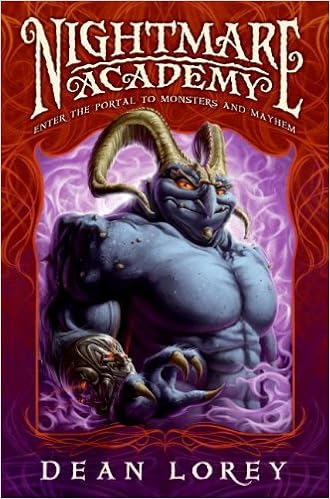
3) Nightmare Academy by Dean Lorey
I don't know about you, but every so often I will have a nightmare, though the older I get, the lesser they happen. Which, I'm fine with. However, for young Charlie Benjamin, nightmares are very real and very dangerous. He gets the unique opportunity to go to a school that fights back against the "monsters in the closet".  He and the others at Nightmare Academy train to fight the monsters that come in the night while we sleep.

What do you think? Would you be able to handle this school?


2) Percy Jackson series by Rick Riordan
Your first thought might not be about school on this one, but it does have Camp Half Blood. Although, its more like a wickedly awesome camp than a school, but whatever. What do you learn? Fight mythic creatures and survive!

What do you think? How would school be if you got to battle mythical creatures?

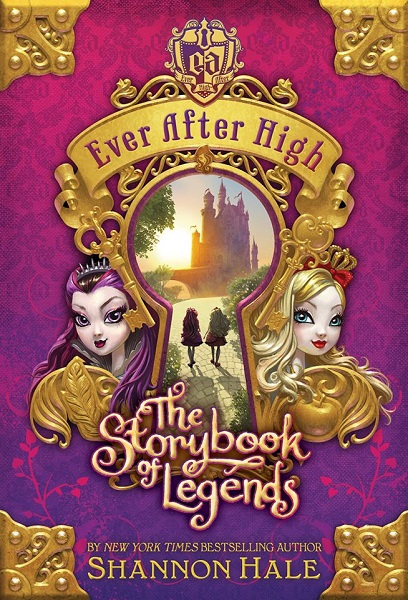
1) Ever After High series by Shannon Hale
Every one loves fairy tales right? What if you went to a school full of all your beloved fairy tale characters's children? At Ever After High, you're supposed to get your happily ever after, all while following in your famous parent's footsteps. You can learn to be a princess or a prince... or the evil queen.

What do you think? Does that sound like the school of your dreams?


Okay, so you may be thinking I left out the obvious one, which I did. Just because it was so obvious. The cream of the crop school book is definitely Harry Potter. I mean, how can you beat Hogwarts School of Witchcraft and Wizardry?!

Any of the above schools sound like the one for you? Or do you have another awesome school to add?


Thursday, July 19, 2018

Book Review: Heartstone by Elle Katharine White (Lizzie)

They say a Rider in possession of a good blade must be in want of a monster to slay—and Merybourne Manor has plenty of monsters.
Heartstone by Elle Katharine White

I was surprised and curious when I heard about Pride and Prejudice and Zombies, but I wasn't curious enough to deal with the grotesque additions to Austen's beloved story. So when a friend recommended a fantasy retelling of Pride and Prejudice because the author's style was similar to mine (meaning we were both influenced by Austen) and it had dragons, I decided to read it. I'm glad I did. Elle Katharine White's Heartstone passes the test for this picky Jane Austen fan and is a good story in its own right.


The Island of Arle is home to many creatures. Some creatures are friendly to humans. Some are not, and between these monsters--gryphons, banshees, lamias, and more--and humans stand the Riders, an elite class of warriors, proud and deadly. They are aided by the tougher of the friendly creatures--dragons, wyvern,  and beoryns. Alistair Daired, dragon rider, belongs to this group of warriors. You've probably already guessed that this is the Darcy character and that Elizabeth Bennett's character, Aliza Betaine, is not from among the Riders. Aliza meets Daired, and Brynsey and Charis (Bingly and sister), when they are hired to rid her area of gryphons after a gryphon kills her sister (Kitty's character). Unfortunately, the battles to keep the Tekari (the unfriendly creatures) at bay ultimately becomes a war for the entire land of Arle when the Greater Lindworm is awakened.

 White's story world is intriguing with its blend of adorable garden hobgoblins, fearsome lamias, friendly dragons, and powerful forgewights (I really liked these), as well as an interesting culture that is in some ways similar to Austen's and in some ways utterly White's own. The title refers to the stone each Tekari  has in its heart. These stones, jewels, are used as engagement stones. Kinda creepy, but it fits the warrior culture. There is violence and death and sorrow, but it is not too much and is not graphic.

Not only did I like the world White set the story in, I also like how she blended Austen's story into that world. Austen's characters were easy to spot with cleverly similar names. For a fun addition, Mr. Collins's character's first name was Wynce. Wynce Curdred. She also softened some of the characters, redeeming even Mr. Collins's character in a way fitting to Austen (Aliza realizes she misjudged Collins, that despite his flaws, he's a kind, wise magistrate). However, Wickham's character is suitably corrupt, but there is never much of a connection between him and Aliza, as there is in Austen's story. Aliza is likable and brave. She's surprisingly prone to eavesdropping, not a typical trait of an Austen heroine. She's also a healer, a skill I always reading about. To my great satisfaction, Daired is more than the handsome, rich, madly-in-love hero some reduce him to. White purposely portrays him as a man of good character who changes when he recognizes his faults--a true Darcy.

In conclusion, if you like fantasy with a cool world (and dragons), if you like Pride and Prejudice, then you should add Elle Katharine White's Heartstone to your reading list--somewhere near the top of it.

Also, White has a sample chapter and several story extras on her website, including character profiles and a few pages of Mari's bestiary with illustrations of some of the story's monsters, if you'd like a sneak peak.

Have you read any Pride and Prejudice retellings that you'd recommend? Or do you have any favorite magical creatures?

Tuesday, July 17, 2018

Why I Write (Lauricia)


Pppssst… Hey, you!

Yes, you. Come here! I’m going to let you in on a little secret…

Being an author is hard.

Yes, I know you’re familiar with the difficulty of filling a blank page on a daily basis, trying to concoct something engaging and new, but are you aware of everything else that’s involved? You’ve got to choose whether to publish traditionally or independently, to decide how to build a platform, to engage in marketing and promotion…

Uh oh. I can see I’m losing you. Let’s just say, there’s a lot involved in being an author; much more than the actual writing. So much more that, at times, it can be a bit overwhelming. But don’t worry—there’s a way to combat that sense of being overrun. All you gotta do is remember what drew you to writing in the first place…

Huh? Sorry, I got caught up in my thoughts. Repeat your question, please.

Why did I start writing? That’s easy: I’m in love with stories.

My passion for them began when I was young. I found a copy of The Lion, the Witch and the Wardrobe, by C.S. Lewis, in the school library when I was ten, and I was instantly addicted. The magic of being transported from my normal life to an extraordinary realm infected me, and the only cure was to consume regular doses of story for the rest of my life. Through the characters of books I have learned courage, generosity, nobility of spirit, and all of the other traits I aspire to embody. I have also experienced the negative qualities I hope to never possess. I have experienced sights unbelievable and journeys improbable and, through them, learned how to face my own monsters, to overcome my own fears, and to cling to hope when all seems lost. My lifetime exposure to story has filled me with wonder and awe, and I am forever in debt to the authors who built those worlds I played in and who created those characters I loved as well as any best friend.


To this day, I am in awe of any story that can take my breath away. However, one can only hear of the magic found in distant lands for so long without experiencing the need to travel to exotic locations and to experience great adventures for oneself. It is only natural for a child grown on stories to long to experience their magic thoroughly, in greater detail, by writing her own. When that longing becomes so strong it is like an ache in her chest, a dull pressure against her heart that makes it hard to capture a complete breath… well, there’s no denying that call. When it comes, all she can do is give in, grab paper and pen, and set out on a journey of her own. If all goes well, she’ll enchant a few readers along the way.

Oh. Heh. I must have gotten carried away. You were saying…?

Yes, that’s why I write. Even though it can be hard, I can’t deny the longing. And yes, it is very much worth the struggle.

What about you? Why do you love stories? Or, if you write, why? I’d love to hear your motivation in the comments below.