Showing posts with label Avengers. Show all posts

Tuesday, October 22, 2019

What Readers Want (and Don’t Want) in a Second Novel in a Series (Lizzie)


Book 2’s make me nervous. The more I like book 1, the more nervous book 2 makes me. What if I don’t like it and lose pleasure in book 1 and lose book 3 entirely? It’s rough to want to like a book or author and find you just can’t. 

There's been more than one series where I’ve loved book 1, but book 2 stopped me from completing the series, and even from reading anything else by that author. I experienced this unfortunate trauma a little while back, and it got me thinking about what I, as a reader, want and don’t want in a second novel and how that should affect me as a writer.

First, it forced to think about what I loved about the first story. Was it the characters? The developing relationships? The overall plot? The action and adventure? The milieu? The writer’s voice and story genre? The combination of all of those?

For me, it’s usually the characters and their relationships that is the strongest drive to book 2. I like the action, adventure, and mystery, and I trust the author to deliver that same kind of thing in book 2, with similar style, tone, and humor. But the characters are the strongest draw. And not just the main characters. Secondary characters are magnetic as well. Basically, I want to see all my favorite characters interacting in book 2. I want to know the fate of some character left in danger. I want to understand some mystery regarding this or that character. I want the hero and heroine to end up together, and those lovable secondary characters to have their relationships resolved happily. I want the redeemable character redeemed. 

In short, the draw to a second and third book, for me, is usually not the ultimate destruction of the villain or the fulfillment of a quest, it’s the characters. So you might say what drives the reader is not the same as what drives the main characters. The reader and MC may have different goals, and the author must satisfy both.

Taking those things into consideration, I came up with seven things that readers don’t want in a second novel.


What readers don’t want is for a second novel to


1) Lose sight of the character interactions


Too often the rich characters we came to love in book 1 are scattered in book two. Or the relationships are tainted by drama that often seems forced. In epic fantasies, like LOTR and Patrick Carr’s novels, and movies like The Avengers, the separation of characters is often necessary, but even then, some of the characters are kept together to give us those beloved interactions.
 
Character interactions are done right in this fantastic series.
I’ve been reading W.R. Gingell’s A City Between books lately (and loving them). One of the things I love about the story series is the characters: the MC Pet, her three “owners,” and the two secondary characters Detective Tuatu and Daniel. Granted, Gingell has small character list in this series, but she consistently develops the relationships between the main four characters over the series, and keeps us connected to the two secondary characters even if they have little page time. For instance, we don’t see Detective Tuatu very much after the first chapter of the third book, but there are mentions of him and humorous text message exchanges that keep him “alive” to me as a reader and keep me happy. There are valid reasons for him not being “on page” a lot too, which is important. Also, the interactions between the books' characters also change over time as relationships deepen. Like this series, the Harry Potter series, The Avengers, and many other successful series actively keep their characters interacting and relationships developing. Even James Bond has a few consistent secondary characters to interact with at headquarters over the course of his many adventures.

On the other hand, in that recent read that traumatized me, the main character rescues her mother (who she had thought dead) in book 1. You’d think the mom would be a big part of book 2. No. She’s mentioned every now and then, but there’s little effort at connection between her and the MC and only a shallow excuse for this. Hardly any of the characters from book 1 get more than slight mentions, and they were a big part of what made me want to read book 2. Because of the virtual loss of the first book's relationships and development of a second set of secondary characters, the second book felt like it should have been different character’s story altogether. Another character-interaction fail for me was Star Wars: The Last Jedi (reviewed here). I assumed the characters from the previous movie would form a team and go on fun adventures together. I was looking forward to that. No. They hardly interacted at all.


2) Add in soap opera drama and character immaturity


Can’t have the main couple getting together too early in the series, now can we? So let’s manufacture some drama—based on a silly misunderstanding—to keep them apart. Actually, please don’t. Don’t have your characters acting in immature, unhealthy ways just to create drama and push the HEA off to book 3. If these behaviors are part of their character arc and they are going to grow out of them, sure, but if not, please spare us. You can find a better way to add tension to the relationship or to the story overall. And consider a more original drama that family secrets involving affairs and unknown siblings. I stopped reading one teen series mostly because, well, it became a very teen series. Cliché romance scenes. Unexpected parental indiscretions. Immature, what-were-you-thinking decisions by a character previously pretty sensible. Haven’t read a book by that author since.

3) Change tone, especially from semi-light to very dark

The story arc of an epic fantasy probably requires going a bit darker in the second book, but readers don’t like it overdone. Give the readers some hope and humor, especially if that is part of your first story and brand. You want your readers to trust you so they’ll stick around for other books. Go too dark, or throw in sensitive scenes they weren’t expecting (like rape or the death of a beloved character or a whole bunch of characters when the first story is pretty light in tone) may be a turn off.

4) Have a lot of traveling to boring places

Questing or running for your life or moving an entire populace is fairly common in second books (and third books), at least judging by my experience. This is more of an observation than a critique. If the readers love the milieu, if it’s a quest type of novel, this is probably a great choice. New places can be fascinating, especially if there is a mystery attached to them. Patrick Carr’s The Hero’s Lot (The Sword and the Staff) is a great example of well-done traveling and an exciting, mysterious new place. I honestly did not care much for the hero’s love interest in this book (I liked her much better in the third), but I loved the mystery of the hidden kingdom the second main POV character stumbles across. I read the third book, and books two and three in this series helped pull me through to book three in Carr’s Darkwater Saga series. I struggled with its second book, A Shattered Vigil, because of the darkness, death, and off-screen rape of a secondary character, but I’m glad I continued on with the third book, which was lighter in tone.
 
I loved the travels in this second novel.
On the other hand, traveling through a fog for ninety pages with arguing characters, random attacks, and visions of disturbing drama at home, is not something I remember with enjoyment from a different series. That, coupled with the very teenage-ish drama that surfaced, induced me to close the book at its end and not move forward with series.

5) Shift to political intrigue and quarreling among friends

Is your typical reader likely to purchase a first book in a series because of an interest in political intrigue or quarrels among friends? If not, then take that into consideration before making that the focus of book 2.

6) Move at a faster pace at the expense of character interaction

Again, action is good but relationships trump action. Find a way to combine them. In Avengers: Infinity War, Captain America and Thor take a breather in the battle to comment on one another’s hair. It’s not much, but it’s humorous and is a connection between two characters who haven’t seen one another in a while.


7) Trick the readers, such as by changing the love interest or undoing some victory or expectation set up in the first story

Book 2: The peace is ruined and the hero must return. That can be okay. What’s not okay, in my opinion, is having the victory of book 1 be worse than pointless. If the “victory” actually sets up a much worse ruler and book 2 opens with near total destruction of a world we loved, readers are going to be sad and feel deceived. Especially if we aren’t expecting that level of destruction from the story at all. Watch the story tone.

Also, what’s definitely not okay is changing the love interest mid-series. Especially if that’s a strong theme in the book. Romantics don’t like that. We don’t like rooting for a couple for a book and half only to discover we’ve been duped. Readers don’t like to be tricked. If we find out the romance we’ve been hoping for for a book and a half would be incestuous, because, oh yeah, that guy is actually her brother (good thing they never kissed, right?) and we had no clues to that effect, readers are going to very, very mad.

So, in short, figure out what your readers loved about your first book and stuff the second full of it. (Hint: that will likely include fun character interactions.)


Saturday, April 27, 2019

Avengers, Avengers, Avengers (Julie)

The Marvel universe is taking over everywhere! I can't scroll through Facebook without seeing an Endgame post at least every other one! Of course, most of them are all warnings of don't spoil it!

Well, don't worry. No spoilers here because I haven't seen Endgame yet. But to get into the spirit of things, I'm using this opportunity to list my favorite three Marvel movies.

Warning: These are my opinions only ;)

3) The Black Panther. I was skeptical watching this one because of the mixed reviews I kept seeing, but I decided to give it a try when a good friend of mine recommended it. I'm glad I did! Wakanda is
great fuel for the imagination!


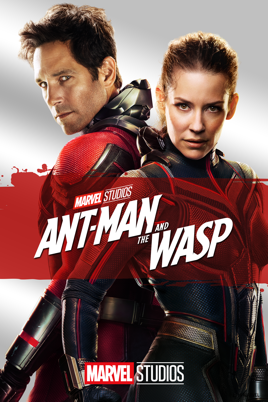
2) Ant Man and Ant Man and the Wasp. Somehow I missed these
when they came out, and it wasn't until sitting on a long flight that I decided why not check out this Ant Man and Wasp movie. I thoroughly enjoyed it, although I was a bit confused since it was the second movie. So when I got back home, the first thing I did was rent Ant Man.

I like these two because they are action packed but the whole movie is much lighter than many of the other Marvel movies. There's still really cool technology and super heroes moves, but lots of humor and fun, likeable characters.


1) Captain America. That's all that needs to be said, right?? Captain America is just the epitome of a good man. He fights for his convictions and doesn't back down in the face of adversity, even if it's amongst his friends. Who wouldn't want someone like that fighting for you?

Feel free to disagree, but these are my picks, and I'm sticking to them:)

Thursday, August 10, 2017

Your Turn!: Marvel vs. DC (Erin)


One of my more frivolous summer pastimes this year has been getting caught up on DC's TV series, The Flash, so I can actually watch episodes as they come out and not just drool over the trailers I see on Twitter. I also have been known to watch SuperGirl, Arrow and Legends of Tomorrow, on occasion. And, with the release of WonderWoman this summer, DC is definitely making an impression.

However, my school staff did a CA Avengers (Marvel) skit for the final chapel of the year, and of course, SpiderMan: Homecoming also came out this summer.


So my question is: Which do you like better?  DC or Marvel? If only one of the franchises could exist, which would you choose?


Leave a response and let us know! 


Tuesday, June 13, 2017

Personal Notes: Erin on Travel to the Emerald Isle

As you read this, we are just days away from boarding an airplane and heading out across the Atlantic. We are headed to visit my namesake country, where my sister and her family have lived for over a decade. Our destination is Ireland, a land steeped in mystery, myth and history. Whether you are talking about fairies, druids, or selkies, Ireland has a wealth of rich myths to draw on.

I am most excited to visit family, of course. I have adorable nieces and nephew and my children can't wait to see their cousins. However, there are some sites I am looking forward to seeing, as well.

 The Giants' Causeway

Doesn't this just sound like a fairy tale title? This is one of my nieces' favorite places to play and bring visitors, so naturally we are enthusiastic about spending time here. I hope I have time to sit with my journal (in between chasing children) and dream a little about the giants who may have walked these paths.


The Cliffs of Moher (Also known as the Cliffs of Insanity from The Princess Bride)

This looks breathtaking in all the photos. I am hoping for a clear day and auspicious circumstances, but I hope my fear of heights doesn't kick in. Also, my other sister tried to visit these cliffs on her last visit, but was sick on the day they had booked their tour. My goal for this trip is to relax and roll with events, but I would love to have no anxiety, good weather and a healthy family on the day we are planning to tackle the cliffs. Thankfully, I don't have to scale them hauling three people up a rope! 


The Wild Atlantic Way

A 2,500 kilometer tour along the western coast of Ireland, this route encompasses six different regions of Ireland, each highlighting a different landscape. While we will only get to drive a little bit on these roads, the steep crags and salt water bays are alluring and mysterious. Whether we stop at ancient portal tombs like the Dolmen Center or scramble around castle ruins, there is more than enough food for the imagination here.

I am hoping to come home with a journal full of images, ideas and word sketches that hopefully will show up in my writing at some point.

Do you keep a journal when you travel? Do places you've been show up in your work? Leave a comment and let us know!


Attributions:
https://pixabay.com/en/giant-s-causeway-northern-ireland-539869/
https://pixabay.com/en/cliffs-of-moher-ireland-nature-sea-1569692/
https://www.google.com/search?q=dolmen+center+ireland+images&tbm=isch&tbo=u&source=univ&sa=X&ved=0ahUKEwju4O2x4afUAhWLjFQKHSqFATEQ7AkIPg&biw=1300&bih=641#imgrc=s8Ef3Z-gd0VF-M:

Saturday, August 27, 2016

Relationships Beyond Romance: Top 3 Companions (Hannah)

Hello, and welcome back to the ongoing series Relationships Beyond Romance!  This is the last real post in the series, so if you missed the first few posts, here is a short recap:

1) Overt Friendships are friendships between non-related people that are characterized by positive interactions.

2) Covert Friendships also involve non-related people who genuinely care about each other, but to outsiders, the interactions between the two do not appear friendly because the characters consistently tease each other, compete with each other, or in some other way act unkindly to each other.

3) Parent-Child relationships are the first and most powerful, because they can prepare a child for a bright future or leave deep emotional scars.

4) Siblings have unique relationships.  Although every situation is different, the defining characteristic here is family.  Siblings generally don't choose each other, like friends do.  Whether through birth, marriage, adoption, or other circumstances, siblings are linked together forever through the special bond of family.

5) Sibling groups can be some of the most riveting bonds in fiction, and can even link together several series.

6) Mentors drive the inner growth of the main character and push him to grow and become a better person.


Part Seven: Partners and Companions

Although partners are often friends (overt or covert), their interactions look different because they are framed by a different scenario.  Friends like each other (usually) and will often spend time together because they enjoy each other's company.  While friends are often loyal and would put themselves in great danger for each other, this only occurs in dire circumstances.  Partners and companions, on the other hand, have a relationship that is defined more by what they do than by how much they like each other.  Partners and companions spend large amounts of time together because they are working together to accomplish a goal.

One definition of "companion" is: a person who is frequently in the company of, associates with, or accompanies another.  Whenever I think of a companion, I think of the Fellowship of the Ring from the eponymous book by J.R.R. Tolkien.  In particular, Sam comes to mind as one of the most supportive, loyal, and caring companions I have ever seen.  However, in fantasy, any two or more characters who travel together or work together to accomplish a single goal can be considered companions.  They might be friends, rivals, enemies, or anything else, but at least temporarily, they are companions.

Generally, partners are permanent companions who expect to work together on many similar endeavors over a long period of time.  Companions, like the aforementioned Fellowship of the Ring, stay together as long as the goal has not been accomplished.  Once they have reached the end of their literal or figurative journey, they can go their separate ways.  These heroes often step up to help defeat evil, but once the main villain is defeated, they return to their normal lives.  Partners in fantasy are usually involved in a permanent evil-fighting occupation.  Police, spies, agents, and many more work in teams to fight each new evil as it arises.  These long-term partners often grow close, since they must trust each other with their lives and rely on each other to survive the regular dangerous encounters.

Onward to my Top 3 Partners and Companions!  Beware of spoilers below.

3. Shasta, Aravis, Bree, and Hwin (The Horse and His Boy, by C.S. Lewis)

This third book in the Chronicles of Narnia series is largely overlooked.  It differs greatly from the rest of the series in that it focuses on an entirely new cast of characters and setting.  Only Aslan is an important recurring character.

Shasta, a slave boy in the land south of Narnia known as Calormen, was sold to a cruel Calormene warlord.  Just before he was taken away, the magnificent horse Bree spoke, and revealed that he too was a slave, kidnapped at birth from Narnia, where talking horses were common.  Bree helped Shasta escape and head north for the land of Narnia.

Aravis, the young Tarkheena (noblewoman), was forced into an arranged marriage to an abominable man.  To avoid this, she and her talking mare Hwin fled from the high life of nobility.  On the way, they fled from a lion attack and met Shasta and Bree.  The four joined together to journey north toward Narnia, the horses' birthplace and a land of freedom for Shasta and Aravis.

Although canonically Shasta and Aravis marry once they reach adulthood, this book focuses on their childhood, therefore avoiding any romantic interaction between the two.  At this point in their lives, I would consider them companions.  They worked together to accomplish the common goal of reaching Narnia and finding freedom, and afterward, they were no longer bound to stay together.

I love the way Shasta, Aravis, Bree, and Hwin all have some admirable character qualities, but also must realize their flaws and learn to overcome them.  Aslan, the Christ figure in this series, forced each one to face his or her greatest weakness and choose to follow him instead.  Like a true gentleman, Shasta proved his courage when he defended Aravis from a lion attack.  Aravis herself learned to overcome her arrogance and selfishness in order to be able to care about others.  Bree similarly overcame his pride and found courage instead, and Hwin passed her test of humility as well.  I enjoyed reading about this group because they genuinely cared for each other and were always looking out for each other's best interests.

2. Thorin Oakenshield, Bilbo Baggins, and the dwarves (The Hobbit, J.R.R. Tolkien)

I know I use Lord of the Rings often as an example for my posts, so this time, I chose to include The Hobbit.  In this case, I am referring specifically to the book version, which (I believe) is better.  After all, the book is always better than the movie.

At the beginning of the book, neither Bilbo nor Thorin were happy with being forced into each other's company by Gandalf.  Thorin, a mighty warrior and dwarf king, viewed Bilbo as weak and simple because of his love for his proper home in the ground, food, tea, pipes, and a simple, quiet life.  Bilbo found Thorin too warlike, arrogant, and brash.  This led to many heated interactions between the two, which reached a head at several important points.  While in Rivendell as guests of the elves, Thorin was in no mood to cooperate with anyone, particularly Bilbo.  Later, the conflict increased again while traveling through Mirkwood and the incident with the elves in Thranduil's kingdom.  Finally, their conflict climaxed when Bilbo took the Arkenstone, Thorin's most treasured possession, and attempted to use it to keep Thorin and the hostile Men of Laketown and Elves of Mirkwood from going to war.  After Thorin was mortally wounded, he finally reconciled with Bilbo, resolving the long conflict.

This book showcases the fascinating tension that can arise from a companionship between two hostile people.  By forcing their heated tempers into the confined space of a traveling party, Tolkien masterfully used this conflict among "good guys" to weave a riveting story.

1. Captain America and Black Widow (Captain America: Winter Soldier, Averngers: Age of Ultron, and Captain America: Civil War)

For those of you who read my "Top 3 Marvel Movies" post, it should come as no surprise that at least one super hero team-up appeared on this list.  There are several important pairs in the series: Iron Man and War Machine/Iron Patriot/Rhodey, Captain America and Bucky, Captain America and Falcon, and Black Widow and Hulk come to mind.  However, I would file the first two under "friendships" and the last one under "romance."  I like the Captain America and Falcon pair (and the original comic version even more so), but it hasn't been developed as well as my favorite: Captain America and Black Widow, or Natasha Romanoff.

Captain America (Cap) and Romanoff are both full-time members of S.H.I.E.L.D. and later the Avengers, so I would consider them partners more than companions.  The true beauty of this relationship comes from their built-in conflict.  Yet, despite their great differences and many disagreements, they grow to have a strong respect for each other that seems mostly absent among the other team members.

Reaching adulthood in the midst of World War II, Captain America was the image of a true, noble hero.  Patriotic, sacrificial, and morally upright, he fought for goodness and freedom.  Even after he was torn from his time and thrust seventy years into the future, he acted selflessly and immediately resumed his quest to make the world a better place.  In contrast, Nathasha Romanoff was a Russian super spy, trained to ignore any moral lines and kill without remorse.  After several years of living this destructive lifestyle, she defected and joined S.H.I.E.L.D., an international peacekeeping force dedicated to dealing with alien and superhuman threats.  Nevertheless, she retained her amoral tactics and tendency toward lethal options.

Cap and Romanoff first met in The Avengers, but had little specific, meaningful interaction with each other.  It wasn't until Captain America: Winter Soldier that we saw their differences cause much conflict.  Nevertheless, they were able to work together to survive the fall of S.H.I.E.L.D. and foil the attempted Hydra takeover.  Later, in Avengers: Age of Ultron, they are seen leading the new group of Avengers, presumably together.  In Captain America: Civil War, they found themselves on opposite sides of the main issue: should superheroes be forced to be accountable for the destruction caused while they were attempting to save the world, and should the Avengers submit to an outside authority, who would dictate how and when they would be allowed to operate?  Romanoff reluctantly agreed to the oversight, since she never intended to become a vigilante.  However, Cap initially refused because he felt it would bog the Avengers down in politics when their real job was keeping the world safe.  It quickly turned into a personal issue for him, though, when agreeing to the oversight meant he would have to betray his longtime best friend Bucky.  Cap and Romanoff were on opposite sides throughout most of this movie, but the bond of respect and companionship was clearly strong.  In the end, Romanoff allowed Cap to escape capture, and was consequently labeled a traitor herself.

In my opinion, this partnership combines the desirable elements of Shasta and Aravis, and also Thorin and Bilbo.  The camaraderie and strong friendship keeps them together, but the conflict adds depth, conflict and meaning.  Cap and Romanoff share a difficult relationship because of their diametrically opposed viewpoints, but this only makes it more satisfying when they are able to transcend their differences and remember why they became friends in the first place.

What do you think?

Are you familiar with any of these characters?  In books and movies, do you prefer the teamwork that characterized The Horse and His Boy, the conflict and tension that characterized The Hobbit, or a combination of the two, like what we see in the Marvel movies?  Let us know in the comments!

~ Hannah


Thanks so much for reading!  Next time, I will officially wrap up the Relationships Beyond Romance series with a final Your Turn! post, and I hope you will all come give me your opinion on this blog's first attempt at creating a running series.  If you would like to read the other posts in this series, check out...

Part 1: Overt Friendships
Part 2: Covert Friendships
Part 3: Parent-Child Relationships
Part 4: Siblings
Part 5: Siblings (Again!)
Part 6: Mentors
Part 7: Partners and Companions


Attributions
The Horse and His Boy: http://d2arxad8u2l0g7.cloudfront.net/books/1388210968l/84119.jpg
The Hobbit: https://upload.wikimedia.org/wikipedia/en/a/a9/The_Hobbit_trilogy_dvd_cover.jpg
http://vignette2.wikia.nocookie.net/marvelcinematicuniverse/images/2/26/Cap_2_poster.jpg/revision/latest?cb=20140131142227
Captain America: Civil War: https://upload.wikimedia.org/wikipedia/en/5/53/Captain_America_Civil_War_poster.jpg

Saturday, May 14, 2016

Top 3 Marvel Movies (Hannah)

Recently, I have been watching several of the Marvel movies.  Now, I realize there are several series of movies that are technically "Marvel superheroes," but I am referring specifically to the Avengers series, which, for those of you that don't know, includes Iron Man, Captain America, Thor, Hulk, and others.  The movies are so different in tone, nearly everyone can find at least one movie he or she likes.  This list is highly subjective, but here is my personal opinion.  Beware of spoilers!  I will try to be as vague as possible, but there might be a few.

Note: I have not seen Ant-Man or Captain America: Civil War, but I have seen all of the others in this series.

3. Captain America: The Winter Soldier

Featuring Captain America, Black Widow (Natasha Romanoff), and Nick Fury, this episode feels like a spy movie. Neither Cap nor Romanoff have the flashy powers of Iron Man, Thor, or Hulk.  Instead, they are simply highly trained and, in Cap's case, physically enhanced.  When the mysterious Winter Soldier showed up to threaten S.H.I.E.L.D, Nick Fury, Captain America, and Black Widow were forced to go on the run as everything they believed in came crashing down around them.  Even the deadly Winter Soldier himself was not who everyone believed...  I love this movie for several reasons: 1) I love Captain America, 2) the whole movie felt like a high-intensity spy adventure, and 3) it followed up on some of the foreshadowing from The Avengers, and the mighty, ubiquitous S.H.I.E.L.D. itself was shaken to its core.  Overall, this was a fantastic movie.


2. Captain America: The First Avenger

As much as I loved Cap's second movie, I liked the first one better.  In this installment, Steve Rogers started out as a scrawny, sickly guy with a determination to fight in World War II.  He constantly got beaten up by bullies, and he viewed the Nazis as even bigger bullies.  Finally, a scientist noticed his determination and general goodness and chose Rogers as a subject for an experimental procedure that would give him great strength, stamina, and metabolism.  Even after that, not everything was easy.  Cap continued his uphill battle to make a difference in the war.  Meanwhile, Hydra, the Nazi science division, tapped into an ancient power to develop deadly new weapons.  I loved how Cap's absolute goodness shined through.  He is a classic example of a true hero.  In addition, the World War II setting is probably my favorite real-world time period that occurred after the Renaissance.  In fact, only one movie had a setting I liked even better...


1. Thor: The Dark World

As a huge fan of both fantasy and Norse mythology (which first introduced many common fantasy tropes), Thor: The Dark World was my favorite movie mainly because of the setting.  The whole movie was just beautiful... Asgard was stunning, Svartalfheim was lovely in a dismal sort of way, and the costumes were fantastic.  Of course, there were other factors that make this movie the best.  Loki is one of my favorite characters (and my #2 all time favorite villain), and his actions in this movie only cemented this status.  His skills of manipulation and deception are legendary.  But Loki isn't the only great villain in this movie.  The dark elves, which capture the top spot in my "Top 3 Mythical Creatures" post, also make an appearance as the "true" villains.  This movie was everything a fantasy-lover could want, and I haven't even mentioned the plot!  All in all, this movie certainly deserves its number one spot.

What about you?  Have you seen the Avengers series of movies?  If so, which was your favorite, and why?  Let me know in the comments!

~ Hannah

Attributions
Captain America: Winter Soldier: http://vignette2.wikia.nocookie.net/marvelcinematicuniverse/images/2/26/Cap_2_poster.jpg/revision/latest?cb=20140131142227
Captain America: The First Avenger: http://vignette1.wikia.nocookie.net/marvelcinematicuniverse/images/8/81/CaptainAmericaTheFirstAvengerComicConPoster.jpg/revision/latest?cb=20120122235032
Thor: The Dark World: http://vignette1.wikia.nocookie.net/marvelcinematicuniverse/images/f/fc/Thor-_The_Dark_World_poster.jpg/revision/latest?cb=20131115001851

Thursday, May 5, 2016

Saturday, January 30, 2016

Villains: Plots and Power (Hannah)

Oftentimes, villains are the most intriguing characters, at least for me.  Far too often, I find I prefer the villain over the hero.  While considering this phenomenon, I found three traits I admire that heroes tend to lack, but villains show in abundance.

The first and most important to me is intelligence.  So many heroes win by brute-forcing their way through every obstacle, defeating the villains through physical strength and strength of character, but not through cunning, trickery, well-thought-out strategy, and the like.  Of course, this does not apply to all heroes, but it is clearly a trend.

Another admirable trait villains tend to possess is level-headedness and the ability to make good (well, at least rational) decisions under pressure.  My favorite villains show an air of confidence until the very end. No matter how hurting or broken they are; they always put on a strong face and keep going, maintaining their calm and remaining brutally effective in the face of all opposition.  Heroes, on the other hand, tend to break down.  They fall apart, cry, and consider giving up.  Of course, they get up and fight through it in the end, but on the way, they lash out at teammates, make rash decisions in the heat of the moment, and generally become their own worst enemies.  Once again, this isn’t universal, but it does show up a lot. 

Finally, villains are evil.  Really, who wouldn’t want to be able to be evil for a day? To put it simply: villains are cool.  They get to do fun stuff that we can only dream of, and would never do even if we were given the chance.  (Or shouldn’t do, anyway.) The sheer awesomeness factor alone would give anyone plenty of reason to like villains.

So, on to my top favorites.  It wasn’t easy to pick, since I love so many villains, but, after some difficulty, I did manage to narrow it down.  As you can see, they each embody all of the traits listed above, plus a good dose of humor just for good measure. (Warning: spoilers for The Lion King, Thor, The Avengers, Thor: The Dark World, and Once Upon a Time.)

#3: Scar (The Lion King)

Although I refused to watch Lion King much when I was younger (due to how Mufasa’s death drew tears every time I saw it), Scar was always one of my favorite villains.  He wasn’t as strong or noble as his brother, but he was certainly more cunning.  He orchestrated a brilliant plan to get rid of his brother and nephew, leaving the throne open.  Manipulating Simba into visiting the Elephant Graveyard was a clever move, and although his minions messed up their part, Scar’s insidious plots were not exhausted yet.  He tried again, setting up a wildebeest stampede to murder his brother, and once again, the hyenas failed to accomplish their mission, allowing Simba to escape.  This ultimately led to Scar’s defeat, but not before he had ruled for a good long time.  Of course, he was nowhere near as good at ruling as he was at plotting, but even so, he was a formidable opponent for Mufasa and Simba.


#2: Loki (Thor, The Avengers, Thor: The Dark World)

The first superhero movie I ever got to watch was The Avengers, and I have to say, this was probably Loki’s worst movie.  With too many characters to juggle (a total of eight important characters in two and a half hours), he just didn’t get as much character development as he needed.  He got this development in Thor and Thor: The Dark World.  In Thor, we discovered his father’s blatant favoritism toward his brother, but more importantly, we saw exactly how manipulative and cunning Loki could be.  Clearly, he was the driving force behind the majority of the movie, and, like Scar, he was able to “win,” for a little while at least.  Unfortunately for him, Thor learned his lesson and returned to Asgard just in time to defeat Loki.  After being imprisoned for his actions on Earth during The Avengers, Loki spent much of his time in prison, right up until Thor realized he needed Loki’s help in Thor: The Dark World.  Loki brought humor and lightheartedness to the movie, and even though Thor anticipated some sort of trick, Loki was still able to manipulate the situation to his advantage.  His sheer brilliance is what qualifies him as one of my very favorite villains.

#1: Regina Mills, aka The Evil Queen (Once Upon a Time)

The Evil Queen from Disney’s Snow White has always been one of my very favorite villains, and when I first started watching Once Upon a Time, I was afraid this version of the Evil Queen wouldn’t live up to the original.  I was absolutely wrong.  She started off as an unambiguously evil queen.  She cast a dark curse on all of the fairy-tale inhabitants of the Enchanted Forest, sending them to a little town called Storybrooke in our world.  There, she ruled as mayor with an iron fist, but as time went on, the cracks began to show.  She might have been evil, but she had good reason to be.  Even though she crossed from being a villain to being an anti-hero somewhere during seasons 3 and 4, she, unlike many villains who turn good, held on to what made her such an interesting character.  She kept her pragmatism, down-to-earth common sense, and willingness to do whatever it took to accomplish her goals or protect her son.  Like Scar and Loki, her intelligence and power give her a level of competence that makes her a fantastic villain.

Some of my honorable mentions go to Darth Vader (Star Wars) for how intimidating and threatening he was (not to mention the Imperial March…), Morgan le Fay (Dragons in our Midst, Oracles of Fire) for her patience, manipulation, and magic, and Guy of Gisborne (BBC’s Robin Hood), for his relentless pursuit of Robin and his hilarious seriousness despite the lunacy of what was going on around him.

Villains in fiction can be so much fun to watch and read about.  Their evil ways are a perfect contrast to the noble heroes who struggle to defeat them, ultimately making the world a better place.

This wraps up our 4-part “Top 3 Villains” series!  Did you like these villains as well?  Who were some of your favorites?  Are there any "Top 3s" in particular that you would like to see next? We would love to hear your opinion!

~Hannah


Attributions:
Disney's Scar (1): https://encrypted-tbn3.gstatic.com/images?q=tbn:ANd9GcSDucKUTNuFw-WHAyXd3Y_I3FZ3qzwKqreHgnYfgBinQEMGguSQ4w
Marvel's Thor and Loki: http://images.desimartini.com/media/uploads/tumblr_static_loki-1.jpg
Disney's Evil Queen: http://vignette3.wikia.nocookie.net/disney/images/d/d2/Queeen.png/revision/latest?cb=20120720005726
Disney's Scar (2): https://s-media-cache-ak0.pinimg.com/236x/d0/62/db/d062dbf38398152c2edcc1aaf73207b9.jpg
Marvel's Loki: http://vignette3.wikia.nocookie.net/avengers/images/f/fe/Loki.png/revision/latest?cb=20140305160727&path-prefix=de
Disney's Regina: https://pbs.twimg.com/profile_images/2741247477/015eff5033a428470b9fda204bb5ddde.jpeg