Showing posts with label J.R.R. Tolkien. Show all posts

Tuesday, November 3, 2020

Writer's Life: Weaving Words of Hope (Sarah)


In our world right now, difficulties abound: a pandemic, a tumultuous political landscape, various disasters, crises, and famines. All around, we see nations and economies in turmoil and experience the impact of these situations in our own lives. So what does that mean for us as writers? It offers us a greater opportunity to shine light into darkness. In seasons like these, our stories can uplift, give meaning, and remind that there’s hope for the present and future alike. Speculative fiction lends itself particularly well to this. 


In discussing storytelling, Tolkien coined the term "eucatastrophe" to refer to the sudden joyous turn of events that occurs when all hope seems lost—the undoing of disaster or catastrophe—and he expands upon it in his essay On Fairy Stories


“The peculiar quality of joy in the successful Fantasy can thus be explained as a sudden glimpse of the underlying reality or truth….The Birth of Christ is the eucatastrophe of Man’s history. The resurrection is the eucatastrophe of the story of the Incarnation. This story begins and ends in joy. It has pre-eminently the inner consistency of reality….this  story is supreme; and it is true. Art has been verified. God is the Lord, of angels, and of men–and of elves. Legend and History have met and fused.”


What does this look like in the pages of fantasy? As Tolkien envisioned, Lord of the Rings portrayed a magnificent moment of eucatastrophe in the destruction of the ring and its master. He  extended that redemption into the restoration of the Kingdom of Gondor and the freeing of the Shire from its scourging. Those engaged in battling this evil paid a tremendous price for the victory won—but even in this, we see signs of redemption as the scarred, wounded Frodo finds a place of ultimate rest and respite beyond the world, leaving Middle Earth through the Grey Havens to find a place of peace. 


The Way of Kings by Brandon Sanderson also succeeds in this regard, portraying a beautiful triumph of hope in its darkest hour. The slave protagonist Kaladin clings fiercely to hope despite having everything of meaning and significance in his life stripped from him in a brutal way. And without giving away spoilers, it’s his determination to cling to hope and humanity that allows him to be a key player in the moment of victorious hope on which the whole story turns.


As storytellers, we’re privileged to imagine and bring to life tales that turn pain, suffering, and loss into hope and redemption. These sudden turnings of joy give a story meaning and impact. As writers, we shouldn’t fear taking our characters into a place of suffering and loss, but I believe our stories will have the greatest impact if we weave threads of hope throughout. It satisfies something innate God placed within us, and it’s an echo of ultimate truth. 


Along the way, we can find encouragement during our own seasons of pain and suffering—and even use our stories as a way to process our pain and turn it into something beautiful. This has been true for me…what about you? Does this resonate with you as a writer or storyteller? Or do you see it differently? I’d love to hear your perspective.

Tuesday, March 26, 2019

7 Ways to Improve Creativity (Lizzie)

In Julie's recent post Calling All Dragon Lovers, she talked about how creative author Brandon Mull is and how she struggles to be more creative in her own writing. I've been challenged to be more creative in a steampunk short story series I'm working on as well, so I thought it would be good to use this Writing Life post to talk about ways to be more creative. So here are some thoughts and suggestions on ramping up the creative juices and improving your stories.

1. Create a Creative Mindset

The first step in being more creative is really just to remember to be creative. It's easy to use a trope or simply not push yourself to use a talking sorting hat to determine which house students belong to in your fantasy novel set at a boarding school for wizards when students could simply draw numbers. There are everyday events in your story (like getting mail) and grand events (like being put in your house or getting a weapon at a crucial moment). You have to constantly ask if these events can or should be ordinary or creative. Not every story needs an owl delivering mail or a talking sorting hat, but somewhere, sometime, you will need to solve a problem using a creative method or just interject a creative version of an everyday activity. Keep that in mind. That's great, you say, but how do I get those creative ideas? Well...
Harry Potter and the Sorting Hat

2. Read widely 

Reading a variety of genres is always good because it expands your range of abilities. Reading mysteries (and contemplating how a good mystery is told), allows you to build mystery and suspense into your fantasy, for instance. But it also introduces you to new ideas and settings. Don't just read teen or adult. Read middle grade fantasy. These authors are very creative and use all kinds of wild and silly ideas that adult books don't (the suspension of disbelief and tolerance of silliness is less, I think, in adults, so creativity is inherently greater in children's books). Don't just read fiction. Read non-fiction. My WIP, a steampunk series, was inspired partly by a book about longitude. Really? Yes. Dava Sobel's book Longitude about the development of the sea clock for the accurate determination of longitude at sea was fascinating (and involving personal stories, drama, sailors lost at sea, a race to win a grand prize, and more). The idea that people didn't have the technology to know where they were (at least at sea, where it's easy to miss that little island with the water you desperately need) until only a couple of hundred years ago blew my mind. And got me to wondering what a world without the ability to navigate would be like.

3. Read widely and read mythology and history

Yes, the repetition was intentional. Don't just read new fiction. Read mythology and history. The ancient weren't short on wild and crazy ideas. And history can be almost as crazy as fantasy. I thought J.K. Rowling and Tolkien were extremely, unbelievably creative until I learned more about mythology and Old English literature and history. A lot of their ideas, I discovered, aren't brand spanking new; they are simply either new to me or repackaged in a way that makes them seem new. Middle-earth? It's an Old English keening (compound metaphor) used in Caedmon's Hymn and probably other works. The moon runes in the dwarf's map in The Hobbit? Anglo-Saxon futhorc. Not really new. And that's okay. A phoenix and basilisk? Not new either. "There's nothing new under the sun," so it's no shame to re-purpose old ideas and no discredit Tolkien and Rowling at all.

Study other cultures. What's new and fascinating to one person may be everyday life or a familiar story to someone else. Boarding schools are rare in my corner of the world, so setting at story at a boarding school made Harry Potter unique even without magic (boarding school stories are no longer unique, so be careful). You never know what aspect of another culture might be useful directly or spur an idea that ups the creativity of your story.

4. Ask questions

This really goes back to number one. How can I make this more creative? How can I make the receiving of mail a magical event? What if people couldn't navigate for themselves? If a faerie curse prevented navigation, how far could they go before getting lost? How I can put fear of spiders into my story in an unforgettable way? What if...? How could...?

5. Make old things new (and unexpected)

Is a bird delivering a message really new? No. Carrier pigeons, anyone? But using an owl as a post man to a boarding school is new. We've already said that a phoenix isn't new, but a phoenix in a headmaster's rooms is new (and unexpected), as is a phoenix (so far as I know) delivering a hat with a sword in it. Putting old things in a new setting, combining them, using them in new ways, altering them a bit (like Rowling altered the mythological basilisk) are ways to increase creativity, partly because it's unexpected.

From wikipedia: "The basilisk and the weasel, in a print attributed to Wenceslas Hollar. The cockatrice (pictured) became seen as synonymous with the basilisk when the "basiliscus" in Bartholomeus Anglicus' De proprietatibus rerum (ca 1260) was translated by John Trevisa as "cockatrice" (1397).[4] A basilisk, however, is usually depicted without wings." So basilisks varied a good bit in mythology, and J.K. Rowling added her own version in the Harry Potter novels.


6. Make the most of your story world (and forego tropes)

An author friend (I won't give her name so as not to risk any spoilers) recently asked about how to get her main character information from a dead character. The tropes are to have the character find a letter from the dead character, have a seance, or have someone else tell the main character. I recommended she find something that fit her story world. J.K. Rowling used magical memory storage balls to get a character needed information. It fit her world and was really cool. If you write fantasy, then you have the option to come up with amazing things--and just knowing to ask the question, being willing to challenge yourself, will usually lead to the answer. So recognize tropes and keep seeking new solutions until you come up with a fresh idea. Remember you're writing in a fantasy world!

7. Create limitations that must be overcome 

This one is great for adding tension to the story as well. In The Rose and the Wand, I introduce a traveling ring. It lets Giles travel instantly wherever he likes (by the way, the idea actually came from a version of the original fairy tale--Beast gives it to Belle so she can go home to visit her family and return to him--and I tweaked it to fit my story). Marcel, in To Catch a Magic Thief, has the mate to Giles's ring. But allowing Marcel to go wherever he wants, whenever he wants is not good for story tension! He needs to be stuck in dangerous situations, and unable to easily rescue Gabriella, so I had to put limitations on the ring. It only carries one person and no luggage (he can't escape with Gabriella in tow); it won't take him anywhere if he doesn't know where he is; it won't take him to a place he's never been. Putting limitations on the ring not only makes it unique, but raises situations that challenge me. I have to find a new ways for Marcel to escape. That challenge, that question of "how will he escape?" will stimulate me to come up with a solution that isn't expected. I also give the ring another attribute, but it would be a spoiler to share it, but remember you can add other attribute to an object to make it unique.


That's a lot of information! Thanks for hanging on to the end. In summary, read widely to fill your creative wellspring and remember to challenge yourself to be creative.

Do you have any other suggestions?

Saturday, January 12, 2019

Top 3 "Epic" Escapes (Julie)


A few months ago, I had what I like to term as one of my "adventure" dreams. A group of bad guys was chasing me through this house because I had something they wanted. The house turned out to have an unlimited amount of doors to run through. The more I ran, the more doors kept appearing. It was kinda like the house wanted me to escape. I did eventually escape from the evil gang of whoever they were.

I tend to have quite a few of those "adventure" dreams to where I'm trapped but somehow find a way out. If only writing escape scenes were as easy for me as they are for my brain to come up with in my dreams!

If you've ever read any fantasy, sci-fi, or pretty much any fiction story, then you've probably read dozens of escapes...some death defying and others slightly implausible, but still fun nonetheless.

So journey along with me as we explore three "epic" escapes from some of my favorite adventure books.


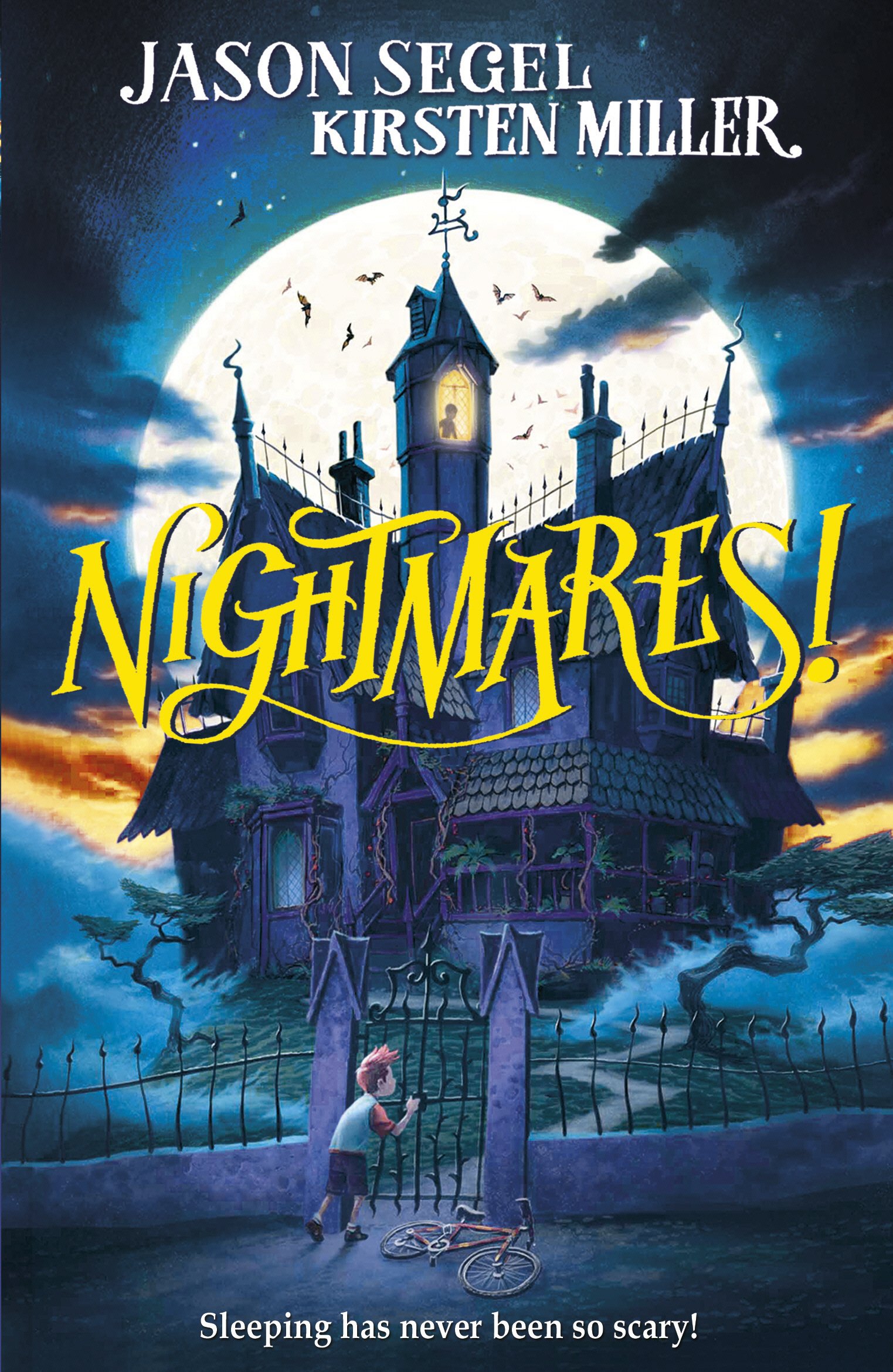
1) Imagine if you suddenly found yourself in your nightmare, in the flesh, being chased by an enormous house on two chicken legs maned by a large, evil cat (who wants to eat you)? Your options include outrunning a chicken house, getting squashed by said chicken house, or get eaten by large, evil cat. Unfortunately, you know you can't really outrun the house. It does have longer legs than you. Just as you except to get squashed or eaten, your rescue arrives in the form of a small, yellow convertible driven by a demented looking clown twice the size of the car. The clown hops out and distracts the chicken house while you make your getaway in the toy car.

Sound pretty awesome? Check out the whole story here: Nightmares by Jason Segel and Kirsten Miller


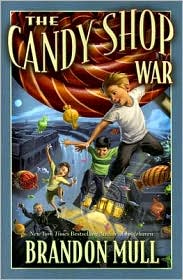
2) For this adventure, you find yourself burglarizing the local library (gasp)! Your objective: abscond with the bottled ship, USS Stargazer, and return it to a suspected witch. You and your friends gain the ship and all is going well when you come face to face with the school bullies. Who also want the ship. And will beat your brains out to get it. Your friends yell at you to run, as you have the ship, and they will delay the bullies. The only way out of the library is through a second story window. Options: get beaten to a pulp or smash through glass and plummet to the ground. You choose the window. You plop a piece of candy in your mouth and run straight through the window. Wait, a piece of candy? Yes, but this isn't an ordinary piece of candy. It's an Ironhide, which makes your body as strong as iron. So crashing through a window and plummeting two stories is nothing. You make your escape just as a police car heads toward the library.

Want to know more about this peculiar brand of candy? Check it out here: The Candy Shop Wars by Brandon Mull


3)  This one may be more familiar to you. You've just destroyed a powerful, dark magic ring and saved the Earth. But now you're stranded on a rock as the mountain erupts and spews lava all around you and your best friend. Options: well...there really aren't any options. As you lay there thinking about your home and what could have been and listening to your best friend mourn the loss of the love of his life, giant eagles swoop in and carry you away to safety. Talk about an unexpected escape from certain death!

Many of you may have guessed this famous escape from The Return of the King by J.R.R. Tolkien.


These are just a few of the terrific near-escapes to be found in books. If you've read an award winning escape, I'd love to hear about it!

Tuesday, September 11, 2018

Stuck in the muck (Julie)

Have you ever gotten a creativity block while writing? I've been knee deep in one lately while trying to plan out the second book in my fantasy series. I have a very basic outline of the plot points but couldn't seem to get my creative juices flowing as to how the characters would get to each one. For weeks I've been trying to think creatively, but it's like I'm stuck in the unimaginative sludge pond. Until today.

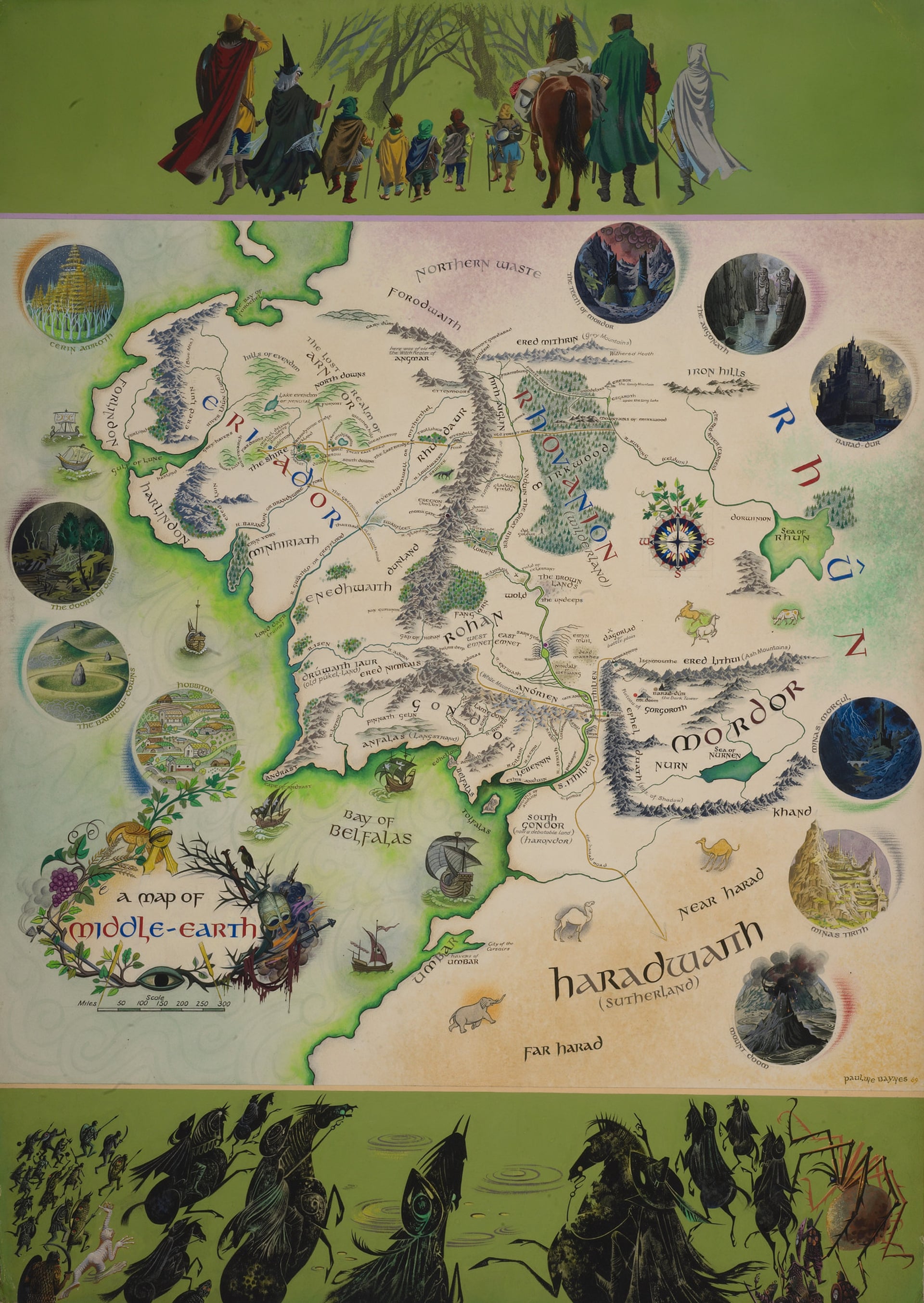
Because I couldn't write anything, I decided to take a break and work on something I've been putting off-creating a map of my fantasy world. So with book one's manuscript, a copy of Tolkien's Middle Earth map as a guide, and the LOTR soundtrack playing in the background, I got to work.

The more I worked on my map, the more my creativity surfaced, and I soon found myself plotting places and ideas on the map for book two and then making a bunch of notes so I wouldn't forget. There's still a few murky areas,  but that can be where my panster side comes out.

Being in a creative/writer's block, I had to step away from writing and do something else that was creative. Writer's Digest discusses doing something else creative to help with writer's block in their article 7 Ways to Overcome Writer's Block.

This has really helped get my creative juices flowing, in fact I had to make myself stop to write this post.

What about you? I'd love to hear what you've found that works.