Art
Tuesday, November 16, 2021
Writer's Life: Running Your Race (Sarah)
In writing circles, I witness frequent discussions on writing speed, daily word count, and the number of books written and released per year. In fact, a few days ago I heard someone who published four books a year call her pace slow…if she is slow, I suppose I’m glacial.
In actuality, I can draft at a decent rate, turning out 1500-2000 words an hour, but I have a relatively minimal amount of time to write, and I also tend to proceed slowly in the editing phase, wanting to layer in detail and nuance and polish words until they shine. Of course, it’s likely that my pace and process will continue to evolve through the years, and I generally find I get faster the more books I write, but that’s where I am now.
And I’ve had to continually remind myself not to compare to other writers. There’s no inherent virtue in cranking out a book a month (nor conversely, to taking a year or ten to write one novel). It’s about cultivating excellence in craft and creativity in your work and finding the pace and methods that fit you as a writer and your particular season of life.
No two people are alike. Our personalities and life circumstances are unique. We each have responsibilities, values, and challenges that shape how we live our lives. It doesn’t mean we can’t learn, grow, and become more effective in how we carry out our responsibilities and pursue our dreams and desires, but we’re working from different starting points and even with different creative or career goals in mind.
Right now, I’m in the season of young children (ranging from 20 months to 6 years). While sometimes stories press upon me, demanding release, and I dream of long blocks of focused time to birth them onto the page, in reality, I wouldn’t trade this season with my kids for anything. I’m thankful that I get to pour my time and energy into them by homeschooling and sharing everyday life with them. If I chose another path, such as sending them to school, I would have more time to write—but this is the choice that’s right for me and my family. That means I simply focus on carving out time to write as consistently as I can, working it into the fabric of our family's schedule—and not comparing my output to someone who writes for four, eight, or twelve hours a day.
I love the Scripture that says “and let us run with perseverance the race marked out for us, fixing our eyes on Jesus, the pioneer and perfecter of faith.” I’ve found when I do that, I’m not distracted by comparison and can be more joyful and productive. I can learn and glean from others, from their methods along with their successes and failures, but I keep my focus on running the race set before me—not someone else’s race.
What about you? Do you struggle with comparison? If you write, what is your natural writing pace? Has it changed with the changing seasons of life?
Tuesday, July 13, 2021
Writer's Life: Dreamers of Dreams (Sarah)
For as long as I can remember, dreams have played a role in my writing life. I’m not talking about daydreams, though certainly those are vital, but actual dreams that come by night. In my current manuscript, a gaslamp mystery novel, the first glimpse of the protagonist came to me in a dream. Jessa has evolved a great deal, but those initial glimmers of appearance and personality sprang into being in the night, as did the core concept of the murder mystery (in another dream, years apart). These glimpses and glimmers take daydreaming, brainstorming, and creative work to become an actual story, but I love discovering story seeds in dreams.
And apparently, I’m not alone. CS Lewis talks about having many dreams of lions, before Aslan sprang into his mind, and from there, the entire Narnia series took flesh. Tolkien speaks of recurring dreams of a tremendous wave consuming a city which gave rise to his tale of the Downfall of Numenor. There’s even a book on writers dreaming (which I have yet to read, though the subject is certainly intriguing) including authors such as Stephen King and Anne Rice.
Our thoughts and creativity run unfiltered by logic as we dream, so it makes sense that we would find in them unusual ideas and inspiration. When I find story seeds in dreams, they’re often dreams carrying emotion that bleeds over into waking, which in turn makes me eager to dig deeper, furthering creativity and story-telling. Certainly, I can’t make these inventive dreams happen, and I have my share of the peculiar or nonsense dreams (and nightmares, unfortunately) alongside those that provide a creative spark, but I appreciate the way God designed us to dream and create even in our sleep!
Are you a dreamer? And if so, do dreams ever fuel your stories? I’d love to hear your experiences.
Tuesday, May 4, 2021
Writer's Life: The Little Art Matters Too (Mary)
I don’t remember exactly when I stopped writing short stories, just that it was several years ago. It isn’t as if I made a conscious decision to abandon short fiction in favor of longer works, it just...sort of faded away.
Ever since I can remember, as a tiny child I would make up stories in my head and then act them out in my play (with my Yorkie Terrier, Ezmerelda, as my co-star and trusty sidekick). When I learned to read and write, I wrote and illustrated picture books. When things scared or upset me, I processed them through story. (I can recall one particularly traumatizing event, when a coyote snatched one of our geese from the yard in broad daylight and ended up killing her—that got a multi-page spread in my art and writing notebook.)
Somewhere around age eleven or so I separated my drawing and writing from each other. Drawing went into a sketchbook, and writing suddenly took on more life as I began writing a collection of short stories that I called “legends” (I don’t know if I actually knew the technical term “short story” at that time or not). I discovered poetry around the same time, and very few nights went by when I wasn’t using my little sister’s night light to scribble late into the night.
I was incredibly prolific during that time, churning out at least one or two new stories and/or poems every week, plus countless journal entries.
Oddly enough, I had no clue at that point that I was a writer. I unconsciously assumed that everyone had stories constantly growing and developing in their heads, that everyone mentally narrated their day-to-day lives in third person, that everyone filled life’s little delays and in-between times with planning out new plots and characters and descriptions. I was utterly unaware that what I was doing was unusual in any way.
I was fourteen when I had what was, for me, a world-shaking revelation: My newest story idea was too big to be a short story—it was a book. And I was going to write it, which meant...that I was a writer!
That was a major turning point in my creative journey. From that moment forward I began calling myself a writer—something I had never done before—and threw myself with wild abandon into my new book-sized project.
One book quickly grew into a slew of ideas. Now that I was writing books-length stories, the ideas came faster than I could finish them, and I started developing a backlog.
Finishing my first book brought with it the most incredible high I think I’ve ever experienced in my entire life—far beyond anything I got from finishing any of my short works—and I was hard at work on the sequel within six hours.
As one would expect of the work of a fourteen-year-old, those first books were utter garbage. But I was learning, growing, developing my craft, and loving it, and that was what mattered.
I still wrote short stories and poetry on occasion—in fact the first work I ever published, at age nineteen, was a poem—and I published quite a few of them over the next few years. But gradually, I thought of myself more and more as a “novelist,” rather than just a “writer” or “author.” I began assuming that more and more of the story ideas that came to me were destined to be novels one day, which meant that of course I couldn’t write them just yet, I would have to wait until I worked my way through the ever-growing list of story ideas that came before it. The list of unwritten ideas got bigger and bigger, and the percentage of ideas that were actually getting written got smaller and smaller.
Then late last year, I was invited to contribute to a Christmas anthology that I was incredibly excited about. When I sat down to figure out what to write, I had a sudden realization: I hadn’t written a short story in years.
Somewhere along the way, I had stopped thinking of short stories as mattering or being valuable. I had developed the mindset that writing an idea as a short story was somehow “wasting” it, or not giving it everything it deserved—that novels were somehow more valuable in terms of artistic merit than short stories. That novels were serious literature, written by serious authors, while short stories were...something less.
Of course, at an intellectual level I absolutely knew this to be untrue. Who would make the argument that a tiny scrap of vellum bearing a sketch by Leonardo da Vinci is worthless simply because it isn’t Mona Lisa? Or that Michelangelo’s David is less important than the tomb of Pope Julius II, just because it’s smaller? Or that Edgar Allen Poe’s short stories or the Sherlock Holmes collection don’t matter because the stories aren’t novel-length?
No one with a grain of sense would argue that, and I knew that.
But somehow, somewhere along the journey, in my desperate pursuit of becoming a “serious” writer, I had let myself internalize the idea that shorter = less valuable, less serious.
So as I planned and wrote my story for the Christmas anthology, I decided to change that.
Since the beginning of 2021, I’ve published one short story and written two more, both of which have been submitted for consideration to different magazines, as of this writing. My main writing project is still a novel, but I’m slowly retraining my brain to allow for the possibilities of short stories, not just novels, whenever a new idea pops up. Those ideas don’t have to languish on a back burner for years until I can make them into novels—they can go out into the world as short stories and still matter.
I long ago made my peace with the fact that I will be leaving many, many ideas behind me, unfinished, when I die. But maybe now that I’m letting go of my weird subconscious need to turn everything into a novel, now that I’m remembering that small works are important too, maybe that number can be a little smaller.
And if you are a writer who maybe doesn’t feel like you deserve to taken seriously as such, because you’ve only written or published short works, rather than a novel so far—remember that the little art matters too.
Tuesday, February 25, 2020
The Curious Mind of a Writer (Sarah)
Most of us have countless demands on our time—work, parenthood, and a myriad of other responsibilities juggled alongside our roles as writers and storytellers. That can lead to a crowded mental space. Yet being an effective storyteller requires a certain sense of curiosity, of being willing to question, and to see the world in a new, wonder-filled light.
Albert Einstein once said:
The important thing is not to stop questioning. Curiosity has its own reason for existing. One cannot help but be in awe when he contemplates the mysteries of eternity, of life, of the marvelous structure of reality. It is enough if one tries merely to comprehend a little of this mystery every day. Never lose a holy curiosity.It was true for him in the academic realm, and it’s true for us in the creative process. So how do we preserve the spark of curiosity and wonder, so essential to creativity?
The answers are as varied as the individual, but here are a few elements I find helpful:
- Maintaining an active spiritual life. God has set a spark of eternity in our hearts and designed us in His image as creators. I find that if I keep my relationship with God in first place, the rest of life flows freely. I view the process of writing as a partnership with Him. After all, He’s the ultimate well-spring of creativity!
- Making space for quiet. As an introvert, I need quiet to refuel—and also to allow ideas to simmer. This is a tricky one with young children in the house, and sometimes, it’s impossible. But even a few minutes carved out here and there make a huge difference.
- Reading excellent stories. Reading inspiring, thought-provoking novels energizes my own creative endeavors. They spark questions, cause me to contemplate new mysteries, and remind me of the power and joy of story.
- Enjoying beauty in all its forms. Whether it’s beauty in nature, compelling music, or any other form of artistic greatness, it stirs wonder and provides bountiful inspiration.
- Quality time with my kids. They approach life with boundless curiosity (cue the endless whys) and take infinite joy in learning and exploring the world. Their insatiable desire to know and understand fuels my own.
Tuesday, November 5, 2019
Using Movies to Help Your Writing (Julie)
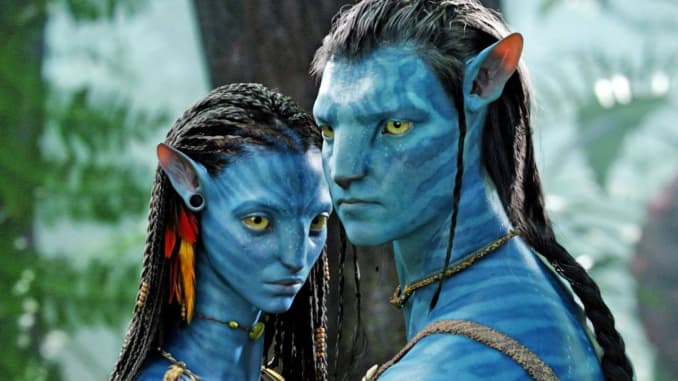
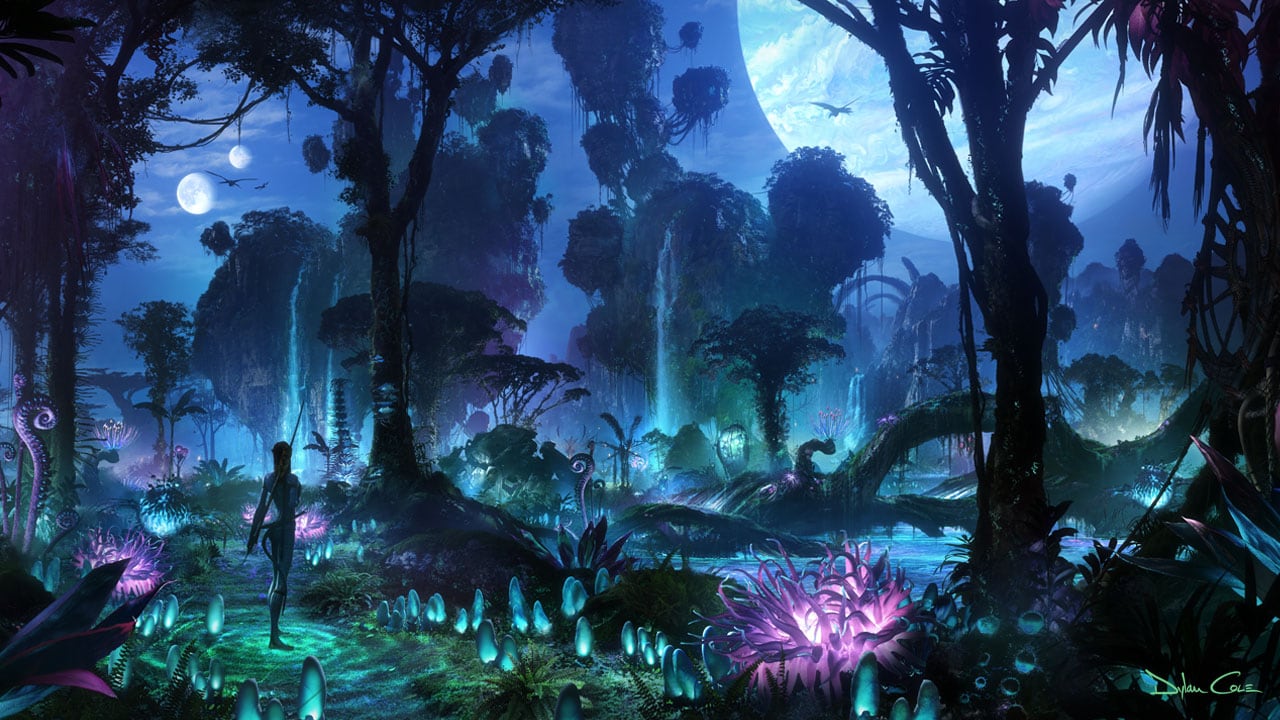
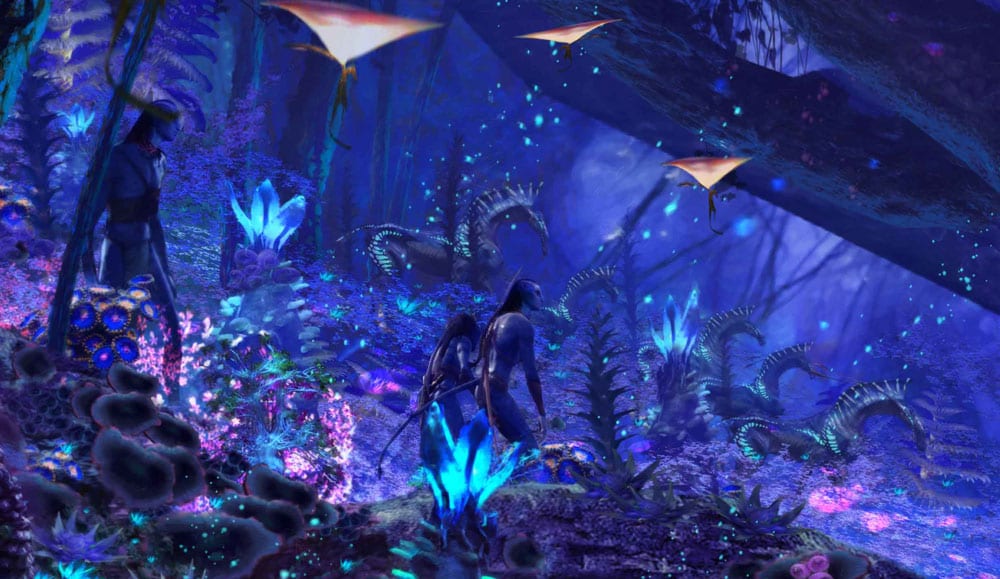
This isn't a review of the movie, but I can say that it definitely wows in the creativity department. It was amazing how unique the story world was. Of course, it was a movie and movies are all about the visual aspects to feed the imagination.
When writing your own story, you have to put more effort into world building because the reader can't actually "see" it like you can in a movie. It's all about the words you use to paint the image.
But anyway, back to the movie. I found some things not to my liking, like the amount of language, but I really enjoyed the world building. There was so much attention to little details that set the world apart. For some reason, the ears of the aliens (how they moved quite a bit) have stuck with me.
So now, the day after watching it, I'm wondering about my own story:
-have I incorporated those small details that give the characters individual, memorable traits?
-is my story world unique enough to capture the reader's attention and make them visualize it in their minds as if they were watching it on the big screen?
-not only if the imagery is good, but also making sure it isn't overly done? Just like in a movie, there can be too much visually going on and you miss a lot or it just becomes overwhelming. Sometimes in Avatar, it did get a bit too much to look at at one time.
Creating worlds and characters can be a fine line. You can either do too much or too little, so you have to find the right balance of creativity without loosing your audience to sensory or word overload.
Have you seen a movie that has inspired you to rethink about your own writing, or helped you improve your writing?
Tuesday, September 24, 2019
Creative Outlets Anyone? (Katie)
What's Your Creative Outlet?
Baking
Walking
Gardening
Tuesday, March 26, 2019
7 Ways to Improve Creativity (Lizzie)
1. Create a Creative Mindset
The first step in being more creative is really just to remember to be creative. It's easy to use a trope or simply not push yourself to use a talking sorting hat to determine which house students belong to in your fantasy novel set at a boarding school for wizards when students could simply draw numbers. There are everyday events in your story (like getting mail) and grand events (like being put in your house or getting a weapon at a crucial moment). You have to constantly ask if these events can or should be ordinary or creative. Not every story needs an owl delivering mail or a talking sorting hat, but somewhere, sometime, you will need to solve a problem using a creative method or just interject a creative version of an everyday activity. Keep that in mind. That's great, you say, but how do I get those creative ideas? Well...![]() |
| Harry Potter and the Sorting Hat |
2. Read widely
Reading a variety of genres is always good because it expands your range of abilities. Reading mysteries (and contemplating how a good mystery is told), allows you to build mystery and suspense into your fantasy, for instance. But it also introduces you to new ideas and settings. Don't just read teen or adult. Read middle grade fantasy. These authors are very creative and use all kinds of wild and silly ideas that adult books don't (the suspension of disbelief and tolerance of silliness is less, I think, in adults, so creativity is inherently greater in children's books). Don't just read fiction. Read non-fiction. My WIP, a steampunk series, was inspired partly by a book about longitude. Really? Yes. Dava Sobel's book Longitude about the development of the sea clock for the accurate determination of longitude at sea was fascinating (and involving personal stories, drama, sailors lost at sea, a race to win a grand prize, and more). The idea that people didn't have the technology to know where they were (at least at sea, where it's easy to miss that little island with the water you desperately need) until only a couple of hundred years ago blew my mind. And got me to wondering what a world without the ability to navigate would be like.3. Read widely and read mythology and history
Yes, the repetition was intentional. Don't just read new fiction. Read mythology and history. The ancient weren't short on wild and crazy ideas. And history can be almost as crazy as fantasy. I thought J.K. Rowling and Tolkien were extremely, unbelievably creative until I learned more about mythology and Old English literature and history. A lot of their ideas, I discovered, aren't brand spanking new; they are simply either new to me or repackaged in a way that makes them seem new. Middle-earth? It's an Old English keening (compound metaphor) used in Caedmon's Hymn and probably other works. The moon runes in the dwarf's map in The Hobbit? Anglo-Saxon futhorc. Not really new. And that's okay. A phoenix and basilisk? Not new either. "There's nothing new under the sun," so it's no shame to re-purpose old ideas and no discredit Tolkien and Rowling at all.Study other cultures. What's new and fascinating to one person may be everyday life or a familiar story to someone else. Boarding schools are rare in my corner of the world, so setting at story at a boarding school made Harry Potter unique even without magic (boarding school stories are no longer unique, so be careful). You never know what aspect of another culture might be useful directly or spur an idea that ups the creativity of your story.
4. Ask questions
This really goes back to number one. How can I make this more creative? How can I make the receiving of mail a magical event? What if people couldn't navigate for themselves? If a faerie curse prevented navigation, how far could they go before getting lost? How I can put fear of spiders into my story in an unforgettable way? What if...? How could...?5. Make old things new (and unexpected)
Is a bird delivering a message really new? No. Carrier pigeons, anyone? But using an owl as a post man to a boarding school is new. We've already said that a phoenix isn't new, but a phoenix in a headmaster's rooms is new (and unexpected), as is a phoenix (so far as I know) delivering a hat with a sword in it. Putting old things in a new setting, combining them, using them in new ways, altering them a bit (like Rowling altered the mythological basilisk) are ways to increase creativity, partly because it's unexpected.![]() |
| From wikipedia: "The basilisk and the weasel, in a print attributed to Wenceslas Hollar. The cockatrice (pictured) became seen as synonymous with the basilisk when the "basiliscus" in Bartholomeus Anglicus' De proprietatibus rerum (ca 1260) was translated by John Trevisa as "cockatrice" (1397).[4] A basilisk, however, is usually depicted without wings." So basilisks varied a good bit in mythology, and J.K. Rowling added her own version in the Harry Potter novels. |
6. Make the most of your story world (and forego tropes)
An author friend (I won't give her name so as not to risk any spoilers) recently asked about how to get her main character information from a dead character. The tropes are to have the character find a letter from the dead character, have a seance, or have someone else tell the main character. I recommended she find something that fit her story world. J.K. Rowling used magical memory storage balls to get a character needed information. It fit her world and was really cool. If you write fantasy, then you have the option to come up with amazing things--and just knowing to ask the question, being willing to challenge yourself, will usually lead to the answer. So recognize tropes and keep seeking new solutions until you come up with a fresh idea. Remember you're writing in a fantasy world!7. Create limitations that must be overcome
This one is great for adding tension to the story as well. In The Rose and the Wand, I introduce a traveling ring. It lets Giles travel instantly wherever he likes (by the way, the idea actually came from a version of the original fairy tale--Beast gives it to Belle so she can go home to visit her family and return to him--and I tweaked it to fit my story). Marcel, in To Catch a Magic Thief, has the mate to Giles's ring. But allowing Marcel to go wherever he wants, whenever he wants is not good for story tension! He needs to be stuck in dangerous situations, and unable to easily rescue Gabriella, so I had to put limitations on the ring. It only carries one person and no luggage (he can't escape with Gabriella in tow); it won't take him anywhere if he doesn't know where he is; it won't take him to a place he's never been. Putting limitations on the ring not only makes it unique, but raises situations that challenge me. I have to find a new ways for Marcel to escape. That challenge, that question of "how will he escape?" will stimulate me to come up with a solution that isn't expected. I also give the ring another attribute, but it would be a spoiler to share it, but remember you can add other attribute to an object to make it unique.That's a lot of information! Thanks for hanging on to the end. In summary, read widely to fill your creative wellspring and remember to challenge yourself to be creative.
Do you have any other suggestions?
Saturday, August 12, 2017
Top 3 Time Suckers (Jill)
And it's due to Time Suckers-- those things we do that take time away from our projects. I'm not talking about laundry or meal prep or running errands. I'm talking about those things that really aren't necessary, even though we sometimes make excuses for them.
3. Crafty projects
As a creative, I tend to have several DIY projects going at once. Near my favorite chair, some beautiful Swarovski crystals are packed in a bag, waiting to be wire-wrapped. There's a piece of cool embossed fabric sitting on the counter that will be turned into a book cover. I also have some paper I've put aside for Christmas cards (I have to start early. Fall/winter is crazy busy in our household.)
2. Social Media
When I sit down to write, I often find myself opening up my email, or my Facebook account, or my Twitter account to see what's happening. This is a terrible habit and before I can blink, I've lost an hour or more. Pinterest is even worse. With one peek, I'll be sucked into a visual rabbit hole and won't emerge until hours later. So I'm making an effort to focus on the project (and only the project!) when I sit down at the computer.
1. Reading
Writers are told to read, read often, and read in our genre. But there comes a time, when I need to put the book down and start working. Sometimes it's so tempting to start reading one more book, because the cover is so gorgeous, and that blurb so interesting, and... I have to stop. And start putting my own words on paper.
So these are the top three things that distract me from finishing my project. What are yours? Any of these? Or do you have other distractions that make you lose focus?
Share them below -- we'd love to hear about them!
Saturday, May 20, 2017
Top 3 Music Choices to Inspire Creativity (Erin)
3. Enya Watermark: Like a great bowl of macaroni and cheese, I don’t think I’ll ever outgrow Watermark. This is only her second album, but the mix of relaxing songs in English and Gaelic is timeless. Listening reminds me of sitting in a window in the early morning, being fascinated by the designs the steam from my cup of coffee makes in the soft sunlight. I like to listen to Enya at the start of a writing session, when my brain needs to wake up a bit.