Showing posts with label World-Building. Show all posts

Thursday, July 26, 2018

A Parallel World: Your Turn (KaLyn)

Photo credit: João Silas on Unsplash

As you know from Laurie's post on Tuesday, she and I were both at Realm Makers this past weekend. It was amazing! I came away with fresh ideas and renewed excitement for my middle-grade science fiction novel.

As I dig into edits this week, I'm looking for ways to include more world-building details about the parallel version of Earth featured in the book. It shares a common history with Earth that deviates after the tenth century, but this fact is too subtle in the current draft.

Part of what makes parallel dimensions fascinating to me is the idea that changing one detail or event can impact every aspect of life and development that occurs after the change and the infinite possibilities of those changes.

Imagine if fire never existed in our world. How would it change where we live, our houses, and our clothes? And what about our food - how would it change what we eat? After all, fire has been the primary cooking method for most of human history.

Consider also all the expressions and stories that include the word fire or other words that have to do with fire, like smoke, ash, flame, etc. How would they change?

How do you imagine our world would be different if fire never existed?

Saturday, May 26, 2018

Top 3 Ways to Add Wonder to Fantasy (Laurie - Indie e-Con 2018)


Over the past week I've been participating in the 2018 Indie e-Con - a Comic-Con kind of event for those of us who have to stay home. It's been an amazing week getting to know and learn from so many authors and celebrating many wonderful genres. And today, the genre happens to be fantasy - how perfect is that? I contributed a post for the main event page about fantasy retellings, which you can find here. But we were also encouraged to write posts on our own blogs, so I thought I'd make my Top 3s post today a slightly instructional tribute to fantasy :)

I realized recently that almost all my favorite fantasy books have a certain sense of wonder about them. There are usually some dark events taking place in literary fantasy worlds, which of course is necessary to create a plot with conflict and tension. But in the midst of that darkness, the books that can instill awe and wonder as I read are the ones that tend to stick with me. So I wanted to share a bit about what those books have in common.


3. A System that Makes Sense

Maybe it's the logical side of my brain taking over or the fact that I'm a bit of a math nerd, but there's something so satisfying about a fantasy world that makes sense. Whether it's magic, fantasy creatures, strange powers, an unearthly setting, or some combination of the above, readers can tell the difference between world-building where cool elements are thrown in haphazardly versus a carefully laid out system with depth and intricacy. Creating a structure that will wow such readers not only involves planning and consistency, but most importantly requires dropping hints and tidbits of information that build the world layer by layer, leading to "Aha!" moments where the pieces suddenly fit together. The book I'm reading currently, Halayda by Sarah Delena White, illustrates this really well (at least so far!). As the characters travel further into the faerie world and delve deeper into the mystery of how to heal it, the history and magic come together to reveal more and more of the fae's secrets, making me eager to learn more.


2. Light in the Darkness

Usually there needs to be something going wrong in a fantasy world, or there won't be much of a story. But a darkness that's too pervasive gets depressing and snuffs out the reader's feeling of wonder when exploring a new setting. Hints of light can come from humor, characters striving to achieve some good in their dismal surroundings, help from unexpected sources, or glimpses into the former and/or future beauty the world could hold. In The Story Peddler by Lindsay A. Franklin, the characters are suffering under the rule of a corrupt, greedy king. Fear and poverty prevail, yet even at its darkest moments the world holds a sense of beauty through new friendships, courageous acts of love, and the incredible sculptures built by the threads of the story weavers. Definitely a world I wanted to spend more time in!


1. Great Characters

Exploring an intriguing fantasy world alone is fine, but getting to explore with characters you relate to and love makes the experience so much more enjoyable. No matter how interesting or beautiful the fantasy world an author has developed, readers won't become attached unless they care about its inhabitants. Trying to imagine the Harry Potter series without Harry, Ron, and Hermione, the Chronicles of Narnia without Peter, Susan, Edmund, and Lucy, or the Lord of the Rings trilogy without Frodo and Samwise is practically inconceivable, because our experiences of those stories and fantasy worlds are so closely tied to their central characters. As important as it is to create a vivid, intriguing fantasy world for readers to visit, it is even more essential to develop complex, relatable characters to give readers perspective, insight, and an emotional tie to the story.


What aspects of a book produce a sense of wonder for you? Can you recommend any books that accomplish this well?


Thanks for reading!
Laurie

Friday, March 10, 2017

Fantasy Travel and Transportation (Hannah)

Hello, everyone, and welcome back to Storytelling Magic! It’s Hannah. When Reni realized she couldn’t write a blog post on her own, she finally let me out… but what she didn’t realize was that as her writer, I have complete control over her life. Those of you who know me know that I can wait days, weeks, and even months to retaliate – but there is no doubt that it will happen eventually. I needed Reni’s traveling experience for my post on transportation, but don’t worry. She will definitely pay for the stunt she pulled as soon as the perfect opportunity arises. 

In the meantime, Reni has been spending a lot of time in Tamriel. Tamriel is the continent that serves as the setting for Bethesda Softworks’ Elder Scrolls series of games. I am a huge fan of the Elder Scrolls series. Call me strange, but I started at Elder Scrolls V: Skyrim, then played IV: Oblivion, and have recently begun III: Morrowind. Though these games are in the same series, they have major differences in graphics, gameplay, storyline, and more. Aside from the user interface, the change that has the biggest effect on the moment-to-moment mechanics is travel. (I promise this is related to worldbuilding, just stick with me!)

I am going to talk about the changes backward, as I experienced them. I know very well that Morrowind was first, but for me personally, Skyrim set the standard. I went from the highly polished, easy-to-play, accessible-for-everyone style of Skyrim to Morrowind, which was much closer in function and mechanics to a tabletop role-playing game. Therefore, for me, it seemed like simple aspects like travel suddenly became much more complex. 


Skyrim


In Skyrim, you had several methods of travel available. They were all intuitive – exactly what you would expect.

Method 1: Walk. Duh. This is the most common way to get around. Going from the city of Dawnstar to the city of Windhelm? You can walk there in – oh, 12 minutes of real time. Naturally, I made Reni walk through the freezing cold and fight off all sorts of wild creatures in order to test this.

Reni: You could have just guessed and not made me go through that.

Hannah: Sure, but it was quite a satisfying form of payback. You spend a lot of time in temperate and tropical regions, so a trek through the cold like that was definitely not fun for you.

Reni: You could say that again.


Walking has its advantages, though. The landscape is incredible, and the detail put into every plant, rock, and stream is amazing. The northern lights in the sky at night, the silhouette of a castle on the horizon… To be honest, despite how time consuming it is, I have come to really appreciate the journeys. 


Method 2: Ride a horse.  You can buy a horse in every major city. Horses greatly increase your speed and can allow you to cross terrain you normally couldn’t access on foot. Riding a horse has all of the benefits of walking and is faster. 

Method 3: Boats or carriages. These aren’t anything special and didn’t stick out to me at all. In the three coastal cities, you can find a boat that will instantly transport you to one of the other ports. Every major city has a carriage that will also instantly take you to other cities. Unfortunately, you do have to pay for these services. At least the cost is negligible even from the lowest level. 


Method 4: Fast travel. This is by far the most widely used method. To use this, you just open up your map, select a location you have visited before, and teleport there instantly. Very convenient and completely free.


Oblivion


In Oblivion, you can walk, ride a horse, or fast travel. No major differences from Skyrim. 


Morrowind


Morrowind’s travel system completely threw me for a loop. One change led to a complete overhaul of the travel system: there was no fast travel. Sometimes I play Skyrim where I don’t use fast travel, but still, it was very nice not to have to spend so much time walking around when I was more interested in completing quests or exploring new locations. Morrowind throws that option out the window.

Did you just stumble out of a cave after two hours of clearing it out? Now you have a ten minute walk back to any form of civilization. Do you need to go home to drop your treasure off? Have fun walking the same stretch of road you’ve traveled every other day. Does some quest-giver want you to pick up the mail from a city all the way across the map? Better get moving if you want to do anything else meaningful in the next hour or so.

Thankfully, the game compensates with a highly sophisticated travel system that feels very rewarding, realistic, and otherworldly.

It is a fantasy game, after all.

There are many more methods of travel in Morrowind – 

This is Morrowind's travel map.  It shows about half of the options and where they will take you.

Method 1: Walk. Big surprise, huh? Unlike Skyrim, Morrowind does running a little more realistically. You can’t just run all day every day – it drains all of your energy. And then if you happen to encounter an enemy, you are practically helpless. Thankfully, it actually has a skill dedicated to running. The more you run around, the faster you get and the less energy you expend. If you watch a high level Morrowind character run, you can see it is much more efficient than running in Skyrim. More work up front, bigger payoff at the end – this could be Morrowind’s motto. 

Method 2: Fly. Yes, fly. If you are a powerful enough mage, you can fly everywhere you go. This significantly shortens trips over mountains, winding paths, tall buildings, and more, and it gives you a beautiful bird’s-eye-view of the landscape. In fact, you cannot even travel around the mages’ towers without the ability to fly, because there are no stairs.

Method 3: Boats and silt striders. This is a silt strider: 


It functions similarly to a carriage in Skyrim, but it is much more interesting looking and gives traveling a unique flavor. Boats are just like Skyrim boats, but can reach more than just three cities. These are the most common means of quick travel, but are costly.

Method 4: Almsivi Intervention or Divine Intervention spells. These are related to different religious groups and call upon the power a deity to rescue the character from harm and teleport her to the nearest temple for healing. 


Method 5: Propylon Index. If you find the necessary components, you can use an ancient and abandoned technology to teleport around the map to the other ruins.

There are lots more, but the main point I am trying to make is that the mechanics of travel can drastically change the flavor and function of a fantasy world. Yet, this is one of the things fantasy writers can easily overlook. I know I did, and my story is based on travel! Often, the way your people get around will be directly related to their environment. In a fantasy world, there is a good chance you won’t just have traditional options available.

Think about some other fantasy and science fiction stories. Nearly all space-based stories have spaceships that can travel across galaxies in a negligible amount of time. Anne McCaffrey’s Dragonriders of Pern book series is centered around dragons who can teleport between time and space. Blizzard's StarCraft has nydus worms, which are living creatures that burrow through the ground and become tunnels for other creatures to pass through.  Even real life places like Venice have uncommon methods of travel. How many other cities have streets made out of water?

There are a few things to think about when you are deciding how your characters get around.

What are your species’ built-in travel options?

For example, walking is the standard option that is available to most humans. Birds can walk, but they are better known for flying. Some superheroes can teleport, and others can stick to walls and climb really easily. Whether you are using people or some sort of fantasy race, think about their options before any domestic animals, vehicles, or technology come into play.

How far do your people usually go?

This one is important. My family drives our car everywhere. I can drive twenty minutes to the grocery store or twenty hours to visit out-of-state family and the car is sufficient for both. In many places, that isn’t the case. If you lived in a big city, you might walk or ride the subway most of the time and only drive if you were going somewhere moderately far, or perhaps take a train or a plane if you are going even farther. If you lived in Medieval Europe, you wouldn’t go far outside of your home village anyway so you might just walk everywhere. The pioneers probably walked much of the time, but they used horses and horse- or oxen-drawn carts and wagons for longer trips.

What type of technology is available?

Maybe your culture relies exclusively on animals like horses or camels to travel, and therefore are limited by having to care for a living being on the journey. Maybe they use something similar to modern cars or planes, which are more versatile and lower maintenance than living creatures, but still require a lot of fuel and upkeep. Or maybe you have a futuristic invention like a transporter or a stargate. And of course, don’t forget about magic – anything can happen when magic is involved.

What are the difficulties of crossing your particular landscape?


If your characters need to get from one planet to another, they obviously can’t use a car. They need a spaceship of some sort. You wouldn’t take a horse across the desert, and the pioneers wouldn’t have gotten very far if they had been riding bicycles. What is your biome like?

  • Is there a lot of water? Do they need ships that can sail on the ocean, or are they only crossing rivers and lakes? 
  • Are there a lot of hills or mountains? What would be effective for navigating these? 
  • What about thick forests? 
  • Is there snow and ice during certain times of the year? 
  • What are some other features of your landscape that could affect travel? 

What options are available for overcoming these difficulties? 


When the Europeans wanted to reach Asia, they found the journey across land was very difficult and dangerous, so they spent the next century or two figuring out how to build better ships, master the natural tools (for example, learning to navigate by the stars), and invented new equipment (like the compass) that would allow them to sail to Asia. If your people want to get somewhere and there is an obstacle, there is a good chance they will innovate and create something that will allow them to overcome the obstacle.

What conventional or unconventional methods fit your criteria? 


In Morrowind, the ash-covered land is riddled with mountains and lava rivers. Horses and other regular animals wouldn’t be very useful there, so the writers invented the silt strider, a giant bug-like creature that can survive the rough terrain.

Are there any other terrain improvements that can help travel?

The Romans built a network of roads, which was a new and effective way of facilitating travel all across the empire. The Transcontinental Railroad, which connected the eastern and western United States by train, was a monumental accomplishment. Morrowind’s propylon chambers were built by an advanced civilization to help people teleport around the island quickly. What have your people done to improve the traveling conditions?

What is required to maintain the method of travel?

Animals need food, water, shelter, and rest. Cars need gas, and occasionally oil, tires, and repairs. Star Trek’s spaceships need dilithium crystals. Are there places along the roads or paths that provide whatever is required, like gas stations? Or are your people more like the pioneers, who had to carry what they needed or find it along the way?

What is the cost of travel?

Whether it is food for your animals, gas for your car, hotel fare for overnight, tolls, or taxes, traveling can be costly – and that’s before you include the cost of whatever animal or vehicle you use. What is the cost of your transportation? Is it like the wild west, where a horse thief could be hanged? Are cars reserved only for the wealthiest elite? Or can anyone hop on a spaceship and find himself halfway across the galaxy for just a small fee?

Is there any outside interference?

Is there a government that regulates how and when people can travel? Do they just make rules for the road or do they have to give permission for someone to move from one place to another? Do they place any taxes or fines on the roads and paths? Are there borders or boundaries people cannot cross, or can only cross under special circumstances or through a long process (for example, going through customs when you enter a new country)? 

Are there guides or caravans that might help travelers navigate certain areas?  Or are there gangs or bandits that are likely to attack travelers, making it necessary to bring along some form of protection or travel in groups?

---------------------

The mechanics of travel is an important part of how a civilization functions, and it is especially important to consider if you are writing a “quest” type story like I am, where the characters travel long distances in order to achieve a goal. Just think of the many ways the Fellowship of the Ring got around in Lord of the Rings: they walked, rode horses and ponies, rode on boats, flew on the eagles, and more. There is a lot of walking going on in my story – perhaps I need to brainstorm some more creative ways for my characters to get from one place to another!

Thank you for reading! As always, questions, comments, opinions, and ideas are always welcome in the comments. If there is any particular topic that would help you in your worldbuilding, please go ahead and mention it down below. Reni and I always want to write posts that are useful and interesting, so request away!

Attributions
All screenshots above are taken from The Elder Scrolls III: Morrowind and The Elder Scrolls V: Skyrim, both by Bethesda Softworks.
Morrowind Travel Map: http://www.terminally-incoherent.com/blog/wp-content/uploads/2007/05/fullmap_travelroutes.png

Saturday, October 8, 2016

Top 3 Speculative Worlds (Laurie)

One of the things I love most about the fantasy genre is that anything can happen in worlds with elements both familiar and foreign. This summer, Elizabeth did a post on her favorite speculative worlds, which got me thinking about the fantasy worlds in the books I've read. Months later, I'm finally ready to share my top 3!


3. His Dark Materials Trilogy by Philip Pullman

119322There are aspects of this series I didn't agree with, but the world-building was phenomenal. I enjoyed the idea of parallel worlds, and the fact that there were consequences for traveling between them. Pullman incorporated so many fascinating elements into these worlds, including armored polar bears, spectres, dust (invisible, mysterious particles), and the remarkable items the books are named for: the Golden Compass, the Subtle Knife, and the Amber Spyglass. Most of all, I loved the concept of daemons, an external manifestation of a person's soul in the form of an animal. I remember wishing I had a constant companion who could provide consolation and guidance like Lyra had in Pantalaimon. And since daemons take a permanent form once their humans reach adulthood, I also had fun speculating what animal form would be a good match for me. The complexity of Pullman's world-building and the way it interacts with the story really made this series stand out when I read it as a teenager.


2. The Hollow Kingdom Trilogy by Clare Dunkle

142776I already posted about this series as part of my top 3 couples, but I have to give it another shout-out for world-building. In the first book, Kate and her sister discover that a civilization of goblins lives underneath a nearby hill. When Kate marries the goblin king, she goes through an interesting series of initiations and learns a great deal about goblin history and customs. In the second and third books, elves are also thrown into the mix, and I loved the way Dunkle handled the suspicions and misunderstandings between the races. I also liked how well developed the goblin and elvin societies were, incorporating everything from fertility issues to standards of beauty. The reader gets a balanced look at each race's point of view, giving thought-provoking perspectives on how divisions and biases form, and how they must be overcome in an interdependent world where each race needs each other to survive.


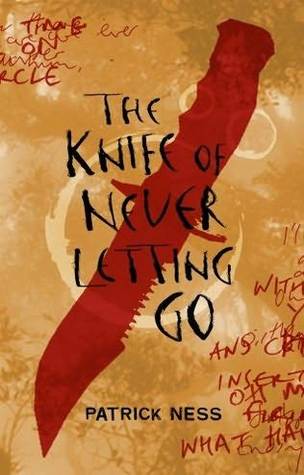
1. Chaos Walking Trilogy by Patrick Ness
2118745
I've been waiting for an opportunity to talk about these amazing books, and world-building is the perfect occasion! The series is based on a planet where a small civilization of humans has settled. In this New World, men can hear each others' thoughts, creating Noise. One of the things I enjoyed most about this trilogy was how integral Noise was to the entire plot. As one would imagine, having their thoughts known by everyone around them has a huge impact on how the characters act, especially when dealing with secrets. In addition, women's thoughts aren't audible (but they can hear Noise), a distinction that creates a great deal of conflict and division. Over the course of the books, the main character, Todd, learns to control his Noise, to the point that he can produce physical reactions in others just using his thoughts. Ness's world also has a complex history including relations with an indigenous species called Spackle. The way his world-building elements come together makes the reader fully experience his speculative world, yet creates moral dilemmas that are all too familiar.


Have you read any of these series? What are some of your favorite speculative worlds? What elements make a fantasy world stand out for you?


Thanks for reading!
Laurie